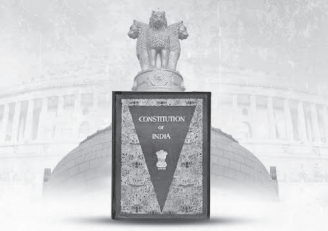
India holds a unique place in the history of global democracy—not merely because it encompasses the world’s largest population living under a democratic system, but because, ever since independence, the nation has consistently upheld its democratic institutions, constitutional processes, and the supremacy of the popular mandate. While political ideologies have shifted, governments have changed, and power dynamics have evolved, the constitutional foundation of Indian democracy has remained steadfast. This is our greatest achievement.
The core philosophy of Indian democracy is the sovereignty of the people. No individual, family, political party, or institution can claim permanent ownership of power. The authority to govern is derived from the trust of the people and through processes defined by the Constitution. Through elections, the public selects its representatives and entrusts them with the responsibility of governance. When the public’s trust shifts, the government changes accordingly. In India, the transfer of power occurs not through military intervention or unconstitutional pressure, but through a democratic mandate.
The Foundation of Democracy: Sovereignty of the People
On November 26, 1949, the Constituent Assembly adopted the Constitution of India. The opening words of the Preamble—”We, the People of India”—encapsulate the fundamental philosophy of this system. They signify that the ultimate source of sovereignty lies with the people, and that governments are accountable to them. With the Constitution coming into effect on January 26, 1950, India became a sovereign democratic republic. Acting on the recommendations of the Drafting Committee—chaired by Dr. Bhimrao Ambedkar—the framers of the Constitution adopted a parliamentary democracy for India. In this system, the Council of Ministers at the Centre is collectively responsible to the Lok Sabha, while the Councils of Ministers in the states are collectively responsible to their respective Legislative Assemblies. The existence of a government depends on the confidence of the House. This framework prevents power from becoming absolute and ensures that governance remains accountable.
At the initiative of Prime Minister Narendra Modi, the tradition of officially observing November 26 as Constitution Day began in 2015. Its objective is to raise awareness about the Constitution among citizens and to acquaint the new generation with the contributions of those who drafted it.
The First General Election of 1952: A Historic Experiment in Democracy
A significant milestone in India’s democratic journey was the first general election, held in 1951–52. Just a few years after independence, the nation took the historic decision to conduct elections based on universal adult suffrage. Despite challenges such as poverty, illiteracy, social inequality, and a scarcity of resources, every adult citizen was granted an equal right to vote. Men and women, the rich and the poor, the educated and the uneducated—all were given an equal opportunity for political participation.
India demonstrated that democracy is not confined solely to affluent or highly educated societies. Through the civic consciousness of its people and their faith in the constitutional framework, a vast nation, rich in diversity, proved capable of sustaining a successful democratic system. Since then, elections for the Lok Sabha and State Legislative Assemblies have been held at regular intervals, with transitions of power occurring in accordance with the will of the people.
Governments Changed, Democratic Traditions Endured
A testament to the maturity of Indian democracy is that, despite intense political competition, the continuity of the constitutional order has remained intact. Following the 1967 elections, non-Congress governments were formed in several states, giving a new direction to multiparty competition. The 1977 general election marked a decisive chapter in the history of Indian democracy; in the wake of the Emergency, the electorate exercised its franchise to oust the incumbent government, leading to the formation of the first non-Congress government at the Centre. This underscored the principle that, in a democracy, the final verdict rests with the people.
From 1989 onwards, the era of coalition politics took hold. Political developments in 1996, 1998, and 1999 involved processes such as government formation, votes of confidence, the withdrawal of support, and the necessity for fresh mandates. Subsequent elections—including those in 2014—have demonstrated that voters evaluate the performance of governments before casting their ballots. Thus, in Indian democracy, holding power is not an inherent or permanent right, but a responsibility entrusted by the people.
The Experience of the Emergency and the Restoration of Democracy
The Emergency, declared on June 25, 1975, was an unfortunate chapter in Indian democracy. During this period, severe restrictions were imposed on civil liberties, freedom of the press, and democratic activities, and many opposition leaders were arrested. This experience underscores the vital importance of safeguarding the independence of constitutional institutions, civil rights, and democratic norms. Following this difficult phase, the 1977 general elections saw the public exercise their franchise to bring about a change in government. This event stands as a historic testament to the vitality of Indian democracy and the vigilance of its citizens. It conveyed the message that the true power of democracy does not reside in any single government or political party, but rather in the people and the institutional framework enshrined in the Constitution.
Confidence Motion: The Basis of Parliamentary Accountability
In a parliamentary democracy, the formation and survival of a government depend on its ability to command a majority in the House. Under Article 75(3) of the Constitution, the Union Council of Ministers is collectively responsible to the Lok Sabha, while under Article 164(2), the State Council of Ministers is collectively responsible to the Legislative Assembly. Motions of confidence, no-confidence motions, and floor tests serve as constitutional mechanisms to assess whether a government enjoys the support of the House. If there is doubt regarding a government’s majority, a test of strength can be conducted in the House; should the government fail to prove its majority, it must resign. In the event of a ‘hung’ House, the roles of the President and the Governor are guided by constitutional norms and the necessity of establishing a majority within the House.
The Election Commission: Guardian of Fair Elections
Free and fair elections are the cornerstone of a democracy’s credibility. Under Article 324 of the Constitution, the Election Commission is entrusted with the responsibility of the superintendence, direction, and control of elections. Over time, the introduction of systems such as Electronic Voting Machines (EVMs), Voter ID cards, VVPATs, election monitoring, and the regular updating of electoral rolls has made the electoral process more systematic.
The increasing participation of women, youth, and voters from rural areas reflects the social inclusivity and breadth of Indian democracy. The revision of electoral rolls is a regular and continuous process undertaken by the Election Commission, through which the names of deceased or relocated voters are removed, and the names of new, eligible voters are added. Voter awareness campaigns also play a significant role in increasing citizen participation in elections.
The Role of the Opposition and Parliamentary Dignity
The strength of a democracy is not determined solely by the success of the government; an informed and constructive opposition is also an essential requirement. The opposition reviews government policies, raises issues of public interest, and plays a role in ensuring the accountability of the administration. Mechanisms such as the Question Hour, Zero Hour, legislative committees, and debates on bills—within both Parliament and state legislative assemblies—give substance to the democratic system. While differences of opinion are a natural feature of democracy, it is essential that such disagreements be expressed through dialogue, reasoned argument, and within the bounds of constitutional decorum. The dignity of the House does not belong to any single party; rather, it represents the prestige of the entire democratic system.
New Challenges and Democratic Responsibilities
Today, social media and digital communication have expanded the scope of political discourse; however, the prevalence of misinformation, artificially generated content, personal accusations, and social discord has compromised the quality of democratic dialogue. Citizens must exercise discernment in evaluating information, while political parties should prioritize healthy competition, transparency, and the public interest. For a democracy to remain robust, it is essential that citizens maintain their trust in the electoral process and constitutional institutions.
The Constitution Gallery at the Rajasthan Legislative Assembly: A Unique Convergence of Constitutional Consciousness
Respect for the Constitution should not be confined merely to books, speeches, or ceremonial events. Citizens should also have the opportunity to explore and understand the journey of the Constitution’s creation, its core values, and its historical background. It is with this vision that a ‘Constitution Gallery’ has been established within the Rajasthan Legislative Assembly. This gallery was inaugurated on November 26, 2024—coinciding with the 75th anniversary of the Indian Constitution—within the Digital Museum of the Assembly’s ‘Museum of Political Narratives.’ As the Speaker of the Legislative Assembly, my objective in this initiative has been to bring the story of the Constitution’s creation, its cultural foundations, and its democratic values to the general public, especially the youth.
A distinctive feature of this gallery is the inclusion of the artistic illustrations that originally appeared at the beginning of each of the 22 parts of the Constitution. These depictions—ranging from the return of Lord Rama, Sita, and Lakshmana to Ayodhya, and Lord Krishna imparting the teachings of the Gita to Arjuna, to historical and cultural icons such as Gautama Buddha, Lord Mahavira, Emperor Ashoka, Vikramaditya, Chhatrapati Shivaji, Guru Gobind Singh, and Rani Lakshmibai—reflect the vastness and depth of Indian civilization. Furthermore, images depicting Mahatma Gandhi’s Dandi March and Netaji Subhas Chandra Bose serve as a poignant reminder of the glorious chapters of our freedom struggle.
The gallery also displays historical material related to the significant proceedings of the Constituent Assembly, the authentication of the Hindi version of the Constitution, the signatures of its members, the participation of women members, the various committees—including the Drafting Committee—and the contribution of Rajasthan. This is not merely a collection of images; rather, it is an endeavor to bring the journey of the Constitution’s creation to life for the new generation. It serves as an important educational site for students from schools, colleges, and universities, enabling them to grasp the historical background and cultural expression of the Constitution.
The Political Narrative Museum of the Rajasthan Legislative Assembly showcases the state’s political evolution, the freedom struggle, the activities of the Praja Mandals (people’s movements), and the historical journey of the Legislative Assembly itself. The Constitution Gallery adds a significant chapter on national constitutional consciousness to this museum. To date, it has been visited by more than 55,000 people.
Constitution Day: A National Commitment to the Sovereignty of the People
India’s democratic journey bears witness to the fact that the Constitution has provided a well-structured system for governance and the transfer of power. Governments may change, political circumstances may shift, and the popular mandate may offer opportunities to new leadership, yet the constitutional foundation remains steadfast. This is the greatest strength of Indian democracy. On Constitution Day, we must resolve to strengthen the tradition of free, fair, and regular elections, respect our democratic institutions, and uphold the supremacy of the popular mandate. While governments and political ideologies in India may evolve, the spirit of democracy and the supremacy of the Constitution must remain inviolable. This reflects India’s democratic maturity, its constitutional strength, and our proud identity as the world’s largest democracy.
The author is the Hon’ble Speaker of the Rajasthan Legislative Assembly