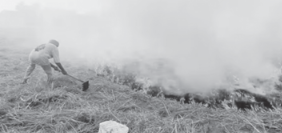
Sanctions won’t stop stubble burning. It’s high time the Centre, the States and the NCR invest in an alternative solution.
November has brought back with it the deterioration in the air quality of the National Capital Region. The Air Quality Index 441 on official scales (at Burari Crossing on November 9) and over 1,000 on private trackers like IQ Air in areas such as Shahdara and Defence Colony, which prompted a ban through Stage III action plan under the Graded Response Action Plan, while Punjab witnessed 1,152 cases of farmland fires on Diwali day, highest since mid September.
The usual blame game has started. However, the real question is not of the accused, but of the reasons for the persistent problem. There is clear indication of multiple causes behind the pollution level in Delhi. According to the Center for Science and Environment, pollution in Delhi prior to Diwali had hit a three-year peak, with pollution from neighbouring NCR areas forming 54.43% of Delhi’s PM2.5 concentration in early November.
Pollution from farm fires peaked at 16.2% in November 4 and declined to around 8% by November 6, but during this period there was an increase in the pollution levels in the city. Stubble burning, therefore, cannot be excused as it forms a major cause during the season. However, the scale of burning in Punjab requires consideration.
The number of cumulative fires till November 10 was 72,499 last year and has reduced to 5,002 this year, although slightly higher than last year’s figure of 4,195. This does not mean anything less to be careful about. In fact, an estimate by a NASA-linked scientist suggests that accounting for satellite blind spots would increase the total by a considerable amount.
Additionally, farmers are believed to burn crop stubble during times when there are no satellites overhead. This is fundamentally an economic issue, for the time period between harvesting the rice crop and sowing the wheat crop is limited, and burning is the most cost effective way of clearing the fields. Alternatives take labor, fuel, and equipment, which are expensive for the small-scale farmer.
Farmers have been demanding anywhere between Rs 1,500 to Rs 10,000 per acre, but the Central and State governments have not yet decided on who will pay for this. The experience of Haryana is illustrative of how the issue can be solved. International practice supports the same conclusion. Since 1999, China has had a ban on straw burning and has been monitoring fires from space for over 20 years, yet it has combined its efforts with heavy subsidies for recycling worth CNY 14 billion in 2022.
Nevertheless, over 6,000 burn sites existed in 2017, and there has been a change in policy towards targeted management taking into account the farmers’ livelihood and the work of their hands. The California 1991 law has taken a gradual approach, reducing rice straw burning over almost a decade, with financial support and outreach, with an exception of disease in crops.
Both strategies cannot be replicated, as a district in Punjab cultivates paddy on the land amounting to the Sacramento Valley of California. Still, both point out to the fact that prohibition without an available alternative leads to avoidance. Fresh air is a common public resource, and the price of it should not be borne by the farmer alone. Fresh air will not result from accusations but rather when it becomes unprofitable to burn, and when the cost of that is spread fairly to all who benefit from it.
*The author is B.Tech Student at Bennett University, Greater Noida