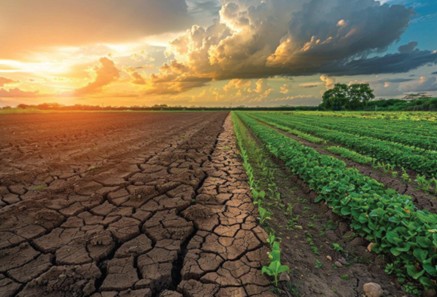
The thirty first edition of the Conference of the Parties (COP31) in Antalya, Türkiye, deferred the formal negotiations on agriculture, a sector central to food security and livelihoods, to 2027, missing an opportunity to advance an important global agenda on food systems. The conclusion of the Sharm el-Sheikh Joint Work on Implementation of Climate Action on Agriculture and Food Security (SJWA) – the UNFCCC’s dedicated work programme on agriculture and food security adopted in 2022 – offered an opportunity to assess its outcome and chart the next course of global action for building climate resilient agri-food systems. However, this year COP failed to reach consensus on its future direction and outcome assessment, particularly the differences between developed and developing countries over the role of mitigation and adaptation and deep divisions on climate finance. These differences reflect fundamentally different agricultural realities and priorities. Developed countries have increasingly emphasised agriculture’s potential to reduce emissions, while developing countries, where agriculture sustains millions of smallholder livelihoods and remains particularly vulnerable to climate change, prioritised adaptation, food security and resilience. This distinction matters because agricultural climate action cannot be divorced from the contexts in which food is produced. India, for instance, has 20 major agroclimatic zones; interventions suited to Punjab’s irrigated plains may be inappropriate for the rainfed landscapes of the Deccan. Context-specific solutions and decentralised implementation, two principles recognised by the SJWA, are therefore essential to ensuring that climate action responds to local needs and enables farmers and communities to shape its outcomes. The inability to reconcile these priorities risks reducing agricultural climate action to a debate over emissions rather than adKolar indicate that integrating groundnut and other intercrops with local oil processing generated approximately ₹1.12 lakh per rainfed acre, nearly three times the earnings of conventional sole-ragi farmers in the region. dressing the multiple challenges confronting food systems. For Global South countries such as India and in Africa, where most farmers are small and marginal, cultivate less than two hectares and largely depend on subsistence agriculture, climate action must first strengthen resilience to rising temperatures, erratic rainfall and other climate risks without compromising livelihoods or food production. This does not make mitigation irrelevant; rather, it calls for mitigation to emerge alongside adaptation, where feasible, without becoming the overriding objective. The concept of food security thus itself must extend beyond the production of calories to encompass nutritional diversity, ecological sustainability and the long-term viability of farming livelihoods. Historically, the approach to food security globally was closely associated with producing enough to mitigate hunger. This approach to address hunger prioritised increasing the production of cereal crops such as rice, wheat and maize. Their high calorific value, relatively predictable yields and suitability for large-scale cultivation and procurement made them central to national food security strategies. While this approach significantly improved food availability, it also pushed agricultural systems to depend increasingly on a narrow range of crops. More importantly, the emphasis on calorie availability did not necessarily translate into dietary diversity or adequate micronutrient intake. Consequently, the challenge today is not simply to produce more food, but to address the ecological and nutritional vulnerabilities embedded in the way food is produced. India’s post-Green Revolution experience illustrates this contradiction. Foodgrain yields increased considerably helping the country overcome chronic food shortages. However, procurement incentives for paddy and wheat encouraged their cultivation even in regions where water availability and agrorice and wheat yields as temperatures rise. Therefore, the global community must move beyond the rigid binary of mitigation and adaptation; a multidimensional crisis like this demands an equally agile, multi-utility toolkit. ecological conditions were unsuitable. Groundwater levels in such region have declined by more than eight metres on average since the 1980s, while groundwater accounts for over 60% of India’s irrigation. Furthermore, the excessive dependence on urea has further distorted fertiliser use contributing to soil degradation and higher nitrous oxide emissions. This input dependence also creates economic and strategic vulnerabilities, with fertiliser subsidies costing ₹2.11 lakh crore in FY2025–26 and exposing domestic agriculture to volatile international supply chains. Climate change is compounding these pressures, with projections indicating substantial declines in Beyond the debate at the COPs, India, is already promoting such approaches to strengthen climate resilience, conserve resources and improve nutritional security. Its traditional dryland crops and associated farming systems offer valuable lessons in this regard. Crops such as pearl millet, sorghum and finger millet, increasingly promoted as Shree Anna or Nutri-Cereals, possess characteristics that make them particularly relevant to a warming and increasingly water-stressed climate. Compared with water-intensive staples, millets generally require less water and less fertilizers, with indicative estimates placing their water requirement at 250–300 litres per kilogram, against 2,000–4,000 litres for rice and wheat. Additionally, per-hectare greenhouse gas emissions for millets are almost half of wheat and one-third that of rice, as documented by a ICAR study, thus contributing to reduction in carbon footprints as well. Therefore, their relatively short growing cycles of 60–100 days, alongside their tolerance to high temperatures and variable rainfall, make them suitable for rainfed and semi-arid regions. They also contribute to nutritional security through their micronutrient content, while their straw provides valuable livestock fodder. Karnataka’s Akkadi Saalu is one such example. Practised in rainfed districts, this traditional mixed-cropping system cultivates finger or pearl millet alongside 15–20 or more intercrops, including legumes, oilseeds and vegetables. Different rooting depths and growth cycles allow crops to use soil moisture and nutrients complementarily. The cultivation benefits extend beyond ecological resilience to farm economics. Farmer case studies from The postponement of the decision on agriculture to 2027 should not mean another year lost in advancing climate-resilient food systems. India’s experience with millets and diversified farming systems demonstrates that agricultural climate action can prioritise adaptation, nutritional security and livelihoods while also delivering environmental benefits. As countries deliberate on the next phase of the SJWA and prepare their NDCs, the focus must shift towards strengthening locally adapted farming systems through contextspecific policies, research, extension, procurement incentives, finance and market infrastructure. Agricultural climate commitments should measure not only emissions and production, but also soil health, wateruse efficiency, crop diversity, nutritional outcomes and farmer resilience. The challenge is not simply to produce more food under a changing climate, but to build food systems that nourish people, sustain ecosystems and secure the livelihoods of those who grow it
0