As the Centre prepares to push ahead with the Foreign Contribution (Regulation) Amendment Bill, 2026, one of the biggest questions being asked by churches and charitable organisations across the Northeast is whether the proposed changes could affect institutions that have spent decades building schools, hospitals and social welfare facilities with legally received foreign funds.
That question became the focus on Thursday when Mizoram Chief Minister Lalduhoma led a delegation of senior church leaders to meet Union Home Minister Amit Shah in New Delhi. The meeting came against the backdrop of growing opposition to the Bill from Christian organisations, particularly in Mizoram and Meghalaya, where foreign contributions have long played an important role in supporting education, healthcare and community welfare programmes.
The proposed legislation, which Parliament is expected to begin discussing on August 12, seeks to amend the Foreign Contribution (Regulation) Act, 2010, the law that regulates how organisations in India receive and use foreign donations.
While the government says the amendments are aimed at improving transparency, closing administrative gaps and preventing misuse of foreign funds, critics believe some of the proposed provisions could give the government sweeping powers over assets created by organisations using foreign contributions.
One of the key concerns centres on what happens after an organisation loses, surrenders or fails to renew its FCRA registration.
Under the proposed Bill, a designated authority would be empowered to oversee the provisional and, in some cases, permanent vesting, management and disposal of foreign contributions and related assets when an organisation’s FCRA registration is cancelled, surrendered or ceases, including through non-renewal.
Church organisations fear that this provision could eventually affect schools, hospitals, hostels, orphanages, training centres and other charitable institutions built over many years with foreign funding, even if those funds had been used lawfully.
It was this concern that the Mizoram delegation placed before Amit Shah.
Chief Minister Lalduhoma was accompanied by Reverend John Raldosanga, Chairman of the Mizoram Kohhran Hruaitu Committee (MKHC), and Reverend Lalhmangaiha, General Secretary of the Council of Churches in Mizoram (CCM). Together, they submitted a joint memorandum highlighting objections to several provisions of the Bill.
After the meeting, Lalduhoma said he had raised six specific issues with the Union Home Minister.
According to the Chief Minister, Shah gave one clear assurance that immediately addressed one of the biggest fears surrounding the legislation.
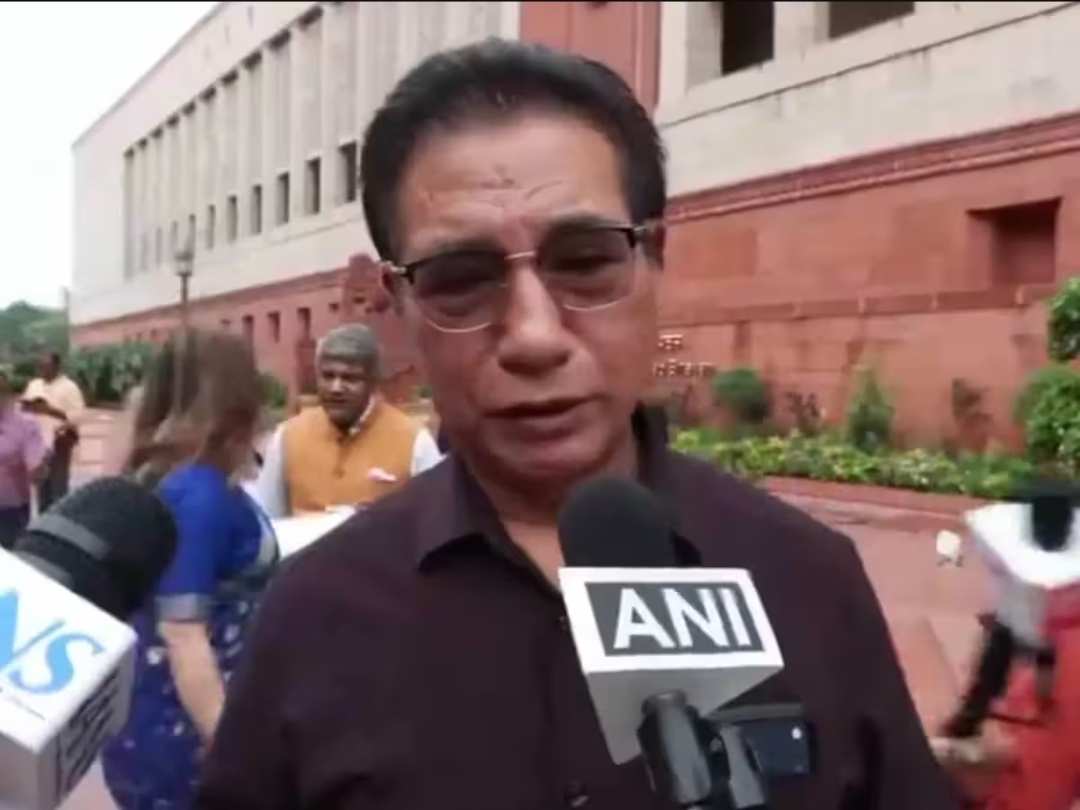
“The only thing that is very clearly mentioned to us is that it’s not going to be retrospective. That assurance was given to us, and the rest of the points will be given paragraph-wise comments by him. He is also going to begin the discussion on the 12th of this month in Parliament,” Lalduhoma said.
The assurance is significant because many organisations had feared that assets created years or even decades ago under the existing legal framework could come under the scope of the new law.
However, Shah’s assurance that the legislation would not apply retrospectively appears to have eased at least one aspect of those concerns, although several other issues remain unresolved.
Reverend Lalhmangaiha explained why church bodies continue to remain worried.
“Those organisations are licensed to receive foreign funds for a special purpose. Even though they use the funds legally and legitimately, whenever the licence is cancelled or voluntarily surrendered… the assets they have built before would be taken away. That is our understanding, and if that is the case, we do not feel comfortable with it,” he said.
The debate over the Bill extends well beyond Mizoram.
According to the background notes accompanying the legislation, India had around 14,449 active FCRA registrations as of mid-July 2026, while tens of thousands of registrations have either been cancelled or allowed to expire over the years.
For organisations working in remote parts of the Northeast, foreign contributions have supported a wide range of public welfare activities, particularly in education, healthcare and community development. This is one reason why church bodies across the region have reacted strongly to the proposed amendments.
Mizoram, where Christians account for roughly 87 per cent of the population, has emerged as one of the strongest voices opposing the Bill in its current form.
On July 25, the Mizoram government and apex church bodies jointly decided to approach the Centre, describing the legislation as unacceptable in its present shape and calling for wider consultation before it is passed.
The concerns are also shared by church organisations in Meghalaya and other Northeastern states, which fear the proposed law could create uncertainty for institutions that have operated legally for decades.