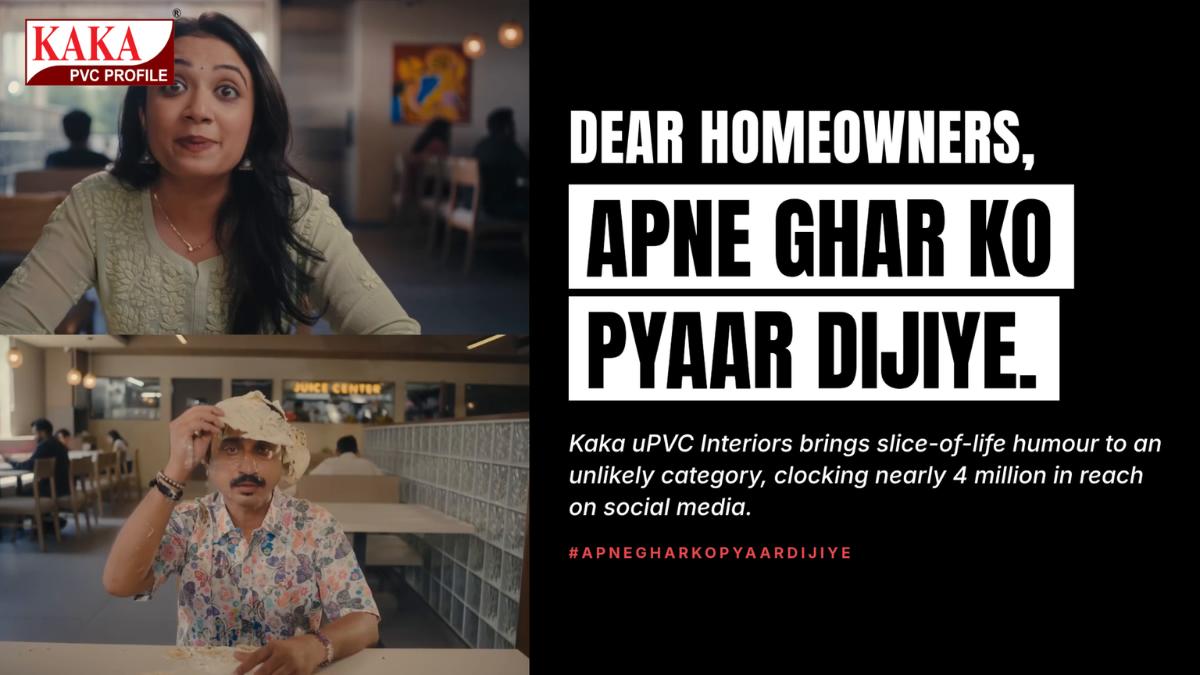
Conceptualised by Curate Media, the ‘Apne Ghar Ko Pyaar Dijiye’ campaign uses humour, meme culture and social-first distribution to bring a fresh voice to uPVC home interiors advertising.
Ahmedabad (Gujarat) [India], November 16: Kaka Industries’ first brand campaign for Kaka uPVC Interiors, ‘Apne Ghar Ko Pyaar Dijiye’, has generated nearly 4 million combined social media reach in its first week. Conceptualised by Ahmedabad-based creative agency Curate Media, the two-film campaign takes an entertainment-led approach to the traditionally product-focused uPVC home interiors category.
The first film unfolds in a busy café, where an evening takes an unexpected turn, complete with a dessert-covered head and an unimpressed companion. The second film moves into a heritage home, where a homeowner tries to find some peace amid the everyday noise of street vendors, a knife-sharpener and a watchful elder. Both films use exaggerated humour and recognisable situations to bring the campaign’s message to life.
Instead of opening with technical specifications, the films start with the everyday experiences that shape how people feel about their homes. The campaign then showcases Kaka uPVC Interiors’ product range, including uPVC kitchen cabinets, furniture and Larga Charcoal Louvers. The brand highlights product benefits such as durability, termite resistance and low maintenance.
The Internet Took Notice
The campaign’s social media distribution strategy brought the films into internet culture through meme communities and social media pages, including Sarcastic Us, Laughter Feeds, Ghantaa and Epic69. The combined reach came through organic brand communication, meme-page collaborations and marketing-page distribution.
The campaign also received promotional placements on Mad Over Marketing and Social Samosa, increasing its visibility among audiences interested in advertising, marketing and digital culture.
Making uPVC Interesting
With ‘Apne Ghar Ko Pyaar Dijiye’, Kaka Industries brings uPVC interiors into a more relatable, everyday context. Humour gives audiences an accessible entry point into a category more often communicated through product features, specifications and finishes.
The campaign places uPVC home interiors in a broader lifestyle context, using storytelling to introduce products such as kitchen cabinets, furniture and louvers without making the films feel like conventional product demonstrations.
Bhavin Gondaliya, Executive Director, Kaka Industries, said:
“For years, uPVC interiors have been a category that dealers and contractors talked about. Today, the homeowner is the one making the decision, and we wanted to meet her where she is, with humour she’ll actually remember. ‘Apne Ghar Ko Pyaar Dijiye’ is our way of saying that a home deserves interiors that last. Curate Media brought a fresh perspective to the campaign, helping us communicate the potential of uPVC interiors through relatable storytelling and humour.”
Breaking the Category Playbook
For Curate Media, the campaign was an opportunity to rethink how brands in the uPVC interiors and building-materials categories communicate with consumers. The creative approach began with a simple observation: people may not actively think about uPVC interiors every day, but they recognise the small, everyday experiences that influence how they feel about their homes.
Curate Media translated those experiences into humour-led storytelling, allowing Kaka’s products to enter the narrative as part of the story rather than as a conventional sales pitch.
Curate Media said:
“We believe ads shouldn’t be an interruption; they should create disruption. For us, that means creating work people choose to watch, engage with and remember. Our objective was to make a category that people rarely talk about become something they would actually stop and watch. We didn’t want to make another advertisement explaining why uPVC is better. We wanted to create something people would enjoy first and remember the brand for. By combining unexpected storytelling, humour and a social-first distribution strategy, we wanted to challenge how brands in traditional industries approach advertising. Kaka Industries gave us the opportunity to take that creative leap.”
(The article has been published through a syndicated feed. Except for the headline, the content has been published verbatim. Liability lies with original publisher.)