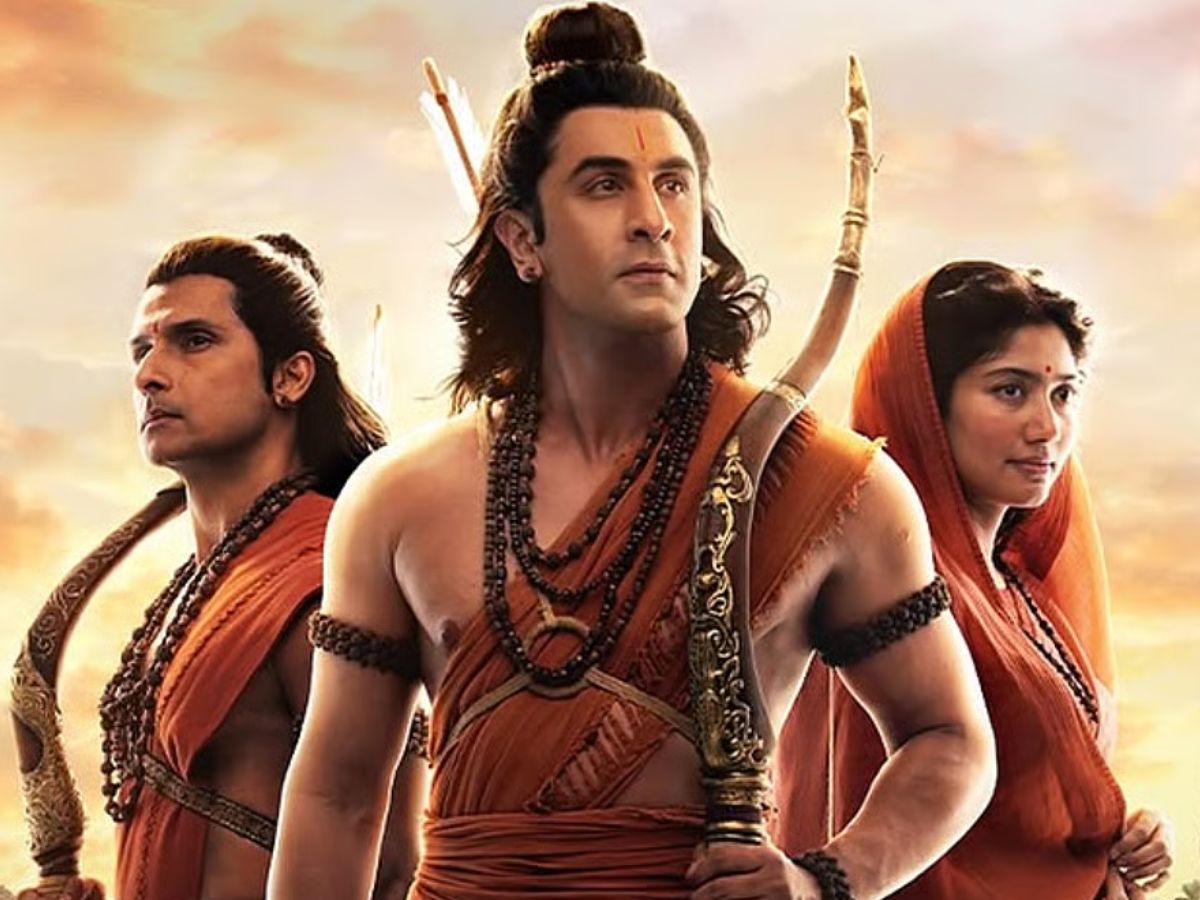
Namit Malhotra’s ambitious vision brings the epic to life with grandeur, heart and global appeal
3.5/5 stars
How do you film a story known to all, adapted across countless formats and languages, and viewed through the lens of every one of its characters? Namit Malhotra’s Ramayana offers a compelling case study.
Released in 2026, when Bollywood was navigating a testing period in which violence (Animal, Dhurandhar) and spirituality (Hanuman Ansh) dominated the box office, the film was no low-stakes venture. Anchored by the star power of Ranbir Kapoor, Sai Pallavi and Yash, each performer largely justified their casting—some more convincingly than others.
Sai Pallavi’s embodiment of Sita was awe-inspiring, while Yash delivered a formidable portrayal of the ten-headed Ravana. Ranbir Kapoor’s restrained, controlled depiction of Lord Ram came as close as many might imagine to the ideal itself—an interpretation that, for some, stood in interesting contrast to the actor’s public persona. Ravi Dubey as Lakshmana proved less persuasive; he was overshadowed by the stronger talents around him, or perhaps underserved by a script that failed to give the character sufficient depth. His attempts at humour largely fell flat and felt questionable in tone.
The dialogues, penned by Shreyas Jain and director Nitesh Tiwari, were uneven and often mismatched the gravitas of the epic—an issue that has plagued earlier adaptations such as Adipurush. Balancing fidelity to a sacred narrative that resists easy alteration with the demands of mass entertainment is undeniably difficult, yet not impossible. While gauging audience response before release is never straightforward, seasoned collaborators might have refined the writing more effectively.
The music, by A.R. Rahman and Hans Zimmer, also left room for greater impact. It never quite achieved the defining, identity-shaping quality that elevated the soundtracks of Dhurandhar and Hanuman Ansh, or classics such as Saathiya. Two Oscar-winning talents did not fully conquer this particular challenge.
Where one Oscar-winning contribution fell short, another excelled. The visual effects are consistently impressive and often flawless—credit to the Oscar-winning team at DNEG, under producer Namit Malhotra, who has not ruled out the possibility of a trilogy.
Ramayana holds significant potential with international audiences less preoccupied with dialogue nuances or character fidelity. The decision to release it in multiple languages was a shrewd masterstroke by Malhotra. The film has the capacity to showcase not only Bollywood’s technical ambitions but also the enduring values of Hinduism to a global viewership.
Overall, the film is unmissable and stands a strong chance of surpassing the commercial benchmark set by Dhurandhar. A solid 3.5 stars. Go for it this Diwali—and enjoy the spectacle.