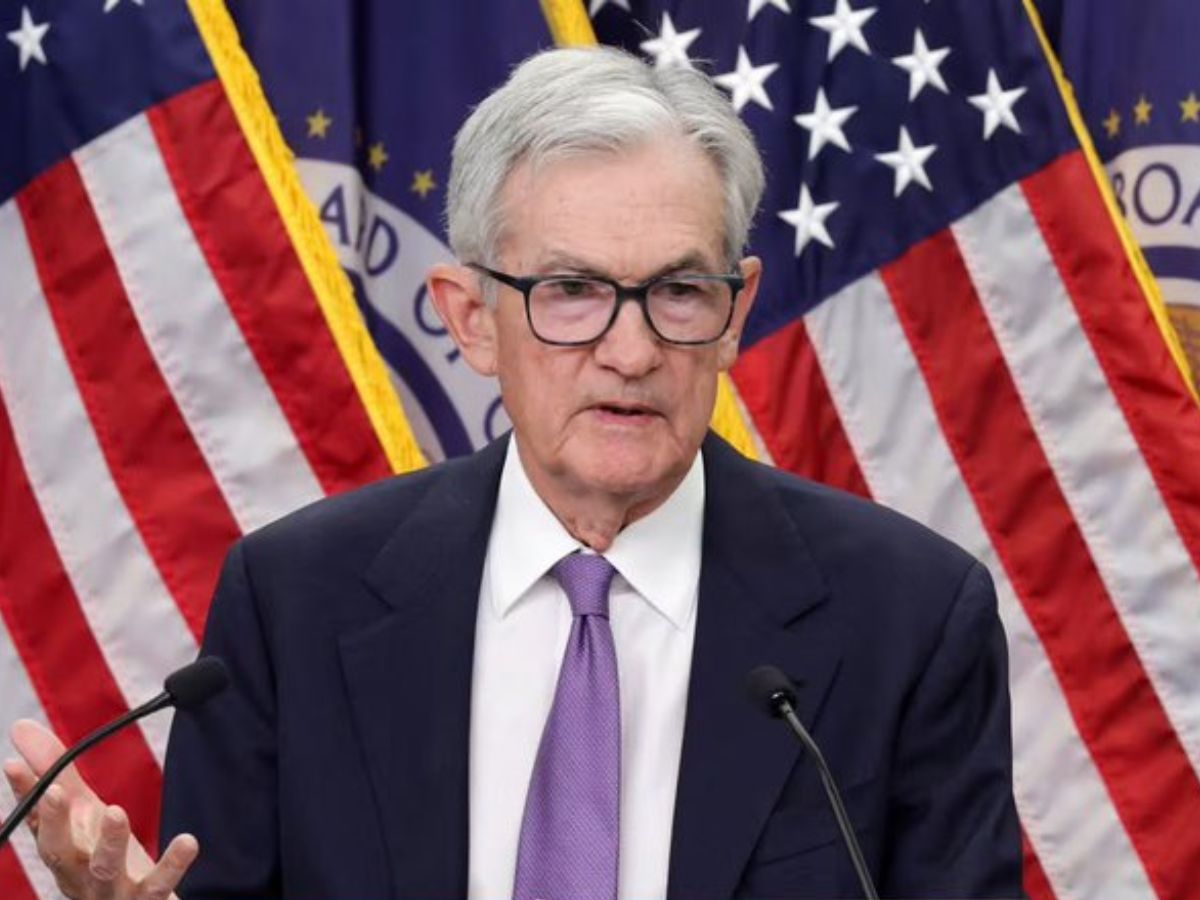
The White House is moving quickly to decide who will replace Jerome Powell as the next chair of the US Federal Reserve, with President Donald Trump expected to make the final call within weeks.
Powell’s term ends in May 2026, and a separate 14-year Federal Reserve Board seat opens on February 1, 2026. Because of these overlapping deadlines, the administration has accelerated its search for a candidate who could shape US monetary policy long into the future.
Officials say the selection process is now in its final stage, with the shortlist narrowed to five contenders.
Tense Backdrop as Trump Pushes for Faster Rate Cuts
The decision comes at a sensitive moment: Trump has repeatedly criticised Powell, openly questioned the pace of monetary decisions, and urged the central bank to cut borrowing costs more aggressively. His earlier pick of Powell later reappointed by Joe Biden has been a long-standing point of contention.
The stakes have risen further ahead of the Federal Open Market Committee (FOMC) meeting scheduled for December 9–10.
While the White House insists the decision will be based on merit, analysts warn that political considerations could still play a major role.
US Treasury Secretary Scott Bessent, who is leading the vetting process, said the announcement could arrive before Christmas. Trump has also signalled he already has someone in mind.
The Five Finalists: Who Trump Is Considering
Scott Bessent has finished the last round of meetings with the five remaining candidates:
-
Kevin Hassett
-
Christopher Waller
-
Kevin Warsh
-
Michelle Bowman
-
Rick Rieder
Why the Fed Chair Role Matters
The Federal Reserve chair is the most important voice in American economic policy. The position determines interest rate strategy, responds to inflation, and influences global markets instantly. The chair also oversees regulation of banks and works closely with Congress through the Board of Governors.
The next chair will guide the FOMC, which sets the federal funds rate—affecting loans, mortgages, credit cards, and business borrowing.
The nominee must be confirmed by the Republican-controlled Senate.
Powell may continue on the board for up to two more years after his term ends, unless he chooses to leave, which would open another seat for Trump to fill.
Leading Contender: Kevin Hassett
Among all names on the list, insiders say Kevin Hassett is now viewed as the strongest candidate.
Hassett’s long relationship with Trump and his support for deeper rate cuts align closely with the president’s economic goals.
His career includes years of work in Republican policymaking and service as chair of the Council of Economic Advisers during Trump’s first term. He returned during the Covid-19 emergency.
However, Hassett has faced controversy—such as his disputed 2020 model predicting Covid-19 deaths would fall to zero by mid-May. Earlier, his book Dow 36,000 was criticised for overly optimistic market forecasts.
Still, he has shown clear interest in leading the Fed. “I want to serve my country and I want to serve my president,” he said, adding, “we’ll see how it goes.”
He also stated he would “be cutting rates right now” because “the data suggests that we should.”
Markets reacted immediately to reports of his frontrunner status, pushing Treasury yields lower.
Christopher Waller: The Insider Candidate
Federal Reserve Governor Christopher Waller is another major contender. His 2020 Senate confirmation was the closest vote for any Fed governor in four decades.
Waller confirmed a recent meeting with Bessent, saying, “We had a nice, a great, meeting.”
Kevin Warsh: Veteran of the 2008 Crisis
Former Fed governor Kevin Warsh brings deep crisis-era experience. He played a major role during the 2008 financial collapse as the Fed’s link to Wall Street.
Trump previously considered Warsh for the top job in 2017 and named him this year among the “top three” options.
Michelle Bowman: The Regulatory Expert
Fed Vice Chair for Supervision Michelle Bowman, initially appointed by Trump, remains a strong candidate.
Her background includes community banking, DHS, FEMA, and repeated dissents on interest rate decisions—signalling independence.
Rick Rieder: The Wall Street Pick
BlackRock global fixed-income chief Rick Rieder manages $2.4 trillion in assets. Although not a Fed insider, he has served on its Investment Advisory Committee.
His appointment would mark a notable break from traditional central-bank leadership.
Why Trump’s Fed Relationship Remains Strained
Since returning to office in January, Trump has repeatedly attacked Powell’s handling of interest rates, calling him “Too Late.” He has joked about firing senior economic officials and pushed for faster policy shifts.
The White House denies that loyalty is the main requirement, but economists warn that political pressure could play a major role. Trump recently described Powell as “grossly incompetent,” and even teased that he might consider removing Treasury Secretary Bessent if rate cuts do not happen quickly enough.
Why This Appointment Matters Now
The Fed is divided. After holding rates steady through most of 2025, officials cut twice—by 25 basis points in both September and October. Opinions differ sharply on whether more reductions are appropriate.
The new chair will take over at a moment of slowing labour markets, sticky inflation, and incomplete economic data. Trump wants someone who understands his policy direction, a point echoed by former press secretary Sean Spicer.
What Happens Next
Bessent has interviewed nearly a dozen people since the summer before narrowing the list to five. A smaller group of finalists will now meet White House Chief of Staff Susie Wiles and Vice President JD Vance.
Once Trump chooses a nominee, the confirmation process will begin in early 2026. If Powell leaves the Fed Board completely after his chair term ends, Trump could gain an additional appointment. Bessent said there is “a very good chance” the final decision will be made public before Christmas. Trump added, “I think I already know my choice.”
Also Read: Why the US Is Pressuring Venezuelan President Maduro to Step Down?