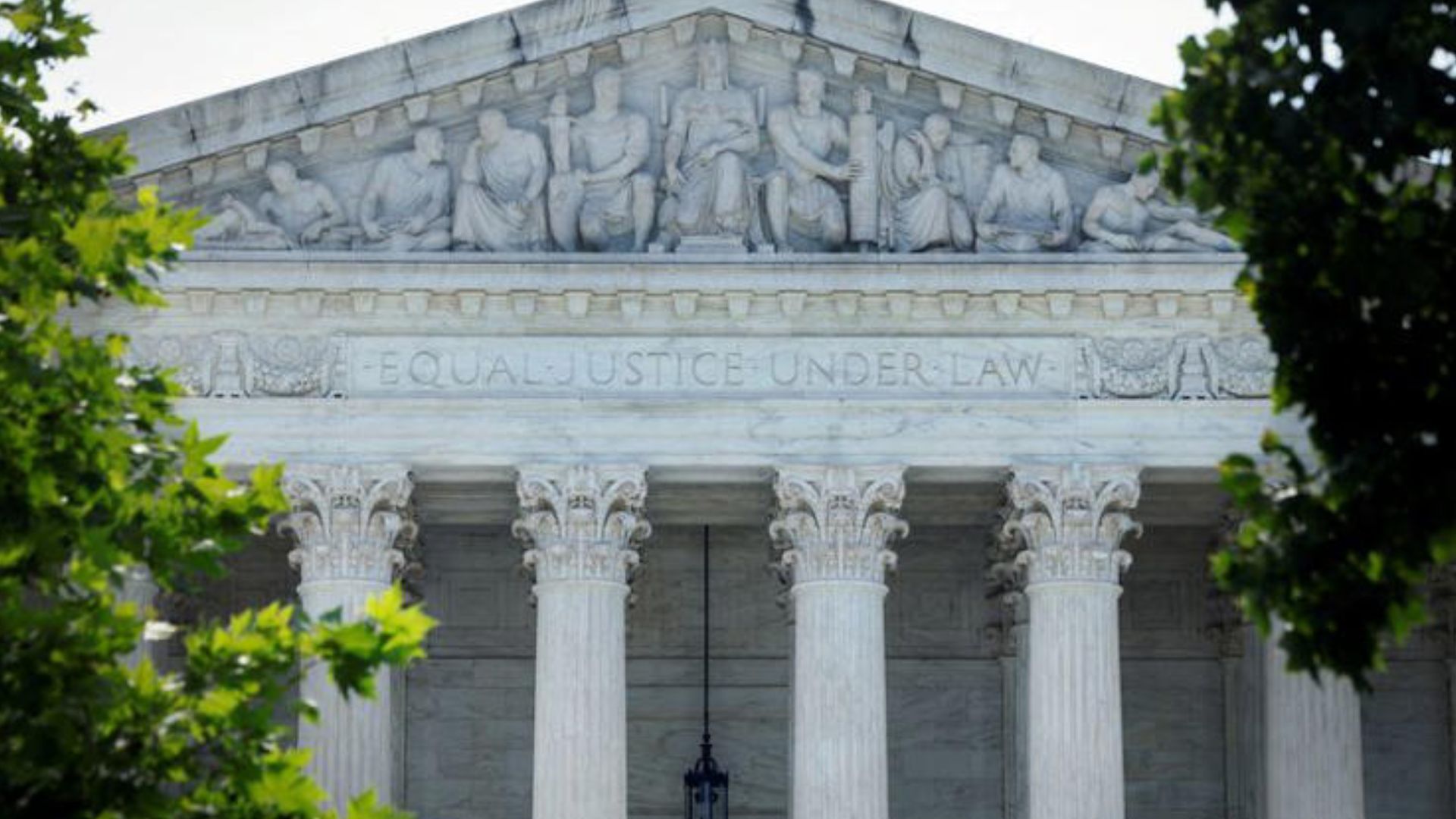
The US Supreme Court announced on Friday that it will take up a new case that could impact a key part of the 1965 Voting Rights Act, a law passed to stop racial discrimination in voting. The court’s decision to hear this case could allow its conservative majority to weaken a provision that has protected minority voters for six decades.
Focus on Louisiana’s Voting Map
The case involves a Louisiana congressional map approved by the state’s Republican-led legislature, which increased the number of Black-majority congressional districts from one to two. This change followed a lower court’s finding that the earlier map likely violated the Voting Rights Act.
The justices said they will now decide whether it is constitutional for states to draw voting districts with Black, Hispanic, or other minority majorities in response to legal rulings that find racial discrimination in redistricting.
The hearing is set for the Supreme Court’s next term, which begins in October 2025, with a decision expected by June 2026.
A Battle Between Race and Equal Protection
At the heart of this case is the tension between two legal principles:
-
The Voting Rights Act, which encourages protecting minority voting power.
-
The Equal Protection Clause of the Constitution, which limits the use of race in drawing voting districts.
The 14th Amendment, adopted after the Civil War in 1868, contains this equal protection clause and was designed to address the rights of formerly enslaved Black Americans.
Every 10 years, US states redraw their voting districts to reflect population changes. This process is known as redistricting.
Court Previously Declined to Rule
The justices heard arguments in this case earlier in March 2024, but chose not to rule immediately. Instead, they asked both sides to provide answers to additional constitutional questions, suggesting the case had broader implications.
Legal Expert Warns of Serious Consequences
Legal scholar Rick Hasen from UCLA warned that the court is taking on a case with huge potential impact. In his blog post, he wrote that the justices may be considering whether this part of the Voting Rights Act “violates a colorblind understanding of the Constitution.”
Hasen also noted, “This Court is more conservative than the Court that in 2013 struck down the other main pillar of the Voting Rights Act in the Shelby County case… This is a big, and dangerous, step toward knocking down the second pillar.”
The 2013 Precedent: Shelby County Case
This new case follows a 2013 Supreme Court decision that struck down a different section of the Voting Rights Act. That section required certain states and counties—especially those with histories of racism—to get federal approval before changing voting rules. Many saw that ruling as a major blow to voter protections.
Louisiana Case Details
In Louisiana, a federal district judge, Shelly Dick, ruled in June 2022 that the original voting map with only one Black-majority district out of six likely broke federal law by harming Black voters. She ordered lawmakers to create a second Black-majority district.
Although Louisiana’s Republican lawmakers said they did not use race improperly in drawing the revised map, Judge Dick found otherwise. She said race had to be considered to protect Black voters’ rights under the Voting Rights Act.
The Supreme Court allowed this map to be used for the 2024 elections.
But in April 2024, a three-judge panel voted 2-1 that the revised map used race too heavily and violated the 14th Amendment’s Equal Protection Clause.
Political and Social Implications
A group of 12 Louisiana voters described in court as “non-African American” filed the lawsuit challenging the map. Their lawyer declined to share the exact racial makeup of the group.
The state and several civil rights groups are now defending the current map, arguing that it corrects past racial injustices in voting.
Black residents make up nearly one-third of Louisiana’s population, and historically, Black voters support Democratic candidates. Meanwhile, the map also happens to protect Republican incumbents like House Speaker Mike Johnson and House Majority Leader Steve Scalise.
This case is also unfolding at a time when former President Donald Trump and Republican allies are pushing to eliminate diversity, equity, and inclusion (DEI) programs, which aim to increase opportunities for minority communities, women, and LGBTQ+ individuals.
The Supreme Court’s decision to hear this case could reshape how race is considered in drawing voting maps nationwide. It could either weaken the Voting Rights Act further or uphold protections for minority voters.
The ruling, expected by mid-2026, could impact election maps across the United States for years to come.
Also Read: Trump Claims India Halted Russian Oil Buys After Tariff Warning