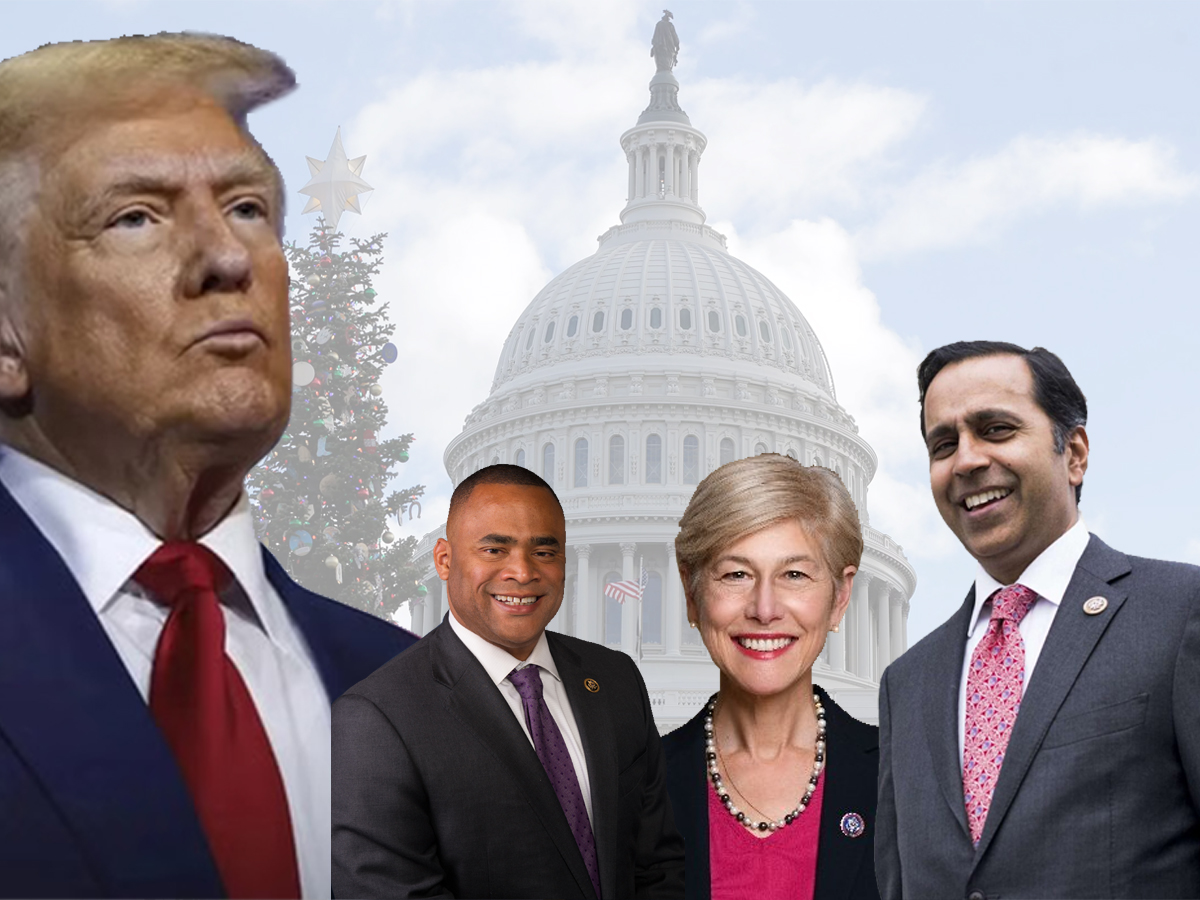
A fresh political fight has begun in Washington over President Donald Trump’s steep tariffs on Indian imports. Three Democratic lawmakers in the US House of Representatives have introduced a resolution to overturn the emergency order that allowed duties as high as 50 percent on Indian goods.
The move reflects growing concern in Congress that the tariff policy is hurting American consumers, damaging jobs, and weakening ties with one of America’s most important global partners.
The resolution seeks to end the national emergency declared by Trump in August 2025, which was used to justify the sharp increase in import duties.
US-India Tariff: What Are Trump’s Tariffs on Indian Imports?
President Trump imposed the tariffs using powers under the International Emergency Economic Powers Act. The first phase began on August 1, when a 25 per cent duty was placed on several Indian products.
Just days later, the administration added another 25 per cent “secondary” tariff. This pushed the total duty on many items to 50 per cent.
The White House defended the decision by pointing to India’s continued purchase of Russian oil. Officials argued that these purchases indirectly supported Russia’s war in Ukraine.
US-India Tariff: Why are US lawmakers opposing the Tariffs on India?
The three lawmakers behind the resolution have strongly criticised the policy. They argue that the tariffs go beyond legal limits and place unnecessary financial pressure on American families.
“North Carolina’s economy is deeply connected to India through trade, investment, and a vibrant Indian American community,” Congresswoman Deborah Ross said. “Indian companies have invested over $1 billion in my state and created thousands of jobs, particularly in life sciences and technology.”
She warned that the tariffs put jobs, innovation, and competitiveness at risk.
Congressman Marc Veasey said India plays a vital role in US economic and strategic interests. “These illegal tariffs are a tax on everyday North Texans who are already struggling with affordability at every level,” he said.
Raja Krishnamoorthi described the tariff approach as damaging. “Instead of advancing American interests or security, these duties disrupt supply chains, harm American workers, and drive up costs for consumers,” he said.
Who are the 3 US lawmakers behind the Resolution?
- Deborah Ross represents North Carolina and focuses on economic growth, trade, and job creation. She has often highlighted the role of Indian investment in her state.
- Marc Veasey, a Congressman from Texas, regularly raises concerns about rising living costs and policies that impact working families.
- Raja Krishnamoorthi, an Indian-American lawmaker from Illinois, is known for his work on trade, technology, and national security issues.
All three lawmakers support stronger US-India relations and oppose the use of emergency powers to shape trade policy.
Growing Pushback Against Emergency Trade Powers
The House resolution follows a similar step taken by the US Senate, where lawmakers recently voted to end emergency-based tariffs imposed on Brazil.
These actions signal a wider effort by Congress to reclaim its constitutional authority over trade decisions. Lawmakers from both parties have expressed concern about presidents using emergency laws to impose long-term economic measures.
US-India Tariff: What Happens Next in the Tariff Fight?
If the House passes the resolution, it would officially end the national emergency declared on August 6, 2025. This would also roll back the additional tariffs placed on Indian imports.
However, the measure must still clear further legislative hurdles. The outcome could shape future trade policy and determine how much power presidents can use to impose tariffs without congressional approval.
For now, the debate has reopened questions about US-India trade ties, consumer prices, and the limits of executive authority.