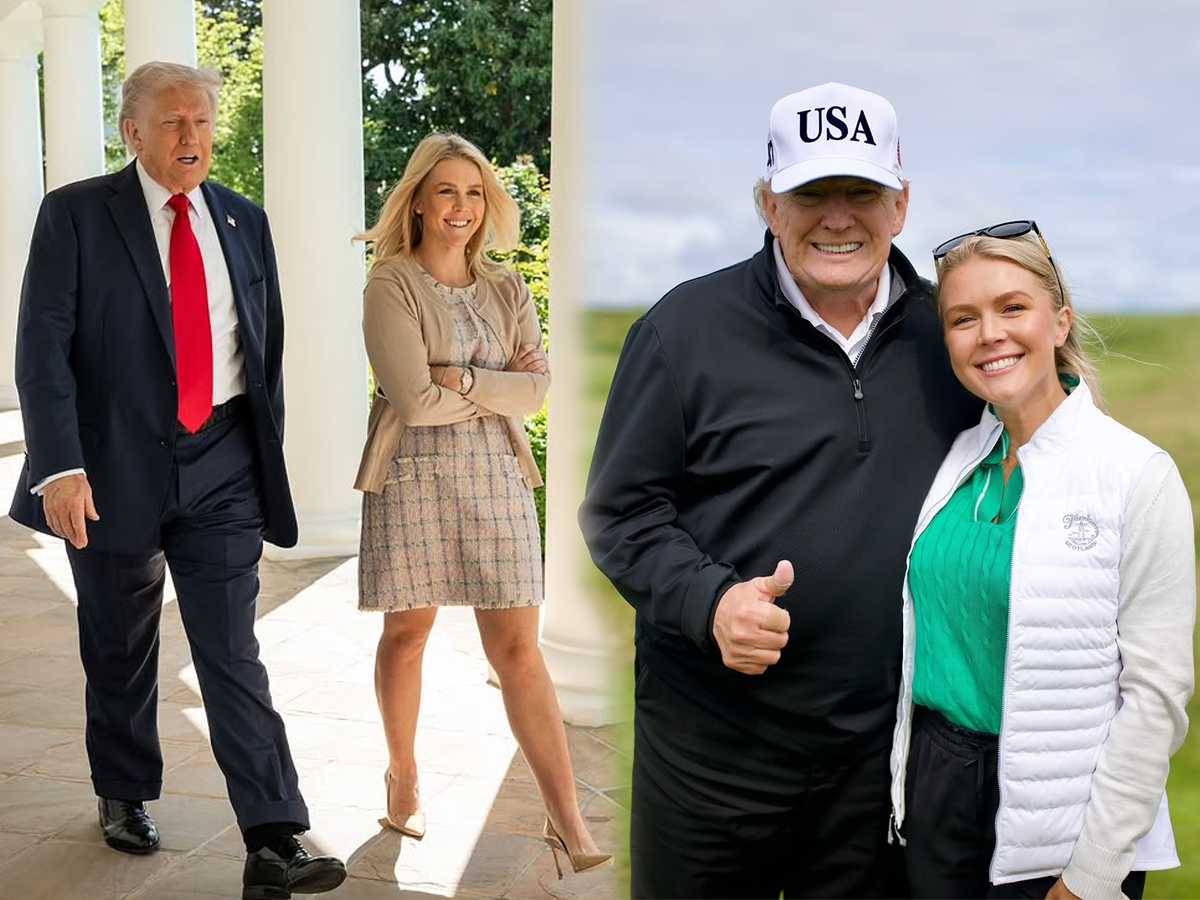
At a political rally in Pennsylvania, President Donald Trump shifted attention away from his economic message by speaking at length about his White House press secretary Karoline Leavitt’s physical appearance.
The remarks, delivered to applause from the crowd, drew widespread criticism online, with many calling them inappropriate and distracting from the rally’s main topic.
What was meant to be a speech on jobs, inflation, and economic policies instead included repeated praise of Leavitt’s looks, a development that shifted headlines and dominated discussion on social platforms soon after.
Trump Focuses on Looks Instead of Policy
Trump introduced Leavitt as a “superstar” during his speech about the economy. He praised her onstage presence and her televised appearances, but added personal comments about her “beautiful face” and “those lips that don’t stop.”
He told the crowd, “We even brought our superstar today, Karoline. Isn’t she great? You know, when she goes on television, Fox, like, I mean, they dominate, they dominate when she gets up there with that beautiful face.”
Trump: Isn’t she great? Is Karoline great? She gets up there with that beautiful face and those lips that don’t stop, ba ba ba like a little machine gun. pic.twitter.com/Ocupqef0ZB
— Acyn (@Acyn) December 10, 2025
“And those lips that don’t stop. Pop-pop-pop like a little machine gun,” Trump continued. “She’s got no fear, and you know why she has no fear? Because we have the right policy.”
These lines drew cheers at the rally but fueled immediate criticism once they spread online.
Social Media Reacts: Critics Call It ‘Creepy’
Internet users responded swiftly. Many questioned why Trump chose to highlight Leavitt’s looks during a policy speech. A user on X (formerly Twitter) said, “Who says *** like this about a female that works for him? It’s beyond creepy and gross.”
Another commentator added, “Fairly weird thing to say about your employee/subordinate.”
Some reactions focused on the disconnect between the comments and more pressing economic issues, “Trump’s speech was supposed to be about the economy, but somehow it’s just… a weird obsession with trans people, a racist word salad, and something about Karoline Leavitt’s lips?? Meanwhile, prices aren’t getting any lower.”
The tone of many responses ranged from humorous to sharply critical — with one user quipping, “Somebody come get grandpa, he’s getting creepy.”
Not the First Time: Leavitt Comments Have Surfaced Before
Trump has commented on Leavitt’s appearance more than once. In October, during a press interaction aboard Air Force One, he again turned the focus from international diplomacy to Leavitt’s features.
At the time, he asked reporters, “How’s Karoline doing? Is she doing well? Should Karoline be replaced?”
When a reporter replied It was ‘up to you, sir,” Trump added, “It’ll never happen. That face… and those lips. They move like a machine gun, right?”
Earlier, in an August interview with Newsmax, he said, “She’s become a star. It’s that face. It’s that brain. It’s those lips, the way they move. They move like she’s a machine gun.”
These repeated remarks have drawn attention not just for their wording but also for their frequency.
Why the Comments Matter: Context and Criticism
White House press secretaries often receive both praise and scrutiny. They are public figures who frequently stand in for the administration in media appearances. However, commenting on personal physical features — especially in a professional setting — has raised questions about appropriateness and professionalism.
Political analysts note that such remarks during a rally focused on economic matters can distract from core messaging and fuel controversy that overshadows policy discussions.
Looking Ahead: Ongoing Debate Over Presidential Tone
Trump’s comments about Karoline Leavitt have joined a broader conversation about tone and rhetoric in political communication. While supporters argue that Trump’s candid style connects with his base, critics say it risks undermining serious policy discussion with off-topic and personal commentary.
As the backlash continues online, many observers say the debate highlights deeper issues about political speech, gender dynamics, and media focus in today’s public life.