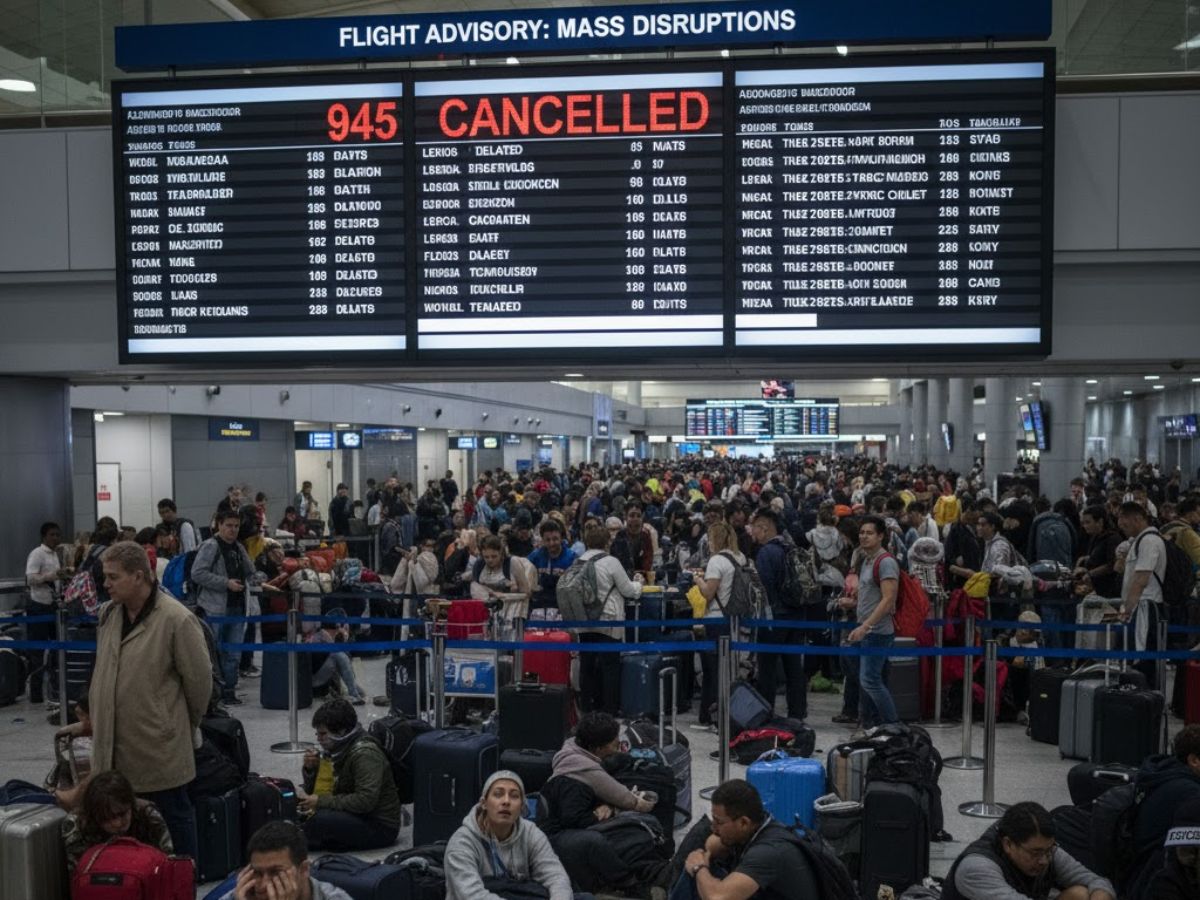
The longest government shutdown in U.S. history has triggered a massive wave of air travel disruption, stranding thousands of passengers. By Saturday, airlines had canceled 945 flights and delayed over 3,300 more, causing havoc at the nation’s major airports and raising grave fears about travel during the Thanksgiving holiday.
Which Airports Were Hit the Hardest?
Travel hubs from coast to coast were impacted by the massive disruption. FlightAware.com data showed where the chaos was concentrated. Charlotte Douglas International Airport was among the worst affected, with nearly 130 cancellations and over 300 delays. Chicago O’Hare International Airport came in second with 280 delays and 83 cancellations. There were also notable problems at John F. Kennedy International Airport in New York (almost 50 cancellations, 300 delays) and Dallas/Fort Worth International Airport (56 cancellations, 189 delays).
Also Read: Interstellar Object 3I/ATLAS Emits ‘First Ever’ Radio Signal, Fuels Scientific Intrigue
How is the Shutdown Causing This Chaos?
Because of the partial government shutdown, there’s a severe lack of staff—most notably air traffic controllers. Even though essential workers are still on duty without pay, many are missing work due to financial stress, affecting operations. Due to a stretched workforce, the Federal Aviation Administration (FAA) has been compelled to reduce services, which has resulted in a cascade of delays and cancellations as the system strains to maintain schedule and safety.
What Does This Mean for Thanksgiving Travel?
The situation poses a severe threat to one of the busiest travel weeks of the year. Transportation Secretary Sean Duffy issued a stark warning, stating that flying for the Thanksgiving holiday is “likely to be tortuous for travellers, even if the government shutdown ends today.” He implied that resolving the issue right away may still fall short of restoring and stabilizing the air traffic control system, leaving many holiday flights exposed to possible last-minute cancellations.
Are There Broader Economic Impacts?
Yes, the ripple effects extend beyond passenger travel. A critical fact is that nearly half of all U.S. air freight is transported in the cargo holds of passenger aircraft. The large-scale cancellation of passenger flights has a direct impact on supply chains. It can cause higher shipping costs, delayed deliveries, and possible shortages, adding more economic pressure to the ongoing travel crisis.
Also Read: Where Was Carnell Tate? Absence Sparks Questions in Ohio State’s Win Over Purdue
Why is Hawaii Asking for Special Treatment?
Hawaii has officially asked to be exempt from flight reduction mandates, pointing to its isolation. In a letter to Secretary Duffy, the state’s Department of Transportation stressed that air travel is vital for its economy, medical and food supplies, and national defense.