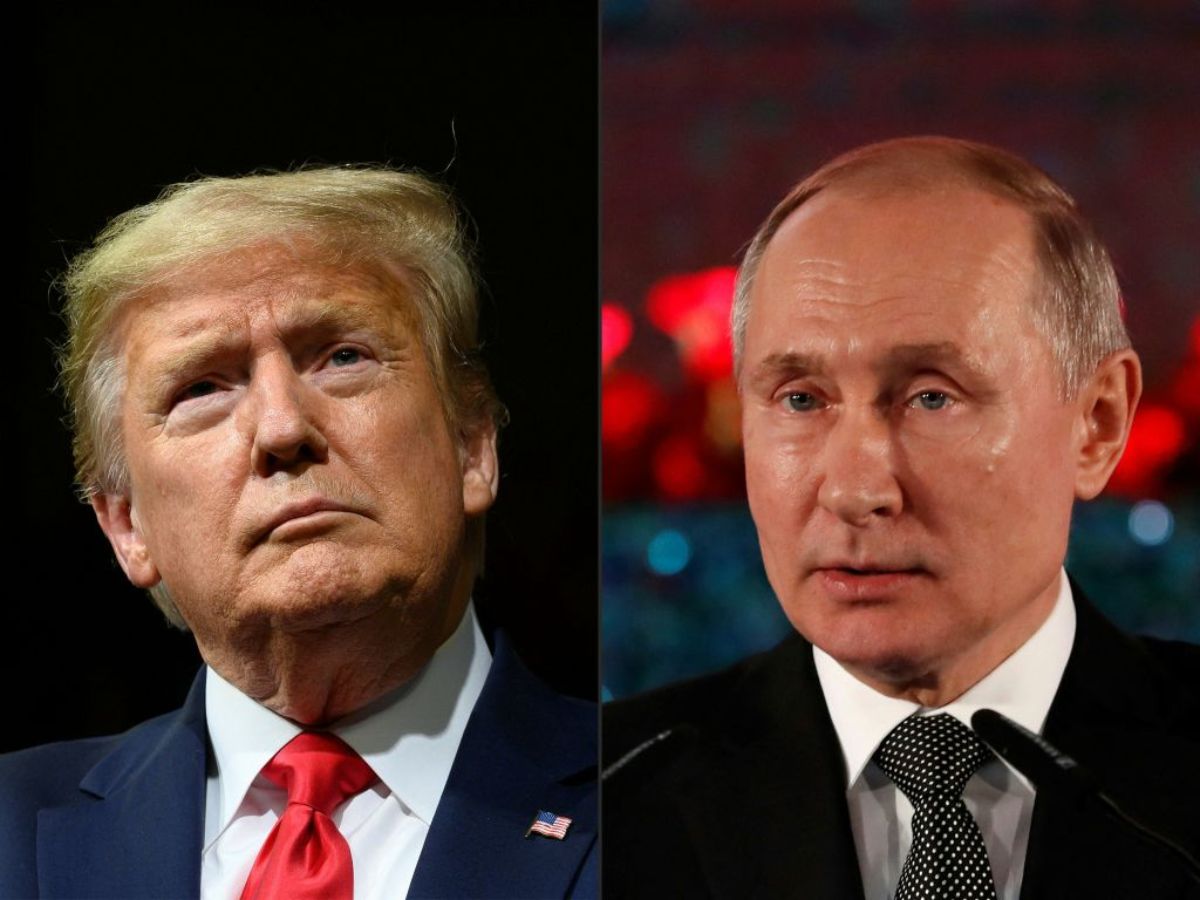
With a new policy that specifically targets countries who continue to buy Russian oil, the United States is indicating a major uptick in its economic assault against Russia. As in Within In a stark warning, President Donald Trump confirmed his readiness to impose a “second phase” of sanctions, a move that could have severe consequences for countries like India, which the U.S. has explicitly named as a primary focus.
This new phase aims to cripple the Russian economy by cutting off its vital energy revenue, but it risks creating major diplomatic and economic friction with American partners.
What Did Trump Say?
The confirmation came directly from the President. Trump gave a brief response when asked by reporters on Sunday if he was ready to slap more penalties on Russia: “Yeah, I am.” The administration’s intention to go beyond the initial steps and increase economic pressure on Moscow is reaffirmed in this succinct statement.
“Are you ready to move to the second phase of sanctions against Russia?”@POTUS: “Yeah, I am.” pic.twitter.com/I2tGWy6QJC
— Rapid Response 47 (@RapidResponse47) September 7, 2025
What is the US Treasury Secretary’s Warning?
Earlier the same day, U.S. Treasury Secretary Scott Bessent laid out the grim calculus behind the new strategy. In an interview with NBC News’ “Meet the Press,” he framed the conflict as an economic race.
“We are in a race now between how long can the Ukrainian military hold up, versus how long can the Russian economy hold up?” Bessent said. He argued that coordinated action with European allies to impose “secondary tariffs” on countries that buy Russian oil could force a decisive outcome. “The Russian economy will be in total collapse, and that will bring [Russian] President [Vladimir] Putin to the table.”
Also Read: Khamenei Urges ‘Muslim Nations’ to Cut Ties with Israel Amid Gaza Conflict
How Does This Specifically Target India?
The statements from both Trump and Bessent are a direct warning to India. Last week, President Trump explicitly identified India as “the largest purchaser [of Russian oil] outside of China” and revealed that he had already imposed “secondary sanctions” on the country.
Most alarmingly for New Delhi, Trump indicated that the current penalties are just the beginning, noting that he hasn’t done “phase two or phase three yet.” This clearly signals that India is a primary target for the next round of escalated measures.
What Sanctions is India Already Facing?
The economic pressure on India has already been mounting. The Trump administration has imposed a combination of tariffs that have significantly impacted Indian exports:
- 25 per cent reciprocal tariffs on certain goods.
- An additional 25 per cent levy specifically for India’s purchases of Russian oil.
This brings the total duties imposed on some Indian goods to a staggering 50 per cent, among the highest tariff rates in the world.
How Has India Responded to the US Tariffs?
The acts of the United States have been harshly denounced by the Indian government.
It has formally called the tariffs “unjustified and unreasonable,” arguing that its energy imports are a matter of national economic security and necessary to ensure stable and affordable fuel prices for its population..
This paves the way for a major diplomatic confrontation if the U.S. proceeds with its threatened “phase two” sanctions, expected to impose even harsher economic penalties.
Also Read: How Will Be The Next Vice President Elected? Date, Process, and Result Calculation
What are “Secondary Tariffs” and How Do They Work?
Unlike direct sanctions that target Russia itself, “secondary tariffs” are a tool to enforce those primary sanctions. Their method of operation involves penalizing third-party nations (such as India) that persist in conducting commerce with the sanctioned country (Russia).
By placing high tariffs on goods from these third-party nations, the United States hopes to make doing business with Russia more costly than complying with its demands, thereby pressuring the international community to isolate the Russian economy.