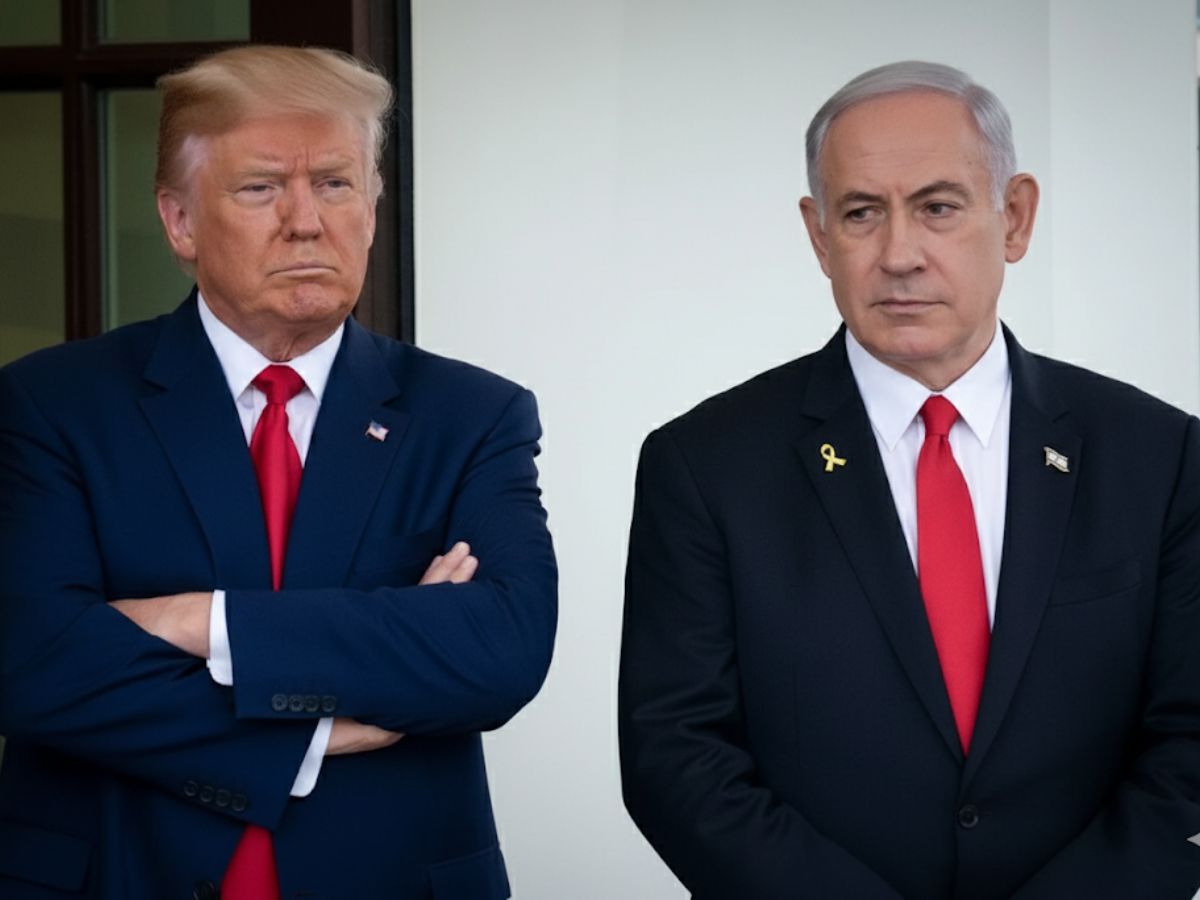
A significant rift is emerging between the United States and its closest Middle Eastern ally, driven by the personal frustrations of the American president. According to an exclusive report by The Wall Street Journal, US President Donald Trump has grown increasingly exasperated with Israeli Prime Minister Benjamin Netanyahu, whom he accuses of repeatedly defying his wishes by prioritizing military operations over negotiations to end the Gaza war.
What is the Source of Trump’s Anger?
President Trump’s frustration stems from a fundamental disagreement on strategy. Trump has told aides that Netanyahu prefers using overwhelming force to compel Hamas’s surrender instead of accepting the President’s vision for a negotiated ceasefire deal. This private irritation spiked dramatically last week following an Israeli strike in Qatar that targeted Hamas negotiators, a move seen as a direct affront to Trump’s diplomatic efforts.
The depth of Trump’s exasperation was captured in a blunt remark to senior aides, including Secretary of State Marco Rubio. According to officials briefed on the conversation, Trump said of Netanyahu, “He’s f—ing me.” This comment reveals the personal nature of the perceived defiance, though it has not, so far, led to any public shift in US policy.
Also Read: Trump Hails Jimmy Kimmel Suspension as Critics Decry ‘Government-Instigated Censorship’
How Has US Policy Actually Changed?
Despite the private anger, there has been no tangible change in the US-Israel relationship. President Trump has not applied public pressure or conditioned the vast American military and diplomatic support for Israel. He has continued to concentrate his public criticism on Hamas, issuing warnings that the group will face more violence if it resists.
Analysts see this as a calculated approach by Netanyahu. Damian Murphy, a former Democratic staff director on the Senate Foreign Relations Committee, stated, “Netanyahu knows that while the White House may grumble a bit, there really is no downside to an ‘ask forgiveness, not permission’ approach.” The Israeli leader appears to believe he can withstand Trump’s occasional fury without consequence.
What are the Broader geopolitical Implications?
The defiance is creating headaches for Trump beyond his personal pride. Shalom Lipner, a former adviser to multiple Israeli prime ministers, told the WSJ that Netanyahu’s moves have “prolonged the Gaza war and complicated Washington’s regional diplomacy.” He added, “Netanyahu’s moves have created trouble for Trump with other U.S. allies in the region and made the expansion of the Abraham Accords excruciatingly difficult.”
This is a critical point for Trump, who repeatedly cites his role in brokering the original Abraham Accords and openly seeks a legacy-defining normalization deal between Israel and Saudi Arabia. Netanyahu’s prosecution of the war threatens to derail these ambitious diplomatic goals.
Also Read: Tsunami Warnings Issued After Powerful Magnitude 7.8 Earthquake Strikes Russia’s Kamchatka Peninsula
Is the Personal Relationship Broken?
Interestingly, despite the fury, the personal rapport between the two leaders is described as remaining “very, very tight” by a former Netanyahu spokesman. The relationship has survived previous ruptures, notably when Trump called Netanyahu disloyal and said “F**k him” after the Prime Minister congratulated Joe Biden on his 2020 election victory.
Furthermore, after the Qatar strike, Trump placed two phone calls to Netanyahu: one to voice his displeasure, and another, more cordial, to ask about the operation’s results. As former Israeli ambassador to Washington Michael Oren noted, “The chances are, if our operation in Doha succeeded, Trump wouldn’t have condemned it, he would have taken credit for it. He likes winners.”
For now, the alliance remains strong in public, even as tensions simmer behind closed doors. Israeli officials insist relations with Washington remain excellent and dismiss reports of discord as “fake news.”