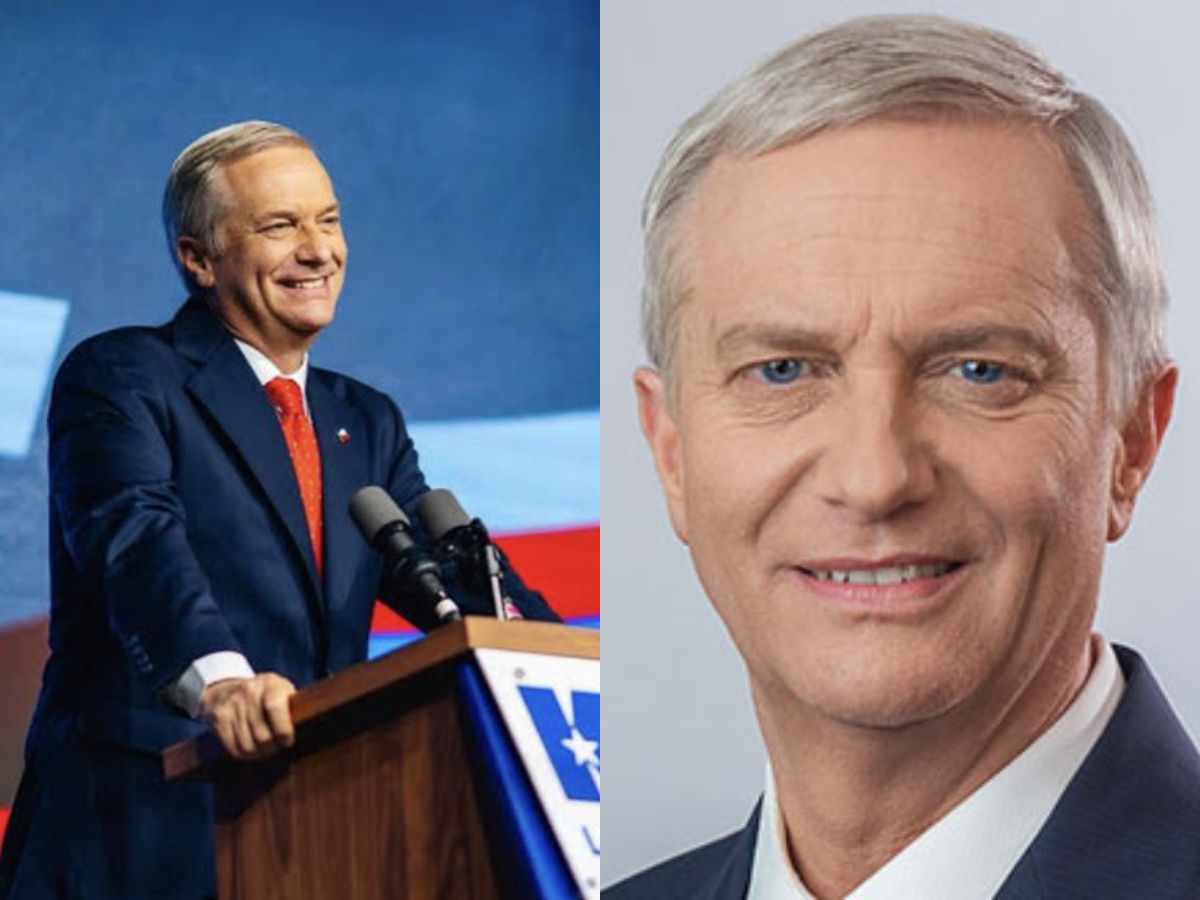
Chile has chosen a far-right leader in a major political shift. José Antonio Kast, head of the Republican Party, secured victory in the country’s 2025 presidential election with about 58 % of the vote, defeating Jeannette Jara of the centre-left coalition. His win marks the most pronounced rightward turn in Chile’s politics since the end of military rule in 1990.
Gracias Chile.
A trabajar! 🇨🇱 pic.twitter.com/WsushQjR1D— José Antonio Kast Rist 🖐️🇨🇱 (@joseantoniokast) December 15, 2025
Who is Jose Antonio Kast?
Jose Antonio Kast is a Chilean lawyer and politician who has emerged as one of the country’s most polarising conservative figures. Born in Santiago and raised in Paine, south of the capital, Kast comes from a large family of German immigrant background. He studied law at the Catholic University of Chile before entering politics at a young age.
Kast began his political career with the right-wing Independent Democratic Union (UDI), where he served as a lawmaker for several years. Over time, he grew dissatisfied with what he saw as the party’s shift toward moderation. In 2016, he broke away and founded the Republican Party, positioning himself as a hardline conservative focused on law and order, national identity, and traditional values.
A devout Catholic and father of nine, Kast is known for his strong views on social issues, though he softened his rhetoric during the latest election campaign. His rise reflects changing voter priorities in Chile, where concerns about crime, migration, and economic stability have increasingly outweighed debates over social reform.
Election Results and Historic Shift
In the runoff election, Kast defeated his leftist rival Jeannette Jara, who received roughly 41 % of the votes. The result was decisive and came with Jara’s quick concession, writing on social media that “democracy spoke loud and clear.” Outgoing President Gabriel Boric also called Kast to congratulate him.
This election marks the first time since Chile returned to democracy that a leader with openly far-right views has won the presidency by such a margin. Kast’s victory follows growing public concern over crime, immigration and economic uncertainty.
Jose Antonio Kast: Early Life & Career
José Antonio Kast was born in Chile and has long been involved in politics. He comes from a conservative family with deep historical roots; his father, Michael Kast, fought in the German army during World War II before settling in Chile. Kast built his political career as a lawmaker and conservative activist.
Previously a member of a mainstream right-wing party, he broke away and founded the Republican Party to push a harder conservative agenda. He first ran for president in 2017 and again in 2021, losing both times. His persistence paid off in 2025, when he harnessed shifting voter concerns to secure victory on his third attempt.
Campaign Focus: Security and Migration
Kast’s campaign centred on public security and immigration control — issues that resonated strongly with many Chilean voters. He warned that Chile was facing a “crisis” of crime and rising undocumented migration, pledging an emergency government to restore order.
After the election, Kast vowed to be “the president of all Chileans” and promised to restore peace, order, growth, and hope.” He also said Chile “will be free from crime again, free from anguish, free from fear.”
Analysts note that his security message struck a chord amid growing unease about violent crime and undocumented migrants, even though Chile remains relatively safe compared with other countries in the region.
Policy Positions and Controversies
Kast is known for his hardline stances on social and cultural issues. He has previously opposed abortion, same-sex marriage and gender law reforms, though during the campaign he emphasised security and migration over culture war topics to broaden his appeal.
He also admires former Salvadoran President Nayib Bukele’s tough tactics against gangs and has pledged harsher penalties for crime and stronger police powers.
Kast’s historical links to Chile’s military dictatorship under General Augusto Pinochet have drawn criticism. Human rights groups see his rise as a controversial revival of old political tensions.
Regional and Global Context
Kast’s victory echoes a broader rightward shift seen in parts of Latin America. Leaders with tough positions on security and migration are gaining traction in countries such as Argentina and Ecuador. His win has already drawn praise from far-right figures abroad and interest from political allies in the United States.
At the same time, analysts warn that Kast may face challenges in implementing his full agenda. His Republican Party does not control a majority in Congress, meaning he will need to negotiate with other parties to pass major legislation.
What Kast’s Win Means for Chile?
Kast’s election is a historic turning point for Chile’s democratic politics. It reflects a shift in voter priorities from social justice and constitutional reform — which dominated in 2021 — to security, migration and public order in 2025.
His presidency could reshape Chile’s domestic policies and influence the nation’s role in regional politics. As he prepares to take office, the coming years will test whether his hardline vision can translate into effective governance in a deeply divided political landscape.