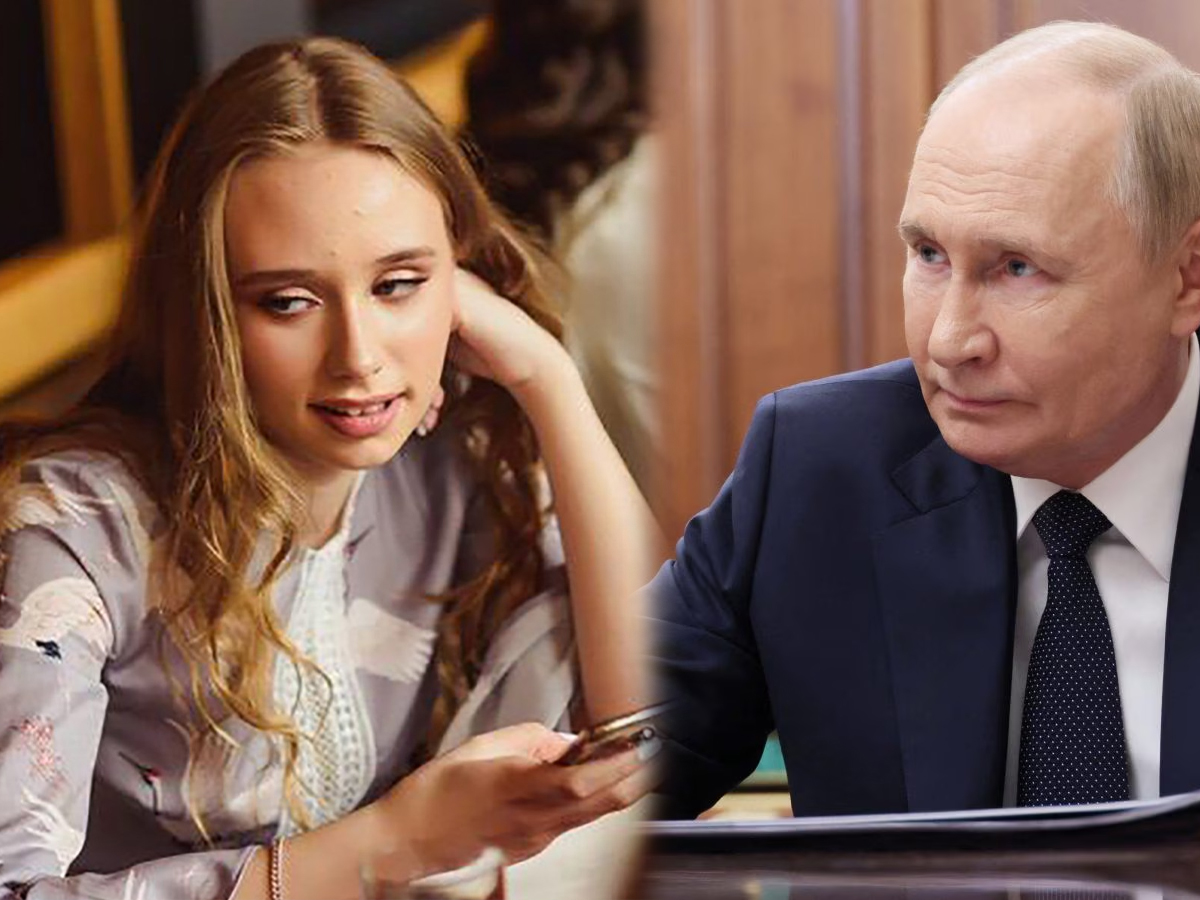
A young woman long rumoured to be the secret daughter of Russia’s leader has reappeared — not as a glamour-obsessed socialite, but as a quiet art worker in Paris. Under the name Elizaveta Krivonogikh (also known as Elizaveta Rudnova / “Liza”), she has reportedly abandoned her former lavish lifestyle and is now associated with Parisian galleries that promote anti-war and dissident voices.
She recently posted on Telegram phrases like “the man who took millions of lives and destroyed mine,” which many interpret as a veiled public break, possibly from Vladimir Putin.
Who Is Elizaveta Krivonogikh? Daughter of Vladimir Putin
Krivonogikh is widely believed to be the daughter of Vladimir Putin and his former cleaner, Svetlana Krivonogikh. Her mother’s sudden rise to immense wealth after the alleged affair drew scrutiny over her connections to Kremlin circles.
For years, Elizaveta lived a life of luxury, travelling in private jets, wearing high-end designer fashion, and appearing at elite nightclubs and exclusive events.
But her glamorous online presence disappeared abruptly around the time Russia launched its invasion of Ukraine in 2022. After vanishing from social media, she quietly resurfaced in Paris under a new identity, “Rudnova,” where she enrolled in an arts management school and intentionally stepped out of the public eye.
Re-Emergence in Paris: Anti-War Art and Public Critique
In 2025, it emerged that she works at two French art galleries, L’Galerie and Studio Albatros, known for hosting exhibitions by Russian and Ukrainian artists critical of the war.
A prominent émigré artist condemned her work there, arguing that it’s morally troubling for someone linked to a regime accused of war crimes to curate anti-war art. Others defended her hiring, calling her a diligent, apolitical worker.
Ukrainian journalists tracked down Vladimir Putin’s secret daughter, Lisa Krivonogikh, in a Paris art gallery — and invited her to come to Kyiv “as air defense.” She replied she couldn’t help. She said she got to Paris by accident. pic.twitter.com/1DhalUKhE7
— Simon Ateba (@simonateba) December 4, 2025
In her Telegram channel, she posted, “The man who took millions of lives and destroyed mine.”
Many observers see this as a direct, symbolic condemnation of her supposed father.
Why Her Return Sparks Reaction
If the rumors are true, her public stance marks a rare moment: someone so closely tied — allegedly — to the Russian president publicly distancing herself from him and condemning war.
For the exiled Russian-speaking art community in Paris, her presence raises ethical questions: can someone with Kremlin ties claim a space in anti-war protest and dissent culture? Some artists feel uneasy; others believe individuals must be judged by their own actions, not ancestry.
Her transformation — from elite socialite to quiet gallery worker — underscores a dramatic personal shift, possibly driven by remorse, guilt, or a search for identity.
What She Says And What She Means
Elizaveta’s own words remain cryptic. She never names Putin. But in the current climate, war in Ukraine, sanctions on her mother, investigations into Kremlin cronies — the meaning is hard to ignore. Her decision echoes among exiled Russians and Ukrainians seeking peace, and among artists grappling with trauma, memory, and justice.
Her public rebuke seems to come with a price: scrutiny, suspicion, moral judgment. Yet she, now “Liza”, continues to show up: at the gallery, at exhibitions, working quietly, avoiding flamboyance. This may be her way of reclaiming identity, agency, and humanity.
What This Story Means for Wider Audiences
If legitimate, her voice adds a powerful symbol of dissent from within circles once considered untouchable.
Her presence in anti-war art spaces pushes a hard question: can personal transformation — even from privilege — contribute meaningfully to justice and reconciliation?
For media and public alike, the tale of Elizaveta Krivonogikh / Rudnova challenges assumptions about guilt, redemption, and the long shadow of political power.
Looking Ahead: What to Watch
In the coming weeks and months, eyes will watch for:
- Any further public statements from Elizaveta — whether more direct or symbolic.
- Response from her mother, allies, or Kremlin-linked circles.
- Art shows, exhibitions, or collaborations she helps organise — and how peers in the dissident world respond.
- Whether this marks a broader trend: children of powerful figures breaking away from legacy, seeking their own voice.
In any case, the emergence of “Liza Rudnova” forces a reckoning: with identity, with history, and with conscience.