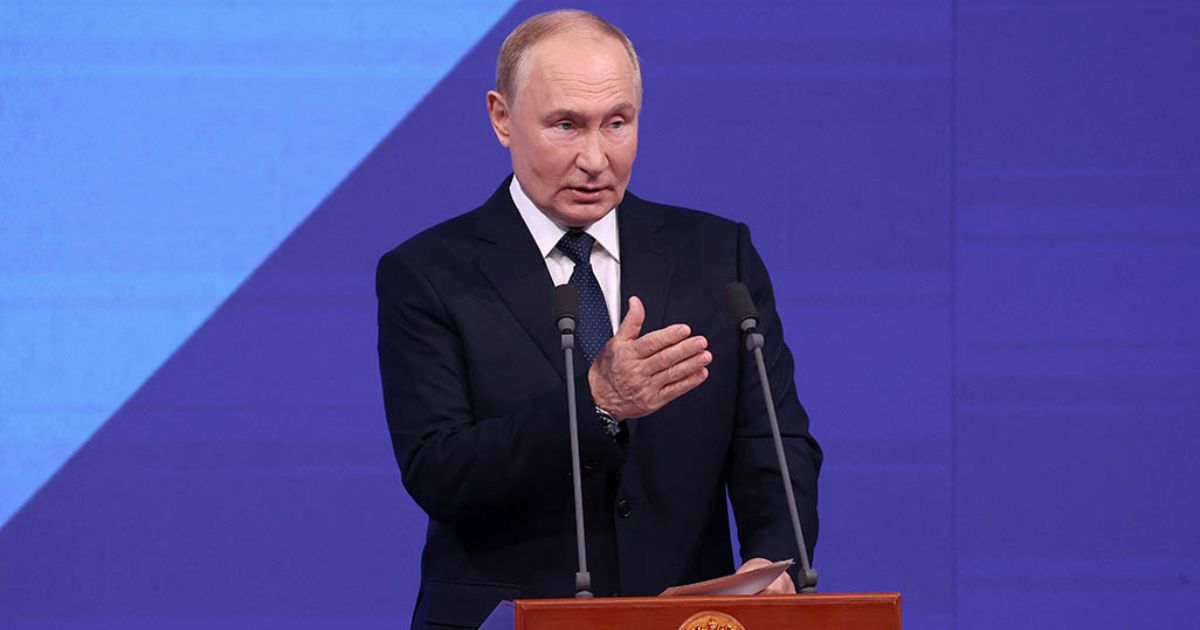
Russian President Vladimir Putin has indicated a historic turn by consenting in principle to allow the United States and European allies to offer Ukraine a security assurance on the model of NATO’s Article 5. The action, characterized by U.S. special envoy Steve Witkoff as “game-changing,” would transform the future of the war and the position of Ukraine within Europe’s security order.
A Breakthrough in Alaska Talks
Witkoff, who joined Friday’s Alaska summit together with U.S. Secretary of State Marco Rubio, disclosed that Moscow had agreed to the option of Article 5-style guarantees the bedrock of NATO’s defense alliance. Article 5 provides for an attack on one member to be viewed as an attack on all, a guarantee that Ukraine has been wanting for quite some time by seeking NATO membership.
We were able to secure the following concession: that the United States could provide Article 5-like protection,” Witkoff told CNN’s State of the Union. “This is one of the actual reasons Ukraine desires to be in NATO.
Russia also agreed allegedly to enact legislation against encroaching on the sovereignty of other European countries, although the terms of the pledge are not known. Witkoff emphasized that it was just one component of a larger framework being constructed toward a potential peace agreement.
Europe Responds with Cautious Optimism
The declaration caused restrained hope in Europe. European Commission President Ursula von der Leyen hailed what she termed a “remarkable step forward,” standing alongside Ukrainian President Volodymyr Zelenskyy in Brussels.
“We welcome President Trump’s openness to contribute to Article 5-like security guarantees to Ukraine, and the coalition of the willing, including the EU, stands ready to do its part,” von der Leyen said.
Zelenskyy also greeted the breakthrough but with a warning about how unclear it was about how guarantees of this sort would be made to function in reality. “It is good that America has agreed to cooperate with Europe to offer security guarantees for Ukraine,” he said. “But still, there are no ideas about how America’s contribution, Europe’s contribution, and the EU’s contribution will interact.”
He also tied Ukraine’s accession to the EU to its long-term security, stating that guarantees must be “real and working, not paper ones.”
ALSO READ: Donald Trump Claims ‘Big Progress’ With Russia After Alaska Summit With Putin
Ceasefire Takes a Back Seat
Perhaps the most unexpected outcome of the summit was Trump’s pullback from his previous call for a quick ceasefire. Witkoff justified the move by saying the administration had won sufficient concessions to turn attention to long-term peace agreements.
“We covered almost all the other issues necessary for a peace deal,” Witkoff explained. “We began to see some moderation in Russia’s thinking.”
Rubio, who appeared on multiple Sunday talk shows, stressed that a final peace agreement remained distant. “We identified areas of potential agreement, but there are still major disagreements,” he said. “We’re not at the precipice of a peace agreement.”
He also rejected new sanctions on Russia, saying they had the potential to sideline sensitive negotiations. “The minute you put in new sanctions, your negotiating hand will be seriously weakened,” he said to NBC’s Meet the Press.
What Comes Next
Zelenskyy and European officials will sit down with Trump in Washington on Monday to resolve outstanding issues, including the borders of Ukraine and whether there will be a land swap. Witkoff conceded that those talks could not be conducted with Putin by himself.
“The fundamental issue is ultimately in the control of the Ukrainians,” Witkoff said. “We hope Monday brings clarity, and hopefully a peace deal very soon.”
Though a complete accord remains distant, American and European officials have indicated that for the first time there is momentum toward a conclusion of the war something thought to be impossible in the past.