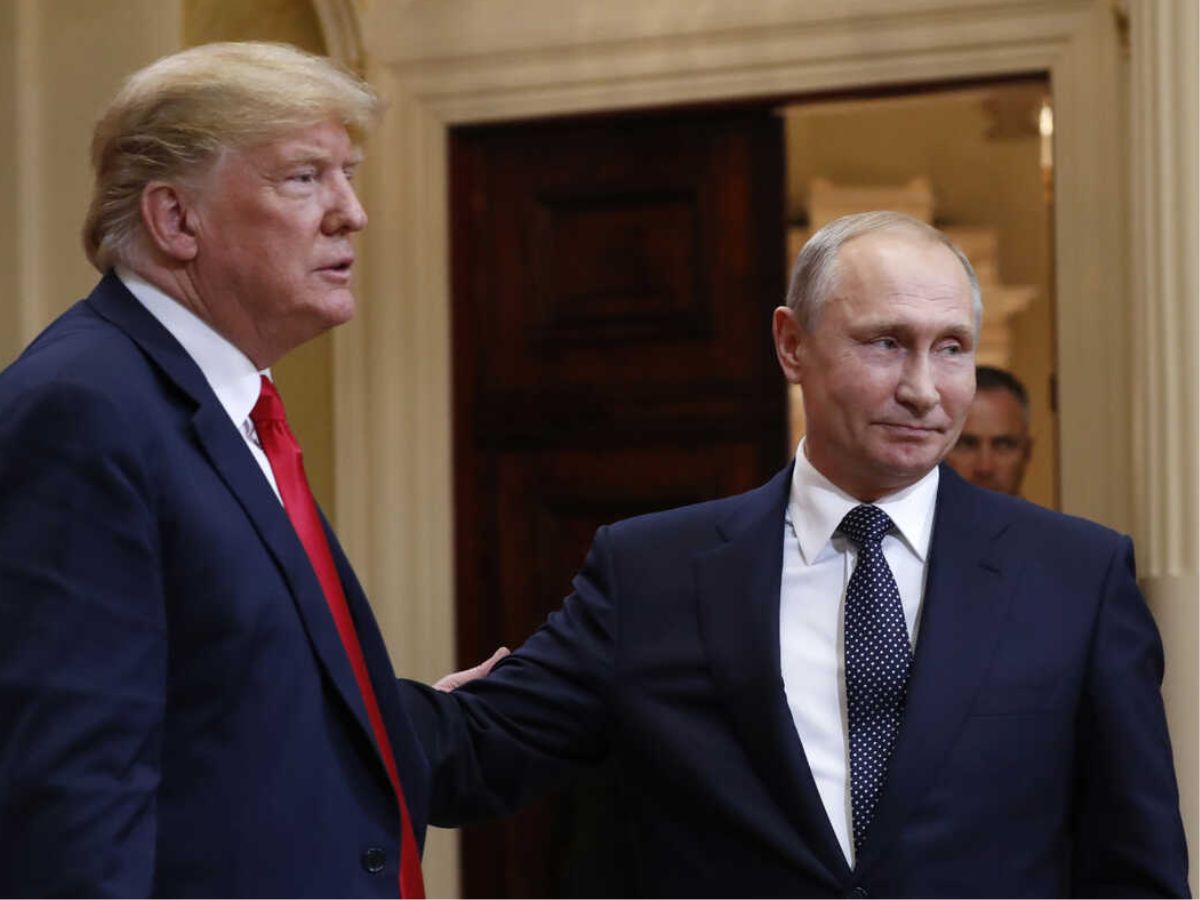
On the eve of a summit with U.S. President Donald Trump, Russian President Vladimir Putin signaled that the two countries could strike a new deal on nuclear weapons as part of a broader effort to enhance global peace. The announcement comes as Trump pressures Putin to end the three-and-a-half-year-long war in Ukraine, a conflict that has escalated East-West tensions to levels unseen since the Cold War.
Why Nukes Are on the Agenda Amid Ukraine Talks
While the summit’s primary focus is the Ukraine war, Putin’s mention of nuclear weapons is strategic. Analysts say it allows Russia to frame the dialogue as part of a larger security and arms control discussion, potentially persuading the U.S. to delay new sanctions on Russia or buyers of its oil and other exports. It could also open the door for cooperation on trade, economic issues, and other geopolitical concerns where Moscow believes there is untapped potential.
Despite Russian advances in Ukraine, Kyiv’s calls for a full and immediate ceasefire have been rebuffed, reflecting Moscow’s insistence that the conflict is part of a complex security landscape. Putin might gain leverage in larger negotiations if he becomes involved in nuclear matters.
Aslo Read: Trump Claims ‘Again’: Averted a Nuclear Crisis Between India and Pakistan
Putin and Russia’s Nuclear Posturing
Throughout the Ukraine war, Putin has repeatedly highlighted Russia’s nuclear arsenal, warning that direct confrontation could trigger World War Three. These warnings include verbal statements, military exercises, and a lowering of the threshold for nuclear weapon use.
Russia’s large nuclear stockpile gives it significant geopolitical weight, allowing Putin to negotiate with Trump as an equal on global security matters. The Federation of American Scientists estimates that China has 600 nuclear warheads, the United States has roughly 3,700, and Russia has about 4,309 nuclear warheads.
Existing Nuclear Treaty: New START
The New START treaty, signed in 2010 by Barack Obama and Dmitry Medvedev, limits the number of deployed strategic nuclear warheads to 1,550 each, with a maximum of 700 long-range missiles and bombers. President Biden extended the pact in 2021, but Putin halted Russia’s participation in 2023 while maintaining warhead limits.
Trump recently stated that he supports maintaining the treaty limits, emphasizing that letting such agreements expire could pose “a big problem” for global security. Analysts caution that in the absence of a replacement or extension, both sides may cross strategic boundaries, increasing the likelihood of an arms race.
Other Nuclear Flashpoints
Tensions extend beyond strategic warheads. Earlier this month, Trump said he ordered two U.S. nuclear submarines closer to Russia in response to comments from Dmitry Medvedev. Meanwhile, intermediate- and short-range missiles are becoming a contested domain. Russia no longer observes restrictions on deployment, and the U.S. plans to station SM-6, Tomahawk, and hypersonic missiles in Germany starting in 2026.