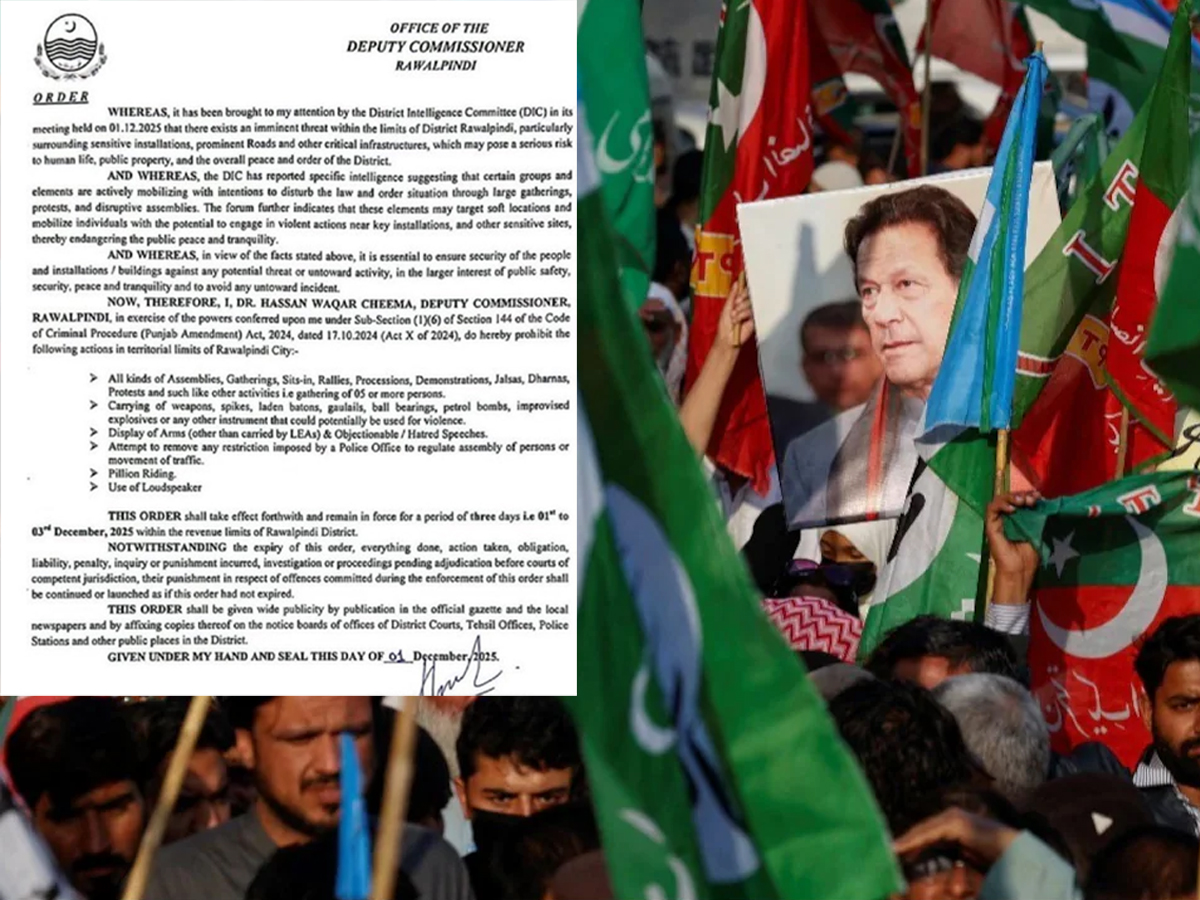
The authorities in Rawalpindi have imposed a three-day curfew on public gatherings, starting December 1, just days before a large protest planned by supporters of jailed former Prime Minister Imran Khan. The measure, invoked under Section 144 of the Code of Criminal Procedure, prohibits all rallies, sit-ins, processions, and even small assemblies of five or more people.
Officials say the move aims to prevent possible unrest sparked by rumours over Imran Khan’s health and demands for access to him by his family and supporters. With mounting tension, the government has sealed roads to the prison and deployed heavy security in key zones.
What the Order Bans in Rawanpindi: Is Imran Khan Alive?
Under the restrictions:
- All forms of assemblies, protests, dharnas, and political rallies are banned in the district.
- Carrying weapons, loudspeakers, or incendiary items is strictly prohibited.
- Pillion riding on two-wheelers and the use of loudspeakers are also disallowed.
- Security authorities warned that violations will invite immediate legal action.
Authorities justified the restrictions by citing “credible intelligence” about groups planning disruptive activities near sensitive sites. Their goal: to maintain public peace and prevent possible violence.
Why Tensions Are So High: Imran Khan’s Health Rumours & PTI Demands
Supporters of Imran Khan’s party, Pakistan Tehreek-e-Insaf (PTI), have threatened massive protests across Rawalpindi and Islamabad. They demand access to Khan, whose family says they haven’t had verifiable contact with him in weeks. His son claimed the lack of communication feels like “psychological torture,” and called for transparency about his father’s condition.
The protests are scheduled outside the jail holding Khan and at the federal capital’s high court, with PTI leaders calling for a “right to know” what is happening. Tensions have soared amid widespread speculation over whether prison authorities are hiding something from the public and Khan’s family.
Security Clampdown: Jail Fortified, Roads Sealed, Imran Khan Alive?
As the clock ticked towards the protest date, the authorities moved fast, they blocked roads leading to the prison, set up checkpoints, and deployed hundreds of security personnel to guard sensitive installations. Law-enforcement agencies and paramilitary forces now patrol near the jail and key government buildings.
All key entry and exit points around the city — especially near the jail — remain closed. The move underscores the government’s intention to prevent large gatherings and avert any potential unrest.
What This Means for Pakistan: Stability vs. Democratic Rights
The crackdown signals the seriousness of the authorities about preventing protests. However, many view the restrictions as a blow to democratic rights and freedom of assembly.
For supporters of Imran Khan, the order feels like a denial of their right to peaceful protest or submit grievances. For the government, it is a precaution aimed at preserving public order and averting violence.
The coming days will test whether peace holds — or if further protests and widespread unrest become inevitable.