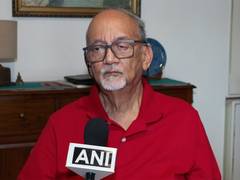
New Delhi [India], June 15 (ANI): Dinkar P Srivastava, Former Indian Ambassador to Iran, on Monday asserted that the technical hurdles blocking a comprehensive US-Iran nuclear settlement are highly manageable, arguing that Israel presents absolute opposition to any diplomatic framework with Tehran.
Addressing the 60-day diplomatic window opened by the Washington-Tehran memorandum of understanding, Srivastava stated that while current priorities have focused on easing immediate military and maritime tensions, resolving the deferred nuclear file will be the easiest hurdle to clear.
“The nuclear issue is easiest to handle because it was resolved in the 2015 deal,” the former ambassador stated, emphasising that the underlying technical framework remains sound.
“President Trump’s objection, or the objection of hardliners in the US, was that it was short-term. You can extend the period of the agreement or the verification mechanism–that’s not difficult,” he stated.
The former ambassador further dismissed standard political criticisms regarding Iran’s past enrichment operations, clarifying that the 3.67% uranium enrichment threshold permitted under the original 2015 accords fell strictly within the boundaries of the Nuclear Non-Proliferation Treaty (NPT), meaning it “was not giving them anything extra.”
“The second objection was that it allowed Iran to continue enrichment the 3.67% threshold, which is allowed under NPT, so that in any case was not giving them anything extra,” he said.
However, the former Indian envoy warned that the Israel’s strategic goals are fundamentally incompatible with any diplomatic compromise, affirming that they “simply want Iran’s destruction.”
“As far as Israel is concerned, they have no interest in any agreement with Iran; they simply want Iran’s destruction,” the former ambassador warned. “Therefore, this is not something which can be sustained over the long term,” he added.
Srivastava highlighted that a robust technical blueprint for the upcoming talks already exists, pointing to the Omani-mediated indirect discussions previously held in Geneva, including achieving a verified “zero inventory” state.
“Now going forward a blueprint exists. This is the agreement which was tentatively which was being discussed in Geneva between Iran and US with Oman’s mediation, where Iran had agreed to downblend highly enriched uranium into fuel which could not be used for the nuclear purposes,” he said.
“With a zero inventory of enriched uranium, you cannot build a bomb,” the former ambassador affirmed, urging international negotiators to rely on this existing Geneva framework to finalise a durable, long-term verification regime once the technical nuclear rounds officially commence.
Earlier in the day, following US President Donald Trump’s announcement that the deal with Iran was “complete” and will be signed on Friday, US Vice President JD Vance said that both sides have already “signed the deal digitally”, stressing that any sanctions relief for Tehran as part of the agreement would depend on the Islamic Republic’s compliance with commitments under the agreement.
Speaking to ABC’s Good Morning America, Vance said no financial concessions had been made to Iran following the signing of the deal.
“We already signed the deal digitally yesterday, and there’s been no money released, and that won’t change,” Vance said, responding to a question on whether Iran would receive sanctions relief or access to frozen assets upon signing the agreement.
The US Vice President underscored that the deal would be implemented on a performance-based framework, with sanctions relief linked to concrete actions by Iran as per the agreement.
“Again, this is a performance-based thing. If we see the Iranians making, for example, taking action to eliminate their stockpile of enriched material, then sanctions relief will follow. If we see the Iranians taking action to allow the kind of verification regime that we need to see to know that they’re not going to build a nuclear weapon, sanctions relief will follow,” he said. (ANI)
The article has been published through a syndicated feed. Except for the headline, the content has been published verbatim. Liability lies with original publisher.