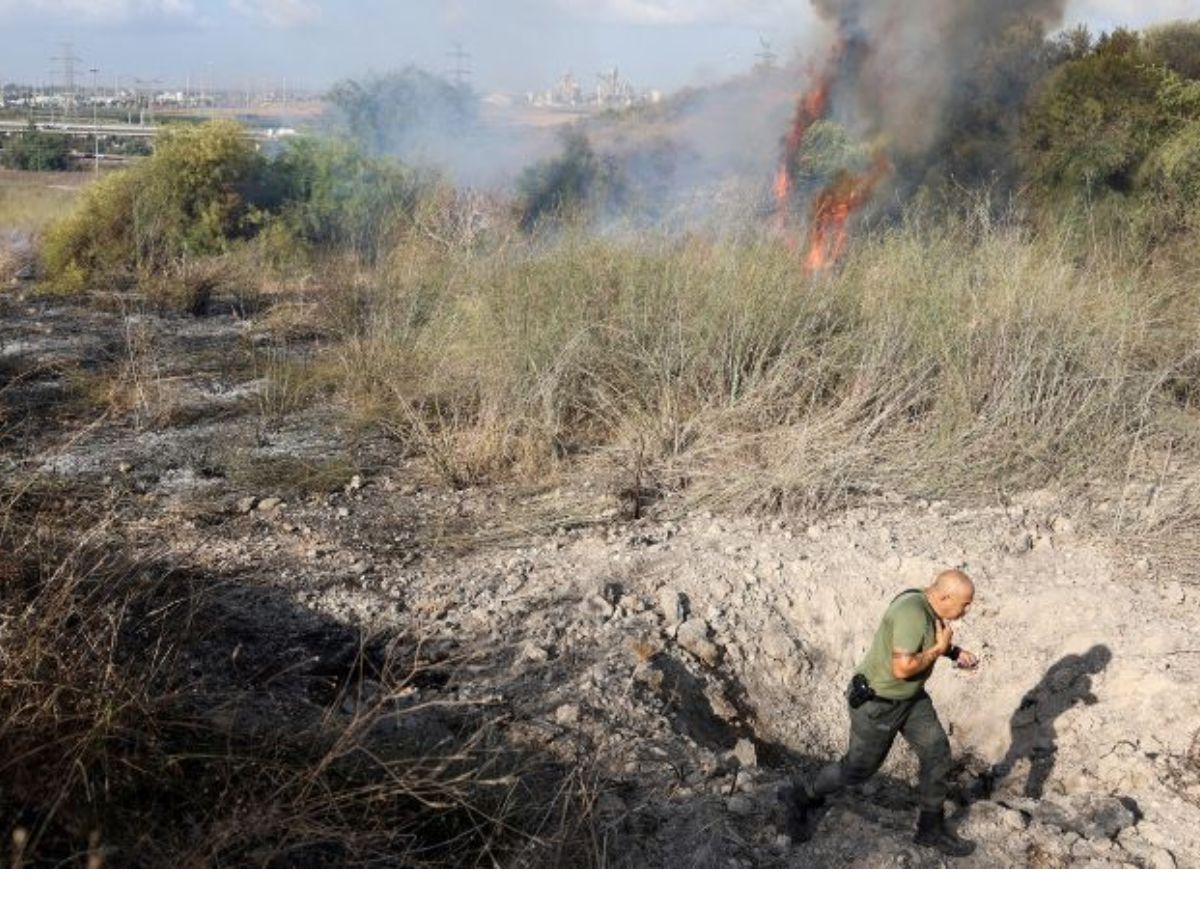
Tensions in the Middle East intensified on Sunday as Israeli Prime Minister Benjamin Netanyahu announced a fresh round of airstrikes on Houthi-controlled territory in Yemen. According to the Israeli government, the strikes targeted the presidential palace in central Sanaa, the capital’s power station, and critical fuel depots. The assault came just days after Houthi militants fired missiles toward Israel, one of which, the Israeli military confirmed, carried a cluster bomb warhead, marking a dangerous new phase in the conflict.
Speaking from the Israeli Air Force command centre in Tel Aviv, Netanyahu praised the “strength and precision” of the country’s air campaign and said the Houthis were “paying a heavy price” for their aggression.
Netanyahu’s Message: “Attackers Will Be Attacked”
In his video statement, Netanyahu left little room for interpretation: “Whoever attacks us, we will attack him. Whoever plans to attack us, we attack them.” His remarks reflect Israel’s long-standing doctrine of pre-emptive and retaliatory strikes against regional adversaries, from Hamas in Gaza to Hezbollah in Lebanon, and now, increasingly, the Iran-backed Houthis in Yemen.
Defence Minister Israel Katz doubled down, insisting that Israel had “destroyed the Houthi presidential palace” in Yemen—though, notably, reports from Sanaa did not confirm such destruction. Regardless, Katz underlined that the attacks were part of a broader air and naval blockade aimed at crippling Houthi infrastructure.
Houthi Escalation: A New Kind of Missile Threat
The Israeli Defence Forces (IDF) said their investigation into Friday night’s missile barrage revealed the Houthis’ first use of a cluster bomb warhead, technology with the potential to cause devastating civilian harm. For Israel, the development signals a dangerous shift: an adversary located nearly 2,000 km away now capable of deploying advanced ballistic technology.
Military analysts suggest this escalation could open another volatile front for Israel, which is already managing multiple flashpoints across the region. “The Houthis are demonstrating a growing sophistication,” one Israeli defence source noted. “But the message Israel is sending back is clear: no matter the distance, retaliation will be swift and overwhelming.”
Also Read: Tug of War in Ukraine: Russia Claims Dnipropetrovsk Village, Kyiv Strikes Back in Donetsk
International Ripples: What Comes Next?
Netanyahu’s bold declaration that “the entire region is learning Israel’s strength” is likely to resonate far beyond Sanaa. Israel’s military campaign in Yemen highlights its expanding reach and willingness to act unilaterally to protect its borders. But it also risks dragging more regional players into an already combustible conflict web that stretches from Gaza and Lebanon to Tehran’s proxy networks across the Middle East.
For now, the Houthis have not confirmed casualties from the latest strikes, and local media outlets in Yemen remain silent on the scale of destruction. What is clear, however, is that the shadow war between Israel and Iran-backed forces is no longer confined to Israel’s immediate neighbours, it is spreading across the map.