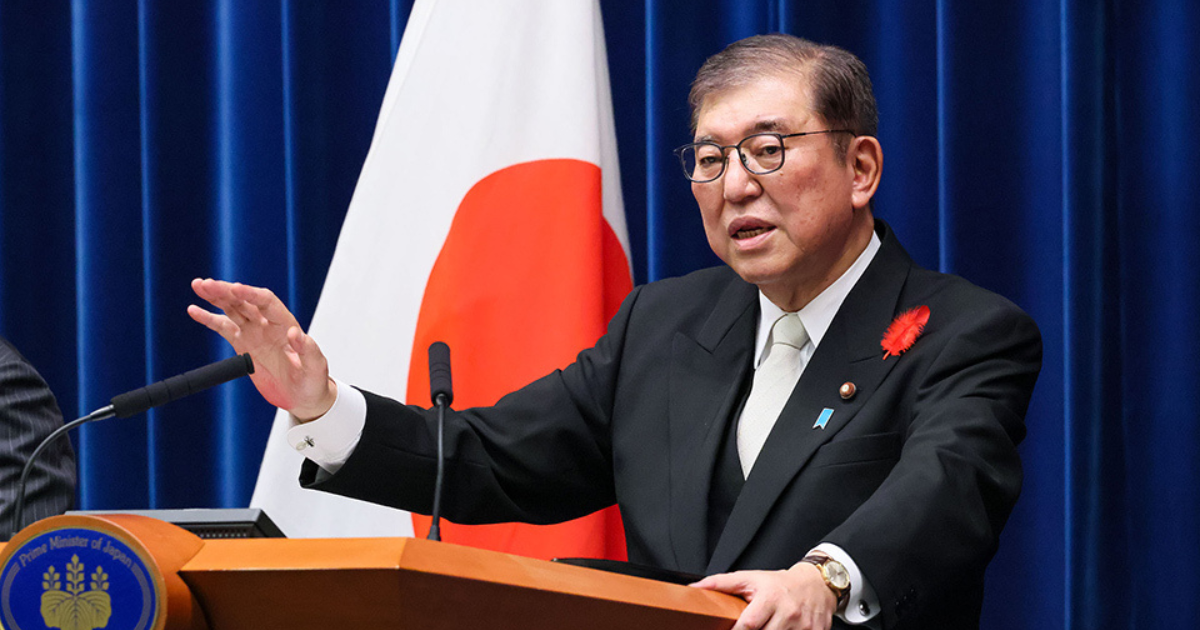
Japanese Prime Minister Shigeru Ishiba dismissed rumours that he had decided to quit after his party’s disappointing performance in the recent election for the upper house of parliament.
Shigeru Ishiba Dispels Resignation Rumours
“I have never said such a thing. Media reports of the facts are totally unfounded,” Ishiba said at the Liberal Democratic Party (LDP) headquarters, resolutely dismissing speculation that he would resign as early as this month.
A number of Japanese media outlets previously said that Ishiba planned to declare his resignation next month, according to sources privy to internal deliberations. The news came just days after Ishiba and former U.S. President Donald Trump launched a trade deal on Tuesday that reduces Japanese car exports’ tariffs and exempts Japan from higher tariffs on other products.
A source close to the prime minister, speaking on condition of anonymity, said that Ishiba had opted not to resign immediately after the upper house election defeat to avoid political instability ahead of the August 1 deadline for finalising the trade deal.
If Ishiba were to resign, it would be the culmination of his term, less than a year into office. His resignation would trigger a leadership race within the ruling LDP at a time when the party is battling increasing challenges from rising political forces.
Japan’s Conservative-Right Gains Support
One such party, the conservative-right “Japanese First” Sanseito party, gained considerable ground in Sunday’s election to the upper house, jumping its seat tally from one to 14. The party won votes with its platform centred on lowering immigration, reducing taxes, and providing economic assistance in the face of increasing living expenses.
Ishiba, 68, a previous defence minister, won the party leadership last year in his fifth bid, beating conservative contender Sanae Takaichi in a runoff election. The LDP, which has ruled Japanese politics for much of the post-war era, is currently faced with a challenging political scene, not holding a majority in either the upper or lower house of parliament after its previous loss in the lower house election in October.
If Ishiba were to resign, his replacement would have to work with a divided legislature and gain the support of opposition lawmakers to be approved as prime minister. Observers advise that any new premier is not likely to call for an early general election, opting instead to restore public confidence before heading to the polls.