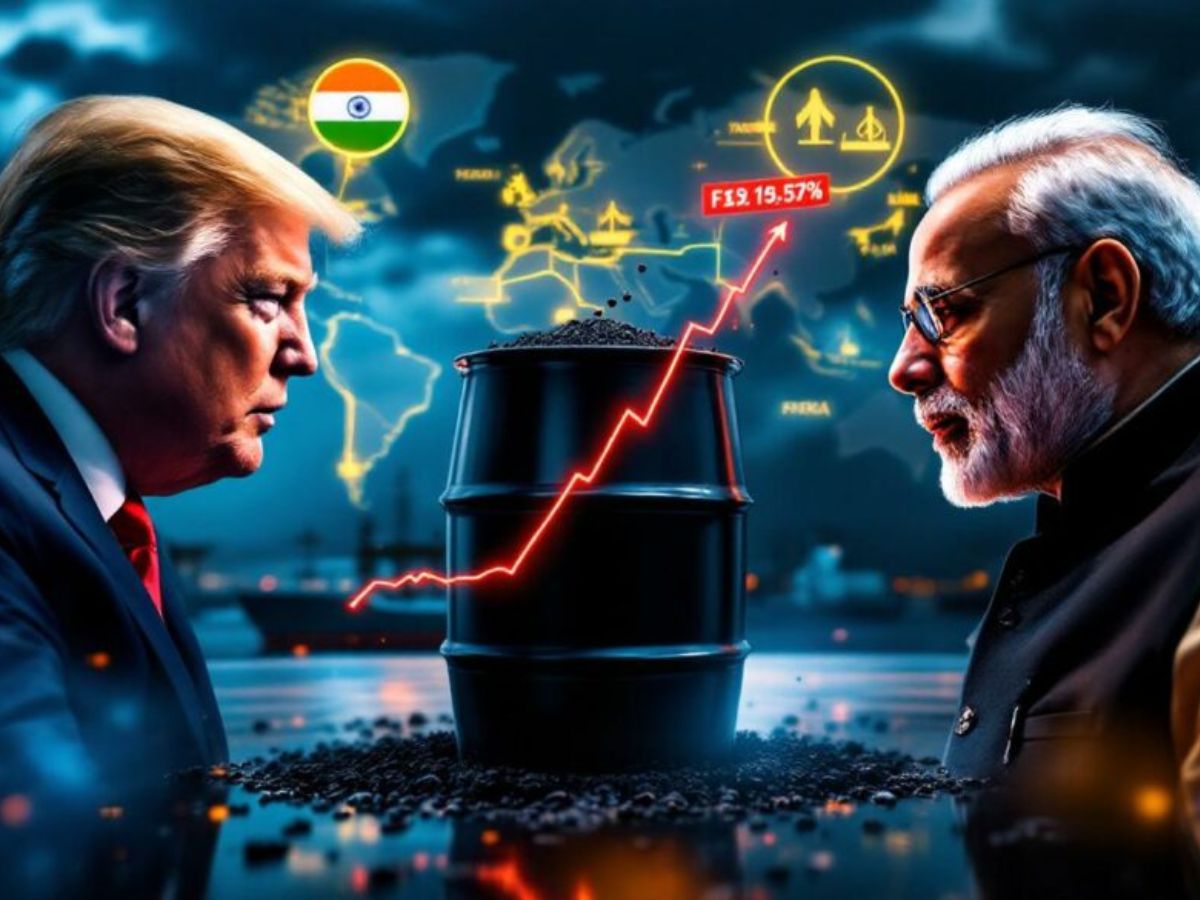
U.S. President Donald Trump, in his second term, has launched a new offensive—not on the battlefield, but on the trade front—and this time, the target is India. In a bold and controversial move, Trump announced fresh tariffs on Indian exports to the U.S., citing New Delhi’s “reckless indulgence” in buying cheap Russian crude oil, which he claims indirectly bankrolls the war in Ukraine.
This step threatens to fracture one of the most crucial Indo-Pacific partnerships at a time when both countries face increasing pressure from authoritarian powers like China and Russia.
What Triggered the U.S. Tariffs?
At a campaign-style rally in Tampa, Florida, Trump minced no words:
“India is buying more oil from Russia than ever before—giving Putin the money he needs to keep the war going. If you’re buying Russian oil, you won’t get free trade. Period.”
According to U.S. trade officials, tariffs are being reinstated on select pharmaceutical, textile, and tech components imported from India. Trump is also reportedly reviewing India’s eligibility under the Generalized System of Preferences (GSP)—a key mechanism that earlier allowed duty-free entry of Indian goods.
Also Read: India Contributing More to Global Growth Than US, Says RBI Chief Amid Trump Row
Who’s Buying Russian Oil in 2025?
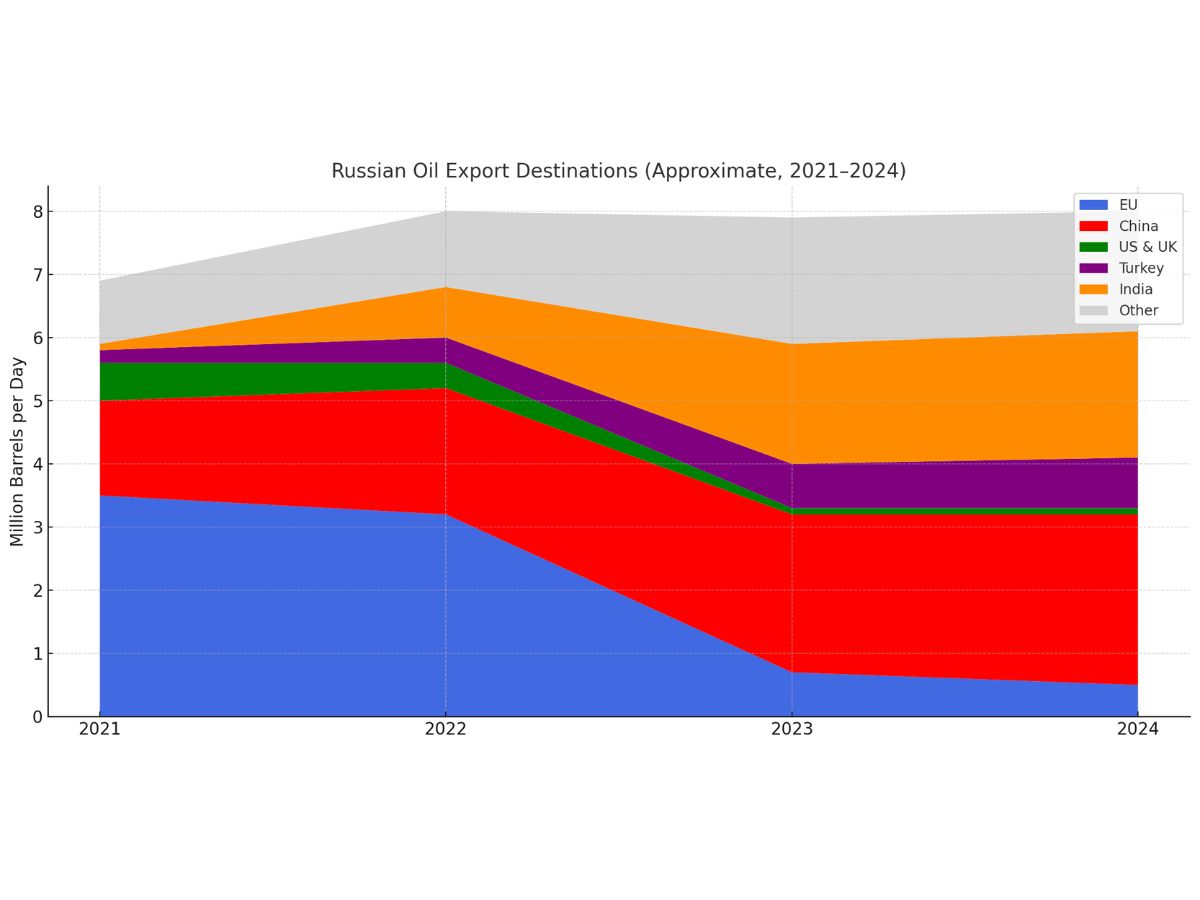
While India faces Trump’s fury, it is far from the only major buyer of Russian crude. Here’s how the top importers stack up in 2025 (source: Kpler, Rystad Energy):
-
China: ~2.7 million barrels per day (bpd)
-
India: ~2 million bpd
-
Türkiye: ~400,000 bpd (including via ship-to-ship transfers)
-
UAE and Malaysia: Significant volumes rebranded and resold
These countries are using a blend of techniques—shadow fleets, fake shipping documentation, and transit via neutral ports—to bypass Western scrutiny.
India defends its purchases as non-sanctioned, transparent, and routed through legal trade channels.
Also Read: Who’s Buying Russian Crude—and Why the US Is Hitting Tariffs on India
Also Read: Trump’s Executive Order Hits India With 50% Tariff, Cites Russian Oil Imports
Boris Johnson Backs Trump, Calls Out India and Europe
Adding fuel to the fire, former UK Prime Minister Boris Johnson jumped into the conversation with a fiery interview on Sky News. He backed Trump’s tariffs, saying:
“If Europe could kick the Russian energy addiction, why can’t India? We all need to grow a spine and stop funding Putin’s war chest.”
Johnson, known for his flamboyant rhetoric, didn’t stop there. He accused some EU nations—particularly Austria and Hungary—of continuing backdoor deals for Russian gas, calling it a “spineless betrayal” of Ukraine.
The comment sent shockwaves across diplomatic corridors in Brussels and Berlin.
Also Read: Boris Lauds Trump’s Tariff Hits On India’s Russian Oil Imports
India’s Tightrope Walk: Sovereignty vs Sanctions
India’s External Affairs Minister S. Jaishankar offered a firm response, saying:
“India’s energy strategy is guided by affordability, availability, and reliability—not political dictates. We will continue to act in the best interests of our people.”
Privately, Indian officials argue that the U.S. itself has bought Russian-origin fuel components like vacuum gas oil and naphtha via third countries—though not in direct violation of sanctions.
New Delhi also contends that its Russian oil buys helped stabilize global prices, especially when Western nations were battling inflation and fuel riots.
Also Read: India Slams Trump’s 50% Tariffs as ‘Unfair, Unjustified, Unreasonable’
Meanwhile, Chaos at Home: Fort Stewart Shooting Rocks U.S. Army Base
While Trump wages trade wars abroad, violence erupts at home. On Wednesday, Sgt. Quornelius Radford, a 30-year-old U.S. Army soldier, opened fire at Fort Stewart, Georgia, injuring at least five servicemen, including one critically.
According to Pentagon sources, the shooting stemmed from an “intra-unit conflict” but raises serious questions about mental health support and weapon access within military bases.
Trump, after being briefed, expressed “deep concern” and promised a review of security protocols. Opposition leaders, however, criticized his silence on gun reform.
“You’re sanctioning India while your own bases are turning into war zones,” tweeted a Democratic congressman from New York.
Also Read: Active Shooter at Fort Stewart, Georgia—Base on Lockdown, Casualties Reported
What’s at Stake Geopolitically?
This development is not just about tariffs or oil—it’s about geopolitical leverage in a polarized world.
-
U.S.-India Ties: Strategic cooperation on defense and counter-China measures may take a hit.
-
Russia’s Resilience: As long as Asia buys its oil, sanctions lose their sting.
-
China’s Gain: Any U.S.-India rift plays straight into Beijing’s hands.
-
The EU’s Dilemma: Publicly anti-Russia, but quietly still reliant on “laundered” energy.
Meanwhile, energy prices have spiked again, with Brent crude hovering near $98/barrel, stoking fears of another global inflation wave.
Tariffs, Tanks, and a Test of Resolve
In classic Trump fashion, the policy is blunt: economic punishment for geopolitical defiance. But the strategy risks alienating an ally that the U.S. needs in its Indo-Pacific chessboard.
India is unlikely to bend easily. Elections are due in both countries in 2026, and public posturing may overshadow diplomacy. As things stand, energy and ego have collided, and the world will feel the aftershocks.