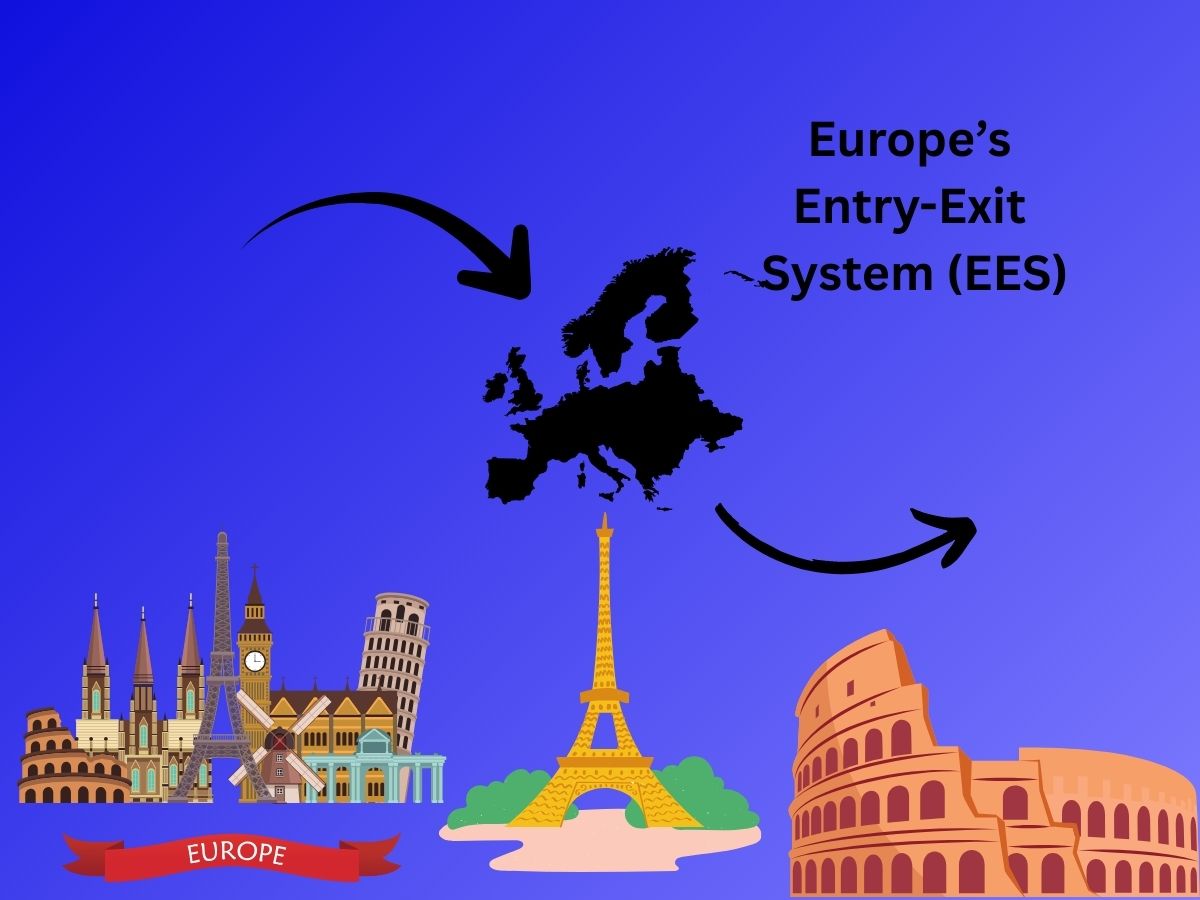
From 12 October 2025, Europe’s new Entry/Exit System (EES) will go live, completely reforming the way visitors from outside the EU arrive and depart the 29 European countries. The system will do away with the old manual passport stamping at external borders switching to a completely digital process to increase security, focused border management, and prevent illegal stay.
What is EES?
The EES is an electronic border control system intended to enrol all third-country nationals, individuals who are not members of the European Union, Iceland, Liechtenstein, Norway, or Switzerland. It is valid for visitors who come to the Schengen Area for stays not more than 90 days in any 180-day period regardless of whether they are visa holders or enjoy visa-free travel.
In place of passport stamps, the EES will register entries, exits, and refusals at border points electronically. The system gathers a person’s personal information like name, date of birth, nationality, passport information, and importantly biometric data like fingerprints and face images (children under the age of 12 are to give only facial images). This biometric authentication assists in enhancing identity verification and decreasing identity fraud.
Rollout and Implementation
The new system will be phased in step by step at points of border crossing from October 12, 2025, and is expected to be fully rolled out by April 2026. In the course of transition, passport stamping may continue at some borders, though electronic registration is set to become universal among the states by mid-2026. Airlines will also have additional requirements of electronically checking passengers prior to departure for flights to Europe.
Who is Affected
Non-EU citizens from everywhere, also including the UK residents who are since Brexit reclassified as third-country nationals, will come under EES examination. UK citizens and family members covered by the Withdrawal Agreement with certain residence permits are excluded. The system is complemented by another new initiative: the European Travel Information and Authorisation System (ETIAS). ETIAS which is to be introduced in late 2026, will charge visa-exempt travellers seeking online travel clearance prior to arrival, introducing an extra level of pre-screening.
What Travellers Need to Know
Visitors may be require to face biometric data capture during the initial entry after October 12, 2025. This involves submitting fingerprints and facial photographs upon arrival. In subsequent visits within the period of validity, only biometric authentication will be requested instead of complete data capture. Children below age 12 are not required to provide fingerprints but will undergo facial recognition.
The EES substitutes passport stamping with expedited, more secure digital processing but does not promise entry; travellers are still required to comply with all existing entry requirements at the port of entry. Knowledge of these changes and taking necessary precautions will ensure a hassle-free travel experience to Europe under the new system.