Luxembourg City [Luxembourg], June 12 (ANI): In a move that signals a significant shift in global trade dynamics, the Council of the European Union on Friday moved to strengthen the Carbon Border Adjustment Mechanism (CBAM), expanding its reach to more products and introducing strict anti-circumvention measures.
The decision was reached during the Economic and Financial Affairs Council (ECOFIN) meeting in Luxembourg and is expected to have far-reaching consequences for India’s export sectors, particularly steel and aluminium.
The finance ministers of the EU countries agreed on a “general approach” to update the CBAM regulation, which has been in operation from January 1, 2026. The new measures aim to close loopholes and ensure that the EU’s climate goals are not undermined by “carbon leakage”.
EU industrial producers in certain sectors must offset carbon dioxide (CO2) emissions with allowances from the EU emissions trading system (ETS). However, for production outside of the EU, the ETS does not apply. As a result, carbon-intensive production could move to countries with less strict climate policy and imported products could gain a price advantage at the expense of the environment. This is known as carbon leakage.
CBAM is the European Union’s landmark carbon tariff on imported carbon-intensive goods, such as iron, steel, cement, fertilizers, aluminium, electricity, and hydrogen. It encourages cleaner industrial production in non-EU countries, ensuring imported products face the same carbon costs as goods produced within the EU, preventing “carbon leakage.”
While the initial mechanism focused on raw materials like iron, steel, aluminium, cement, and fertilizers, the new rules will now cover over 180 additional processed goods.
As India remains one of the largest exporters of steel and aluminium to the EU, today’s decision is expected to have consequences for the manufacturers in the export sectors.
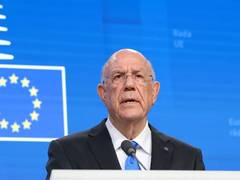
“The EU remains committed to reducing climate emissions both within the Union and globally. Strengthening the CBAM and closing loopholes that can circumvent our rules is a key part in fulfilling that goal. The position agreed today is the first step in making the system more robust,” Makis Keravnos, Minister of Finance of Cyprus in a statement. The six-month rotating presidency of the Council is held by Cyprus and runs till June 2026, after which Ireland is scheduled to take over.
The Council also introduced a new “anti-circumvention” framework and clarified the conditions under which temporary exemptions may be granted in exceptional circumstances.
This is designed to prevent exporters from bypassing the tax by making slight modifications to their products or rerouting trade through third countries. EU Finance Ministers emphasized that these steps are necessary to level the playing field for European producers who already pay high carbon prices under the EU Emissions Trading System (ETS).
The Council’s decision today sets the stage for negotiations with the European Parliament later this year to finalise the legal text. (ANI)
The article has been published through a syndicated feed. Except for the headline, the content has been published verbatim. Liability lies with original publisher.