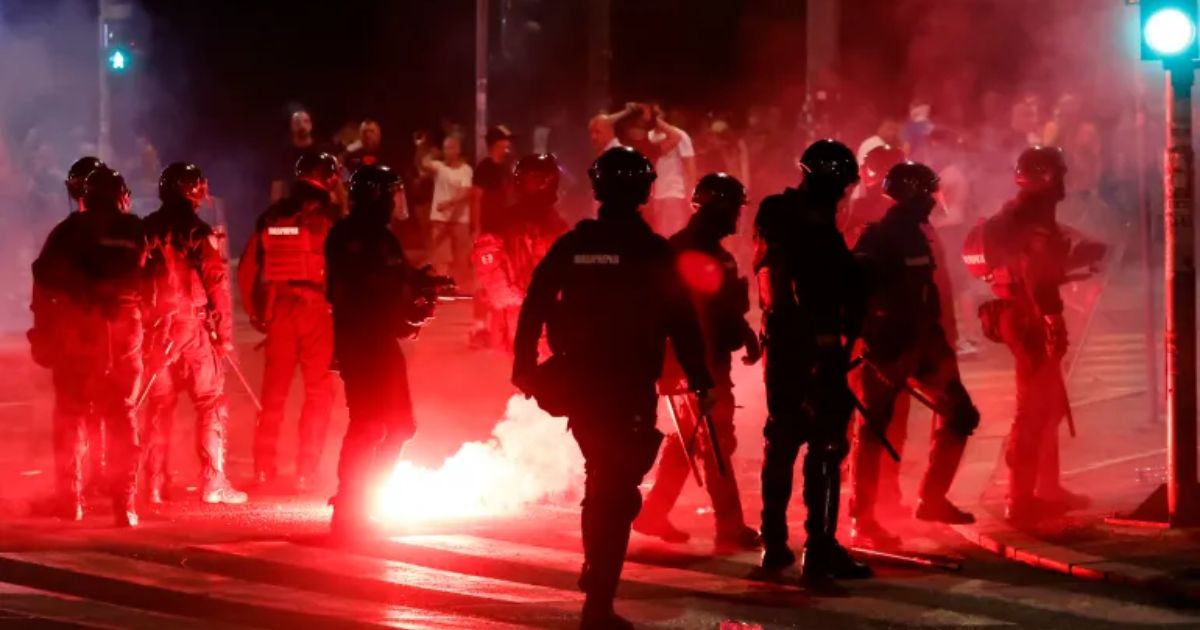
Tensions escalated in Serbia on Friday evening as thousands of protesters clogged the streets of Novi Sad calling for early elections against Aleksandar Vucic. This initially was a peaceful student protest turned into a riot, with police firing tear gas and stun grenades to send the protesters running.
From Train Station Tragedy to Political Crisis
The protest campaign was ignited by last November’s fatal collapse of Novi Sad’s train station roof, which resulted in 16 fatalities. Most Serbians attribute the tragedy to entrenched corruption, and demands for an open investigation and have since escalated into the country-wide demands for snap elections. Banners carried by students at Friday’s rally inscribed with, “Students have one urgent demand, Call elections.”
Violent Clashes and Arrests
Following speeches, protesters advanced towards the city’s university campus, where violent clashes ensued. Protesters threw stones, flares, and bottles at the security forces, reports said. Police also used heavy force, injuring a number of protesters while 13 police were wounded in what Interior Minister Ivica Dacic called a “massive and brutal attack.” 42 people were confirmed to have been arrested by authorities.
The minister condemned the violence as “appalling and apparently planned,” alleging opposition forces were employing unrest as “political fuel to create tensions.”
President Aleksandar Vucic blamed protesters for trying to destabilize Serbia, telling them, “People in Serbia need to know that the state is more powerful than anyone… that will always be there.” He also announced government-backed rallies planned around the country on Sunday in an attempt to stem the tide of the protests.
Despite almost daily protests since the train station collapse some of the biggest attracting hundreds of thousands Vucic has refused demands for elections. The protest has already prompted the resignation of the prime minister and the fall of the government, but Vucic claims the disturbances are the result of foreign influence.
ALSO READ: “I Heard a Large Crash… Then Silence”: Lisbon Reels After Funicular Tragedy Kills 16
A Nation at a Crossroads
Although most of the rallies had been peaceful, mid-August witnessed the first violent clashes, with activists accusing the police of violence. Videos seen on the internet seem to indicate police beating unarmed protesters, further fuelling tensions.
For now, the political future in Serbia is unclear. What started in outrage over a tragic accident has escalated into one of the most serious oppositions to Vucic’s leadership, with students leading the resistance.