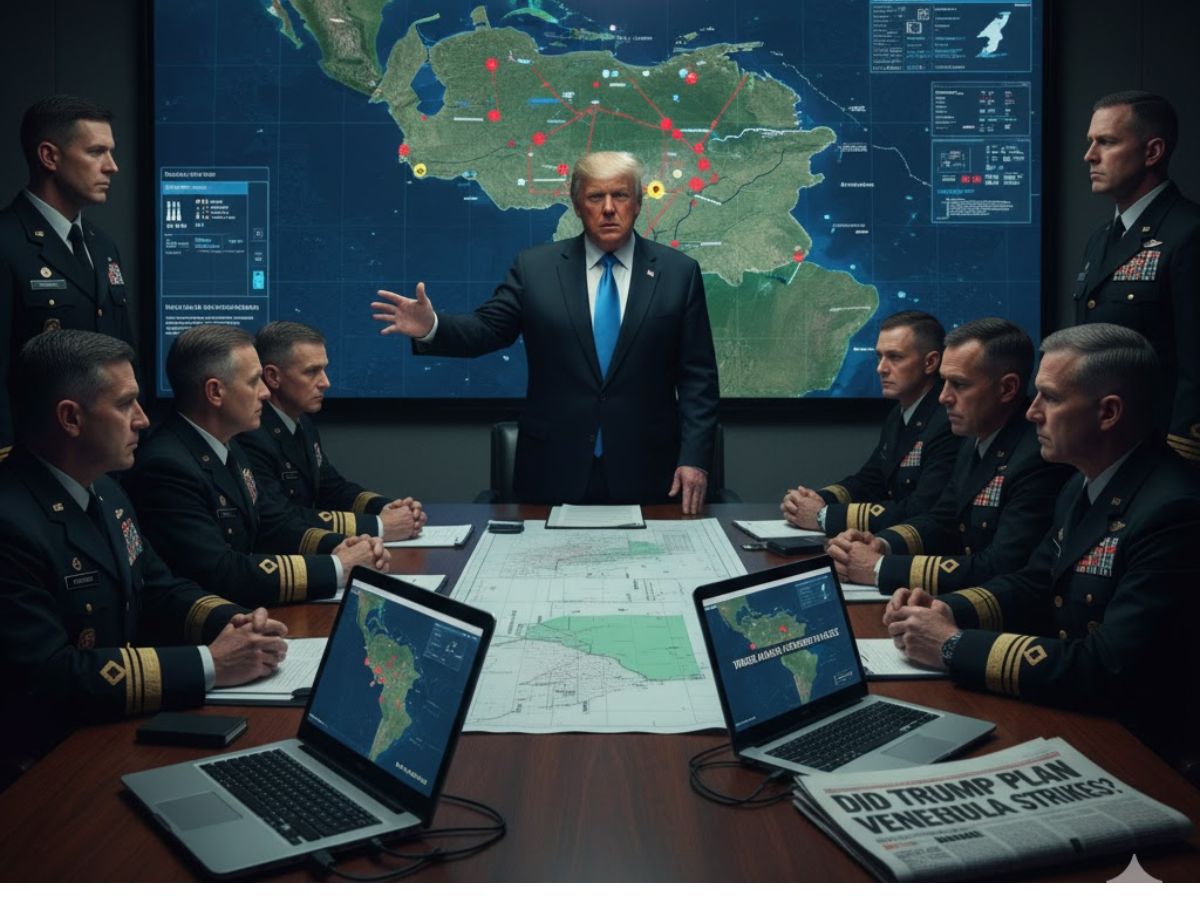
President Donald Trump openly denied claims of potential military operations within Venezuela in a succinct but important statement. When asked aboard Air Force One if the claims were accurate, the president offered a simple, one-word reply: “No.” This denial comes amidst a substantial increase in US military assets in the Caribbean and ongoing covert operations, creating a cloud of uncertainty over Washington’s strategy toward the South American nation.
What is the Context Behind the Denial?
The United States has been significantly escalating its military posture in the region for months. The deployment includes fighter jets, warships, and thousands of troops, with a further expansion planned through the arrival of the powerful Gerald R. Ford aircraft carrier strike group. Since early September, the Trump administration has conducted at least 14 strikes on small boats in the Caribbean and Pacific, which officials describe as targeted killings of drug smugglers. Additionally, rumors suggest that Trump has given the CIA permission to carry out clandestine activities within Venezuela, suggesting a multifaceted pressure campaign.
Also Read: Who is Rob Dyrdek? Bio, Net Worth, DC Shoes, Wife, Age, Kids, Young Career, and Height
How is Venezuela’s Government Reacting?
Venezuelan President Nicolás Maduro, who the US has indicted on drug trafficking charges, has long accused Donald Trump of seeking regime change. He has vowed that the Venezuelan people and armed forces will resist any attempt to remove him from power. Even though the opposition candidate appeared to have won the 2024 election handily, Maduro was sworn in for a contentious third term earlier this year. The growing tensions with Washington are set against the backdrop of this political crisis.
Why is Venezuela’s Opposition Divided?
The potential for US military action has exposed a deep rift within Venezuela’s opposition. The faction is split between two leading figures. Nobel Peace Prize laureate María Corina Machado has aligned herself with Trump, asserting that Maduro poses a direct threat to US national security and supporting the ongoing military deployment. Conversely, two-time presidential candidate Henrique Capriles opposes armed US intervention. He instead calls for renewed negotiations involving both Maduro’s government and the Trump administration, despite the fact that earlier dialogue efforts have yielded little progress.
Also Read: Who Are Judges John McConnell and Indira Talwani, Who Blocked Trump’s Food Aid Suspension?
What Does This All Mean?
President Trump’s direct denial appears to contradict the aggressive military buildup and other actions his administration has taken. Strategic ambiguity results from this. Maduro is under pressure because of the authorization of covert operations and the ongoing deployment of a sizable naval fleet, even though he has ruled out public strikes inside Venezuela for the time being. The fractured opposition is finding it difficult to put up a cohesive front against the government, and the situation is still unstable.