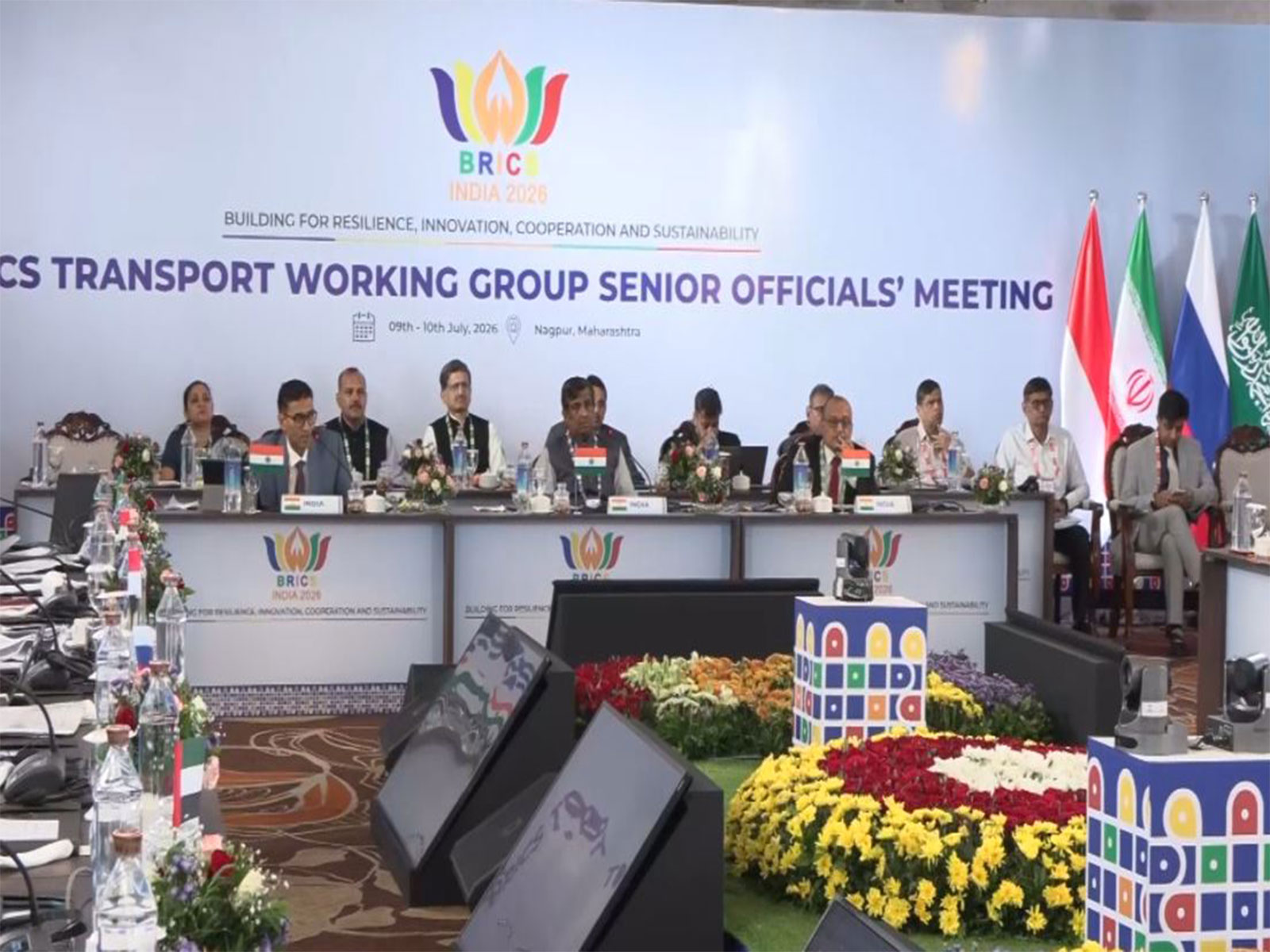
Nagpur (Maharashtra) [India], July 10 (ANI): The second day of the 3rd BRICS Transport Working Group (TWG) meeting continued in Nagpur on Friday, with delegates from India, Brazil, Russia, China, South Africa and other participating countries deliberating on a common transport agenda under India’s BRICS Chairmanship.
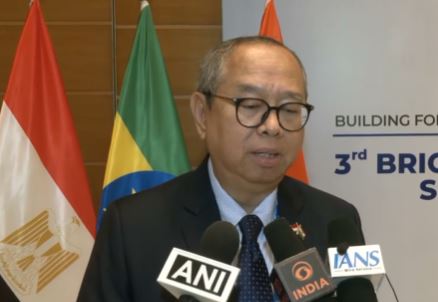
Speaking to the media, Head of the Indonesian delegation and Consul General of Indonesia in Mumbai, Eddy Wardoyo, described the discussions as “very fruitful” and said the outcomes of the meeting would benefit all BRICS member countries.
“I came on the second day and observed very fruitful discussions. I am sure that this will bring benefits to all member countries of BRICS. We hope that after this meeting, we can follow up on this agreement because I think the important thing is not just the MoU agreement, but the actual follow-up to this meeting. I am sure that during the Indian Chairmanship, we can achieve that,” Wardoyo told the media.
The three-day Working Group meeting is focusing on enhancing cooperation in transport connectivity, sustainable mobility, logistics, digitalisation and infrastructure development.
The deliberations are expected to help shape the agenda for the upcoming BRICS Transport Ministers’ Meeting under India’s BRICS Chairmanship.
India’s BRICS Chairship in 2026 is its fourth, having previously held the position in 2012, 2016 and 2021. The Chairship is guided by the theme “Building for Resilience, Innovation, Cooperation and Sustainability”, reflecting a people-centric and humanity-first approach articulated by Prime Minister Narendra Modi at the 2025 Rio Summit.
BRICS currently brings together eleven major emerging economies: Brazil, China, Egypt, Ethiopia, India, Indonesia, Iran, Russia, Saudi Arabia, South Africa and the United Arab Emirates.The grouping serves as a platform for consultation and cooperation on issues of global and regional significance, as well as on global political and economic governance.
The BRICS 2026 website highlights how the grouping’s agenda has expanded significantly from its original focus on economic issues to three core pillars — political and security cooperation, economic and financial cooperation, and cultural and people-to-people exchanges.
It further notes that BRICS cooperation now covers a wide range of issues, including counter-terrorism, climate change, food and energy security, international financial architecture, telecommunications, agriculture, labour and employment, trade, and WTO-related matters. (ANI)
The article has been published through a syndicated feed. Except for the headline, the content has been published verbatim. Liability lies with original publisher.