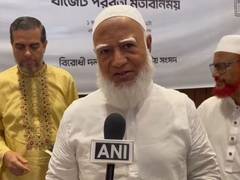
Dhaka [Bangladesh], July 1 (ANI): Bangladesh wants to maintain a mutual relationship with India based on trust, equity and respect, Jamaat-e-Islami Ameer and Leader of the Opposition in the Parliament of Bangladesh Shafiqur Rahman said on Wednesday, while asserting that Dhaka’s domestic projects, including the Teesta Master Plan, should remain its own sovereign matter.
“India is our closest neighbour. We always respect our neighbours, not only India but all the neighbours. And we also deserve mutual respect from them,” Rahman told ANI following an opinion exchange meeting at the Bangladesh Parliament building in Dhaka.
He said Bangladesh wanted to maintain ties with India based on mutual trust and respect.
“And we want to maintain a mutual relation upon trust, equity, and respect,” he added.
His remarks came as Bangladesh is expected to move ahead with the Teesta Master Plan for the management of the Teesta River, a river shared by India and Bangladesh. The project has drawn attention as Bangladesh has discussed possible cooperation with China following the Bangladeshi Prime Minister Tarique Rahman’s recent visit to Beijing.
Calling the Teesta project an internal matter, Rahman said Bangladesh would move forward with the initiative in its national interest.
“The Teesta project is our own matter, our own issue. And we have to do what we need to feel better for Bangladesh. Hopefully, all the friends will be happy with our progress,” he said during the opinion exchange.
The Jamaat chief stressed that the project was urgently needed for the people living in northern Bangladesh.
“We all want the Teesta Master Plan to be implemented. Twenty-five million people are suffering here. Those who live in that area know better than me. I have visited two or three times out of duty, and tears came to my eyes seeing their condition,” Rahman, who is also a medical doctor, told reporters there.
Reiterating his party’s commitment to the project, he said, “Our stance on this matter is very positive and firm. And we will implement our plan for the sake of our nation; our friends will be happy, there’s no reason to be sad. If anyone gets upset, we will try to make them happy by sending them mangoes from Rajshahi.”
Referring to recent reactions over the Bangladesh military naming four new avenues after the Caliphs, Rahman said such matters were entirely Bangladesh’s internal affairs.
“Recently, I noticed that our military has introduced four new avenues named after the Caliphs. I heard that people from another country have reacted to it. But what names we choose for our brigades or our wings is entirely our own matter. Why should they be upset about it?” he said.
“What name we give or don’t give them is our business. Why should they be upset? There is no reason for them to be upset,” he added.
Rahman said countries should refrain from interfering in each other’s domestic affairs.
“We hope that no one will interfere or poke their nose into anyone else’s internal matters,” he said.
Calling for an independent foreign policy for every nation, he said, “Every country should have an independent foreign policy, not just Bangladesh. We look at our neighbours with respect, and we will continue to do so; we also deserve to receive the respect we are due from them.”
The Teesta River, which flows through India and Bangladesh, has been a longstanding subject of discussions between the two neighbouring countries, particularly over water sharing and river management issues.
In April, the Official Spokesperson for the Ministry of External Affairs, Randhir Jaiswal, clarified India’s stance on the fact that Bangladesh will speak to China regarding the Teesta issue, noting that such issues are being addressed under “structured bilateral mechanisms” and at regular intervals with Dhaka.
“Regarding Teesta, India and Bangladesh share 54 rivers. We have structured bilateral mechanisms to discuss all water-related issues, and these mechanisms continue to meet at regular intervals,” he said during a press briefing. (ANI)
The article has been published through a syndicated feed. Except for the headline, the content has been published verbatim. Liability lies with original publisher.