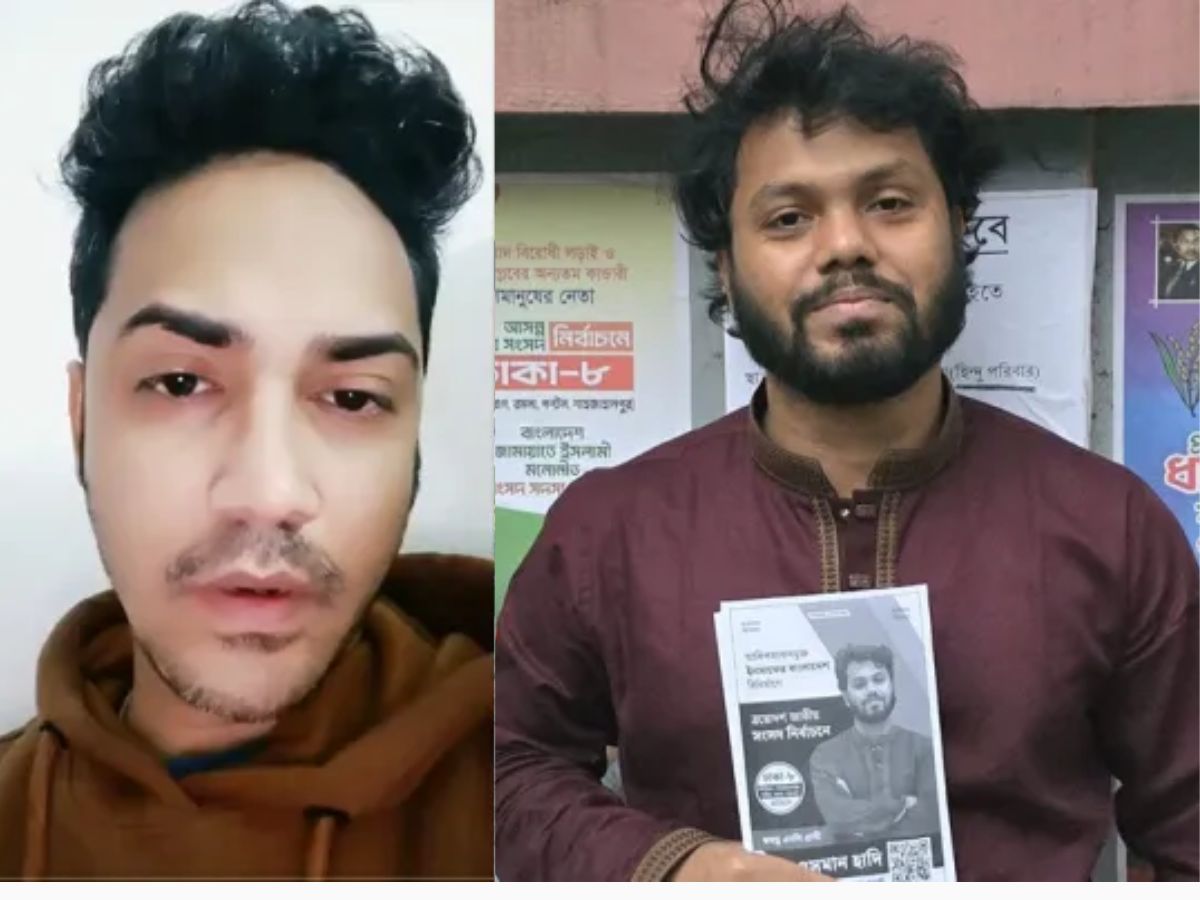
A major development has emerged in the Osman Hadi murder case, sparking fresh debate and uncertainty. The prime suspect, Faisal Karim Masud, has released a video from Dubai denying any role in the killing of the Bangladeshi student leader. His claim contradicts statements by Bangladeshi police that he fled to India after the attack, and has drawn responses from security agencies and political circles in both countries.
#BreakingNews: Osman Hadi’s killer in Dubai!
Hours after the location of Osman Hadi’s killer exposed, now Faisal Karim Masud, one of the key accused, in a video message said. he is currently in Dubai and has no involvement in the killing. pic.twitter.com/fQJ6kI019d
— Omkara (@OmkaraRoots) December 31, 2025
This unexpected twist has once again brought the case into the spotlight, with authorities, supporters and critics voicing divergent narratives about what really happened and where the key accused currently is.
Accused Appears in Dubai, Denies Killing Hadi
In a video circulating widely on social media, Masud claimed he had nothing to do with Osman Hadi’s murder and said allegations against him are part of a fabricated conspiracy. In the message, he said:
“I am Faisal Karim Masud. I want to state clearly that I am not involved in the murder of Hadi in any way. This case is completely false and based on a fabricated conspiracy.”
Masud said he was forced to leave Bangladesh and travel to Dubai, where he currently holds a valid long-term visa. He insisted his visit to Hadi’s office before the shooting was for business reasons, including discussions about job opportunities and political donations linked to contracts.
He also claimed his family was being unfairly harassed and tortured due to the allegations. “My family is completely innocent. The inhumane treatment they are facing is unjust and unacceptable,” Masud said.
Contradicting Claims: Police Say India, Accused Says Dubai
Bangladesh police previously claimed Masud and another suspect, Alamgir Sheikh, fled the country after the December 12 shooting of Hadi and entered India through the Haluaghat border in the Mymensingh district.
However, Indian authorities, including the Border Security Force (BSF) and Meghalaya Police, have denied any credible confirmation that the suspects have crossed into India. Officials called the claims unfounded and misleading, saying there is no verified evidence of a cross-border escape via the northeastern frontier.
The Dhaka Metropolitan Police (DMP) has said the rumours about detentions in Meghalaya were based on confessional statements from others arrested in connection with the case, but clarified that those claims of arrests in India were not confirmed by formal communication with Indian agencies.
Court Evidence and Escape Network Claims
Investigators have also been pursuing leads from individuals who assisted the suspect’s alleged escape. In a Dhaka court, a man identified as Aminul Islam Raju confessed to helping Masud cross the border into India, assisting the accused in moving across the frontier before the alleged escape.
Meanwhile, Bangladeshi police continue to press efforts to bring the suspects back, with extradition discussions and coordination reportedly ongoing between Dhaka and Indian authorities.
Background: Osman Hadi’s Killing and Aftermath
Sharif Osman Hadi, 32, was a prominent student leader and spokesperson for Inqilab Mancha. He was shot in Dhaka’s Paltan area on December 12 by masked gunmen and later died in a Singapore hospital on December 18 from his injuries.
Hadi rose to prominence during Bangladesh’s student-led protests last year and attracted attention for his political views, including criticism of neighbouring countries and domestic politics. His death triggered nationwide unrest, with protests and violent incidents reported in multiple cities.
Political and Diplomatic Sensitivities
The conflicting narratives between Bangladesh and India have added tension to regional relations, with media and security officials from both sides issuing statements. Dhaka’s claims about suspects in India led to firm rebuttals by New Delhi, which insisted that the accusations are part of a false narrative and not based on verified movements across the border.
Amid these disputes, political analysts note that the handling of the case will have implications for public confidence in law enforcement, cross-border cooperation, and political stability as Bangladesh approaches critical events in the coming months.
What Comes Next in the Investigation?
With Masud’s denial from Dubai contradicting earlier police claims, the case’s direction remains uncertain. Authorities in Dhaka are expected to continue investigations, gather more evidence, and work with international partners to resolve questions about the suspects’ locations and involvement.
As the families of victims and accused await clarity, the larger public debate underscores deep mistrust, competing narratives, and the challenges of solving high-profile political crimes in the region.