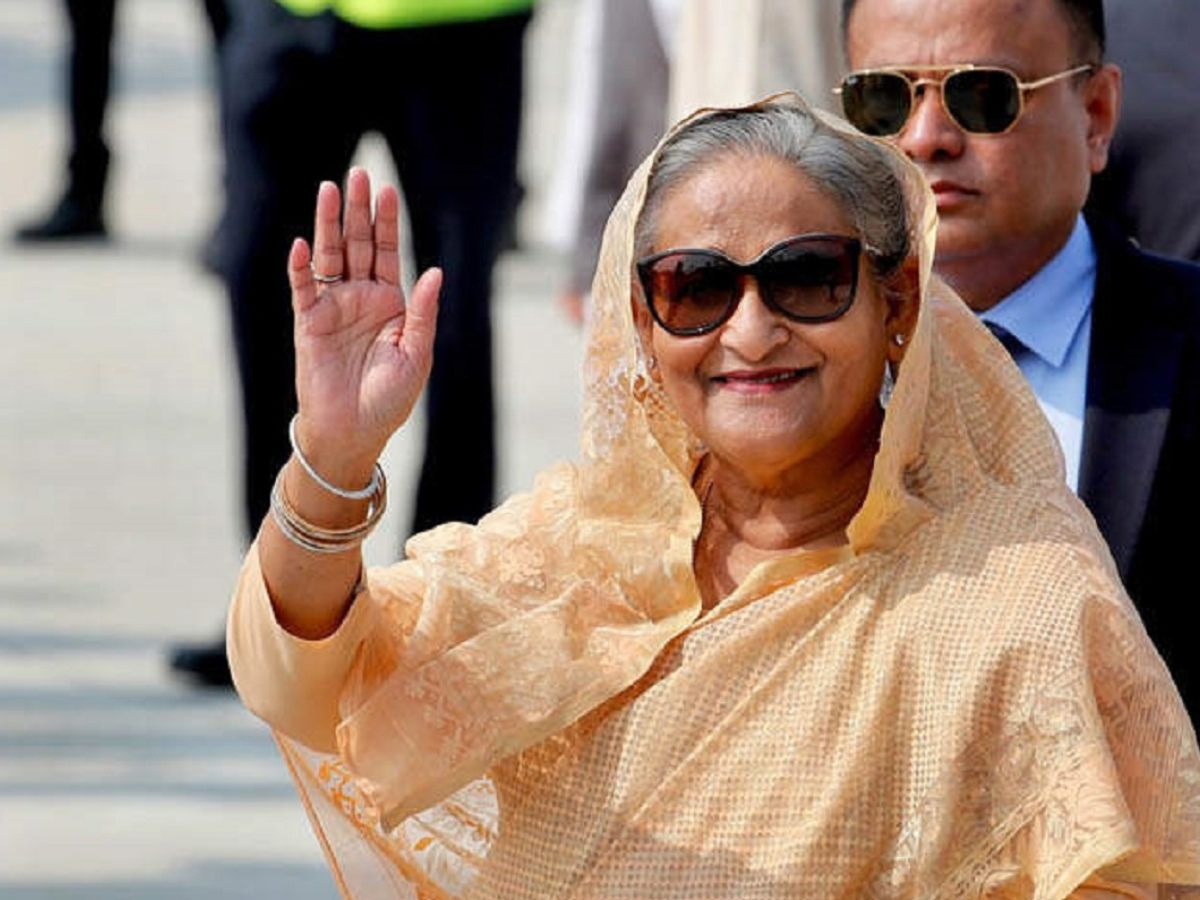
A special tribunal in Bangladesh has sentenced former Prime Minister Sheikh Hasina to death. The court found her guilty of “crimes against humanity” during the July–August 2024 student-led protests. The tribunal said she incited violence, ordered lethal force, and failed to stop mass killings. This ruling marks a major turning point in Bangladesh’s politics. It holds a former prime minister accountable for her actions during civil unrest.
Who Is Sheikh Hasina?
Sheikh Hasina was born on September 28, 1947, in Tungipara, East Bengal. She is the eldest daughter of Sheikh Mujibur Rahman, the founding father of Bangladesh. Hasina leads the Awami League party.
She served as prime minister from 1996 to 2001 and again from 2009 to 2024. She built a reputation as a strong and strategic leader. Her political career closely follows her father’s legacy.
Where Is Sheikh Hasina Now in India?
Hasina fled to India in August 2024 after mass protests forced her government out. She landed on Hindon Airbase, and according to Hindustan Times, she now lives in New Delhi at a safe house under tight security, and India is providing full security to her. Sajeeb Wazed recently said. He added that New Delhi is treating her “like a head of state”.
Bangladesh has sent a formal extradition request to India following her conviction. India has yet to decide whether to return her or let her stay.
What Did Sheikh Hasina Do?
During the 2024 protests, students demanded major reforms and challenged the government. The tribunal found that Hasina ordered a violent crackdown, including the use of helicopters, drones, and weapons to stop protesters.
She also failed to prevent atrocities and instructed officials to commit violent acts. One victim, Abu Sayed, became a symbol of the protests after being killed by security forces.
Who Is the Father of Sheikh Hasina?
Sheikh Hasina’s father, Sheikh Mujibur Rahman, also called Bangabandhu, led Bangladesh to independence in 1971 and became its first president. His leadership shaped Hasina’s political identity. She inherited his vision and continued to lead the Awami League for decades.
Who Was Abu Sayed?
Abu Sayed was a student activist at Begum Rokeya University. He was killed on July 16, 2024, during a protest. The tribunal cited his death as proof of the government’s violent response. Hasina and other leaders were held responsible. His killing sparked national outrage and highlighted the brutality of the crackdown.
What does This Verdict mean for Bangladesh?
The verdict against Sheikh Hasina is historic for Bangladesh. She has long been seen as a symbol of political stability, but now her role in the 2024 uprising faces intense scrutiny. Supporters call her a victim of political revenge. Critics say accountability was long overdue.
Her stay in India draws comparisons to the Dalai Lama, who fled Tibet in 1959 and never returned. China has criticized India for hosting the Dalai Lama, but it never asked for his extradition. Similarly, Hasina’s future depends on India’s decision, diplomatic factors, and concerns about fair treatment and human rights.
This case affects Bangladesh’s politics, the Awami League, and regional stability. Hasina’s next steps will shape both her personal fate and the country’s political landscape.