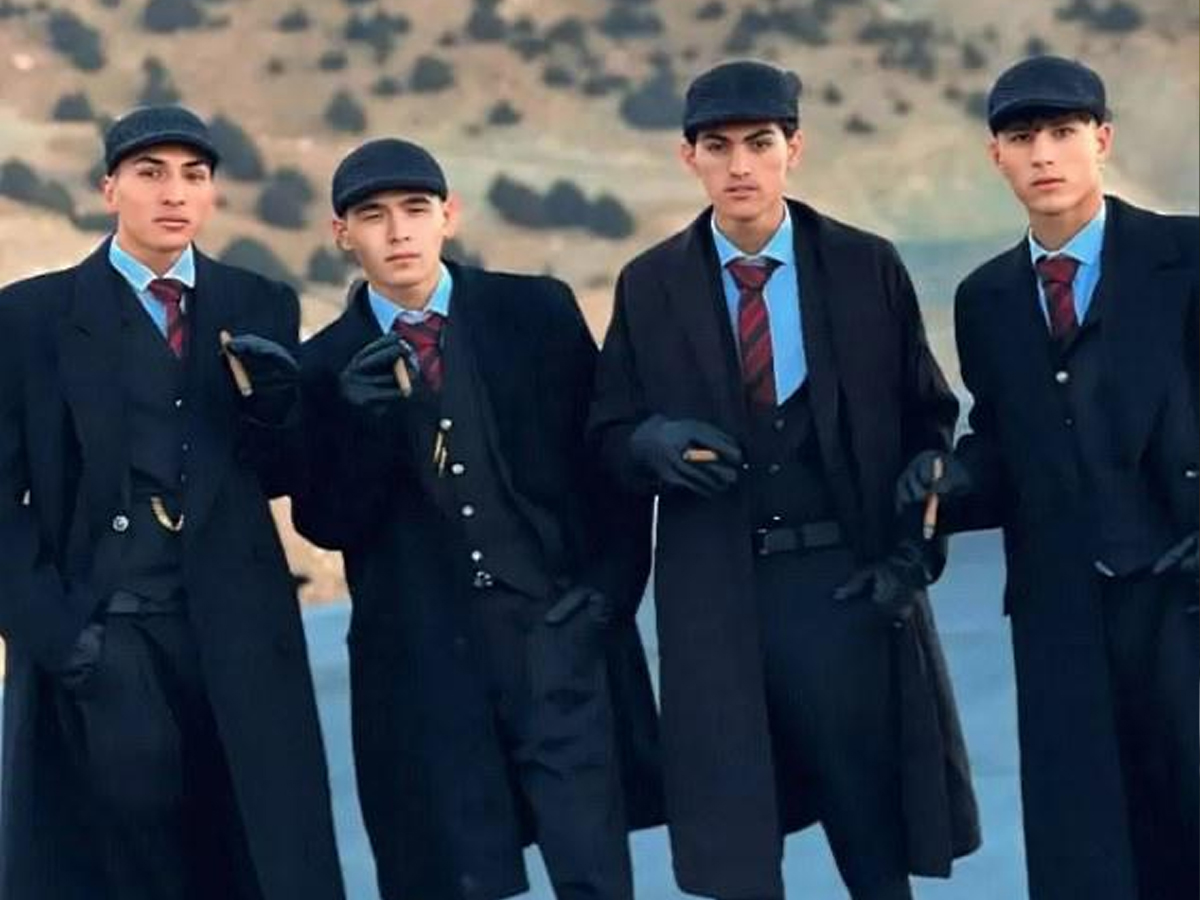
Four young men in Afghanistan attracted attention, and trouble, simply for walking in public dressed like the characters from the British series Peaky Blinders. Their trench coats and flat caps made them local celebrities. But the attire soon caught the eye of the Taliban’s morality watchdog.
The men found themselves detained and placed in a so-called “rehabilitation program” for allegedly “promoting foreign culture,” though authorities later said they had only been “summoned, advised, and released.”
Why the Taliban Took Action on Fake Peaky Blinders
Officials from the Taliban’s Ministry for the Promotion of Virtue and Prevention of Vice claimed the men’s outfits lacked any “Afghan identity” and ran counter to Islamic and local cultural norms. The ministry’s spokesperson said, “We are Muslims and Afghans; we have our own religion, culture, and values… now we are also defending it.”
The Taliban have detained four young Afghans for dressing in a Peaky Blinders–inspired style
The men tried to explain that they were simply inspired by the series. But they were accused of “promoting a foreign culture.”
Taliban officials said such behavior “does not align with… pic.twitter.com/0xYwKigXgq
— NEXTA (@nexta_tv) December 9, 2025
The men’s choice of Western-style clothing and imitation of characters from a foreign series, the ministry added, violated cultural and religious standards, prompting the detainment.
Who Are the Four Men?
The four men, identified as Asghar Husinai, Jalil Yaqoobi, Ashore Akbari, and Daud Rasa, are in their early 20s. Before the controversy, they had gained local popularity in Herat’s Jibrail township. Videos and photos of them walking together in coordinated outfits had spread widely on social media.
One of them, Jalil Yaqoobi, said that many residents stopped them on the street to take pictures. “There were some negative comments, but we focused on the appreciation,” he said.
Ministry Releases Them — With a Warning
After social media backlash and media attention, Taliban officials clarified that the men were not formally arrested. Instead, they were “summoned and advised and released.” In a recorded audio clip, the ministry shared, one of the young men expressed regret:
“Without realizing it, I used to publish and spread things that were against Sharia… I was summoned and advised, and from today onward, I will no longer engage in such sinful activities, and I have stopped.”
Still, critics argue this response highlights growing control over personal expression and a curb on cultural diversity.
Public Reaction and Cultural Debate
The episode stirred heated discussion online and beyond. Many questioned whether clothing, a form of personal expression, should draw moral policing. Some defended the men’s right to self-expression and global cultural connectivity.
Others sided with cultural preservation and traditions. The debate underlined increasing tensions between global influences and local cultural laws in Afghanistan.