Thousands of Gen Z protesters in Nepal, rallying against censorship, corruption, and the leadership of Prime Minister K.P. Sharma Oli, turned the streets into a sea of defiance by raising the Jolly Roger of the Straw Hat Pirates a global pop culture emblem of freedom and rebellion.
Oli resigned on Monday after one of the deadliest crackdowns in recent years, just a day after security forces opened fire on demonstrators, leaving at least 19 dead and hundreds injured.
Despite the government lifting its controversial social media ban, anger has only deepened, with young Nepalis who make up nearly half the nation’s population demanding accountability for corruption, unemployment, and state brutality.
Why The Flag Seen in Nepal?
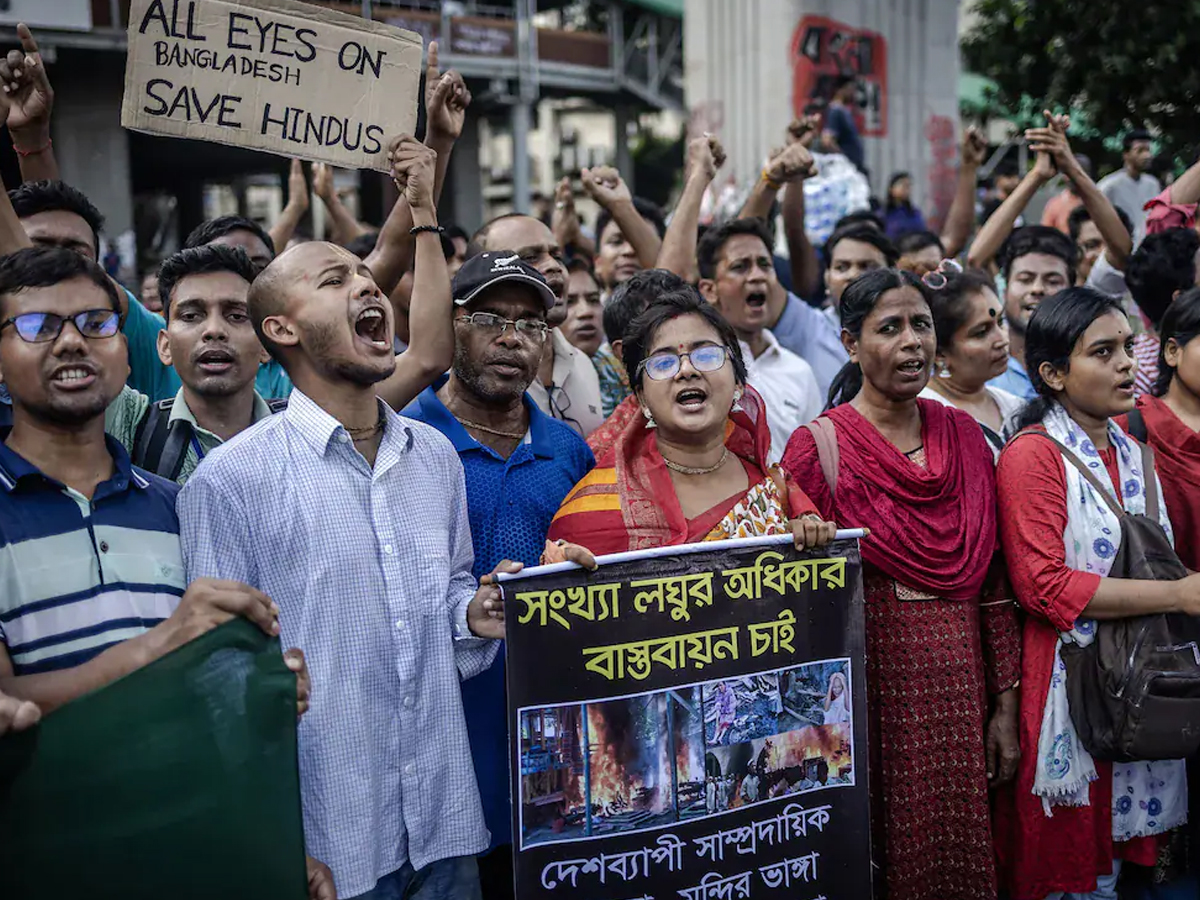
Nepal saw a stunning youth-led rebellion this week as thousands of Gen Z protesters flooded the streets of Kathmandu and a few other cities, protesting against the government’s surprise decision to censor access to social media sites.
The Oli government invoked a necessity to contain fake activities and disinformation but saw the ban interpreted broadly by young citizens as an attack on freedom of expression and online expression.
Protests, started on September 8, soon gathered pace. Many people died and got injured in the violent confrontations with security personnel reported by hospital authorities across Nepal.
What Is the One Piece Jolly Roger Flag?
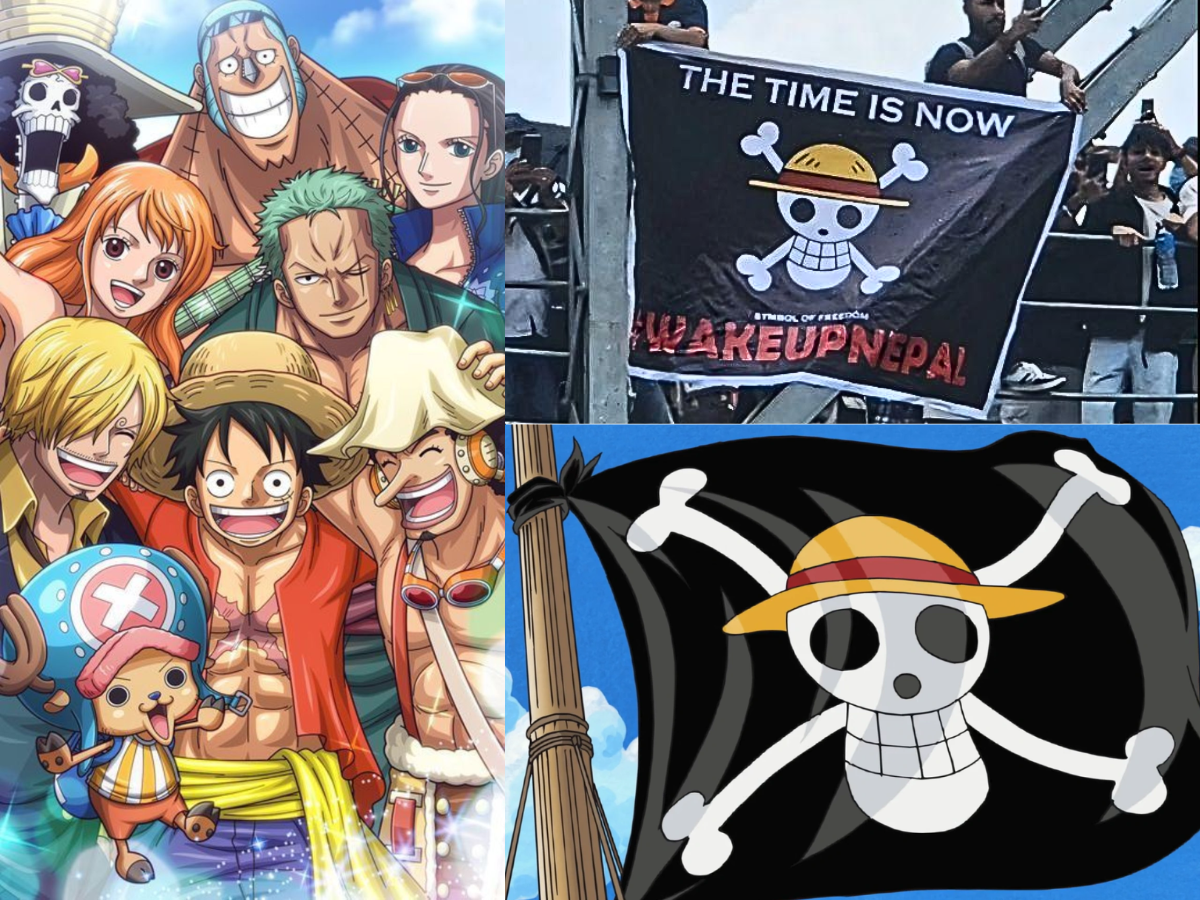
In One Piece, all pirate crews sail on a Jolly Roger a black flag bearing a skull symbol that signifies their identity and beliefs. The most popular among these is that of Monkey D. Luffy and his Straw Hat Pirates.
Their flag features a skull sporting Luffy’s signature straw hat, with two bones crossed behind.
Not just a pirate flag, the Straw Hat Jolly Roger represents freedom, resistance against oppressive systems, and the continuation of dreams without selling out. For Luffy and his crew, unfurling this flag is to proclaim independence on the seas, standing with their friends, and not bowing to unjust power.
It is this symbolism that is so powerful when used in real-life protests. To fans, it is immediately recognizable as a battle cry to live freely and struggle for justice values that resonate far beyond the anime universe.
The Jolly Roger of One Piece Takes Over Nepal
Between the sea of slogans, placards, and national flags, one stand out was the black flag with a smiling skull in a straw hat. It was the Jolly Roger of Monkey D. Luffy’s Straw Hat Pirates, a key symbol in the world-famous anime One Piece.
For the youth protesters, the flag was more than an anime nod; it was a symbol of being free to live, defy authoritarian rule, and pursue one’s own aspirations no matter what systems are in place. To fly the Jolly Roger in One Piece is to claim independence at sea. To fly the Jolly Roger in Nepal was to issue a challenge against censorship.
Can One Piece Inspire Real-World Revolutions?
The sighting of the Straw Hat flag in Nepal is not a unique incident. Earlier in August, mere weeks ahead of Indonesia’s 80th Independence Day, the identical Jolly Roger was flown by thousands of youths protesting against the government in Jakarta and other cities.
Indonesian youth, disappointed with corruption, unemployment, and political gridlock, identified strongly with the One Piece ideal of defying authoritarian forces. Demonstrators displayed the pirate flag on the backs of trucks, draped it across shop fronts, and waved it together with the Indonesian national flag. It became so ubiquitous that politicians paid attention. Deputy House Speaker Sufmi Dasco Ahmad called the phenomenon a “systematic movement” that threatened to destabilize national unity.
Rather than undermining unity, however, several of Indonesia’s young people posited that the flag represented their shared spirit a call for freedom, truthfulness in the government, and the ability to steer their own life. The imagined struggle of Luffy against authoritarian institutions such as the World Government struck a chord with a generation that believed its own freedom was being threatened.
The imagery took hold, and now, only weeks on, Nepal’s youth have taken the same symbol, demonstrating how anime can cross borders to influence political activism.
Why One Piece Is More Than Just Anime ?
Eiichiro Oda’s One Piece, which has more than 1,000 episodes and tens of millions of fans globally, is not just an anime it’s a philosophy of freedom. The show, at its best, is about Monkey D. Luffy and the Straw Hat Pirates, who fight dictators, corrupt leaders, and the omnipotent World Government all day long without sacrificing loyalty or liberty.
For admirers, the Straw Hat Jolly Roger is a pirate flag but also an affirmation: nobody can tell you how to live. That’s why it has become a powerful symbol for political protest.
In Indonesia, protesters waved it to fight censorship and corruption. In Nepal, it was seen again as a symbol of rebellion against reused leadership. Like Luffy, protesters regard themselves as rebels up against impossible odds for justice.
This application of One Piece reveals a generational change in activism. While prior movements relied on old-fashioned slogans and nationalist imagery, the current Gen Z who grew up in digital culture and transnational fandoms identifies with anime as a language of protest.
The imagery of the Jolly Roger is immediately recognizable, a universal symbol across borders that brings youth together under an iconic banner of freedom. One Piece is thus no longer simply a narrative but a living icon of rebellion.