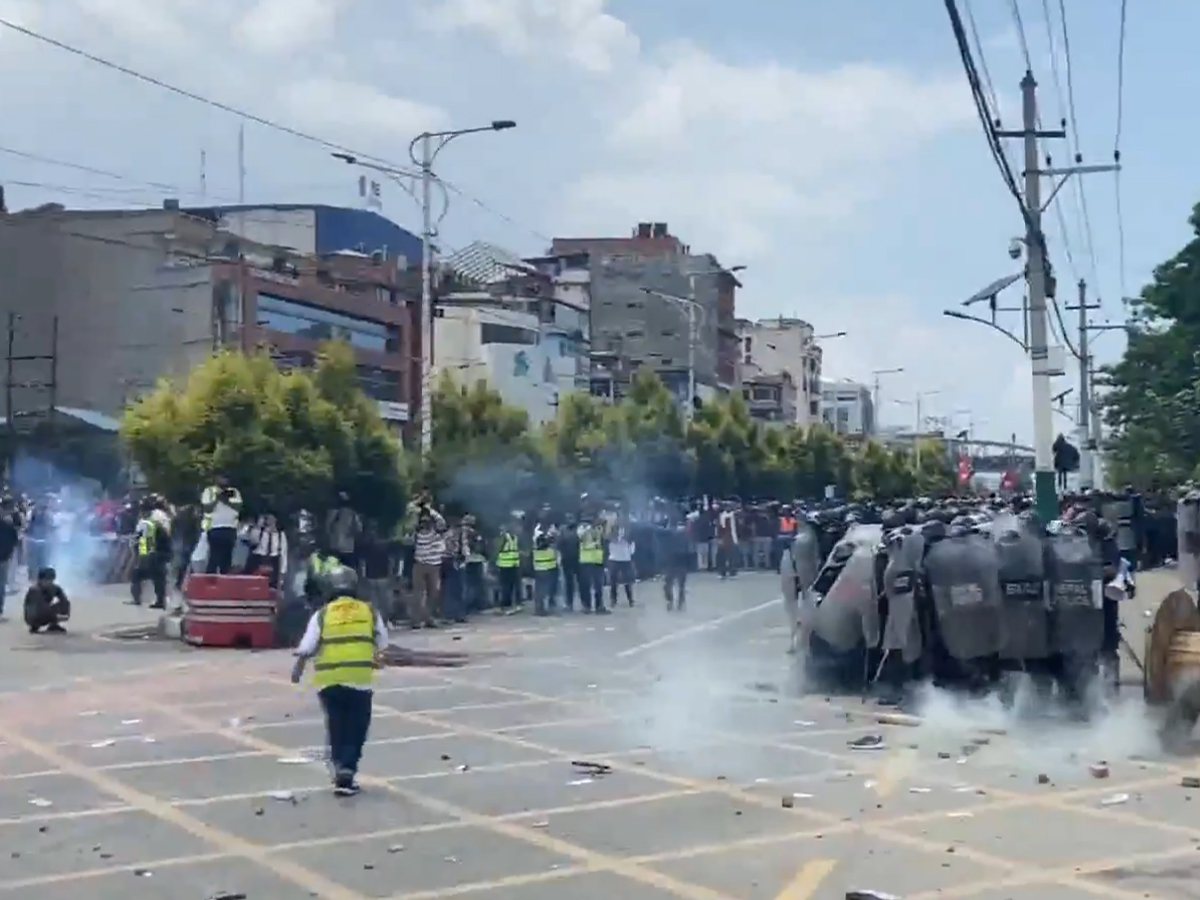
Nepal is witnessing a massive youth-led protest, dubbed the ‘Gen Z Revolution.’ What began as online dissent against corruption and restrictions on social media platforms turned into a street movement on Monday. Thousands of young demonstrators clashed with police near Parliament in Kathmandu.
Security forces opened fire after protesters breached barricades and restricted zones. The violence left one protester dead and over 800 injured. Authorities have now imposed a curfew in parts of the capital, including the Parliament area.
Social Media Ban in Nepal
The immediate spark came from the government’s September 4 decision to ban 26 social media platforms, including Facebook, Twitter, WhatsApp, and YouTube. Officials said the ban was because these platforms failed to register with the Ministry of Communications and Information Technology.
#WATCH | Nepal | Protest turned violent in Kathmandu as people staged a massive protest against the ban on Facebook, Instagram, WhatsApp and other social media sites, leading to clashes between police and protesters. pic.twitter.com/YWNj3R0wUG
— ANI (@ANI) September 8, 2025
The government insists the move is about “regulatory compliance.” But protesters see it as an attempt to silence criticism and block organised resistance.
How Gen Z Mobilised
Despite internet and phone blackouts, Nepal’s tech-savvy youth turned to TikTok, Reddit, and other platforms to spread the word. By Monday morning, crowds of young protesters — many in school and college uniforms — gathered at Maitighar Mandala before marching towards Parliament.
ALSO READ: Why Popular Online Platforms Suddenly Went Dark in Nepal, Full list of Banned Apps in September 2025
Protesters carried placards with slogans like “Independent voice is our right” and “Where has the taxpayers’ money gone?” As they advanced, police used tear gas and water cannons. Some protesters managed to breach the Parliament compound, escalating the chaos.
Scenes of Clashes in Kathmandu
Videos circulating online showed tear gas canisters filling the streets while demonstrators threw water bottles and branches at police. The protests quickly grew into one of the largest youth uprisings in recent years.
Analysts say the anger has been building for months, fuelled by corruption and economic inequality. The government’s decision to block popular social media apps was the final push that drove Gen Z from digital spaces to street protests.
PM KP Sharma Oli Defends Move
Prime Minister KP Sharma Oli defended the ban during a ruling party convention.
“Any attempt to undermine the nation can never be tolerated,” Oli said. He added, “The independence of the nation is greater than the loss of jobs of a handful of individuals. How can it be acceptable to defy the law, disregard the constitution, and disrespect national dignity, independence, and sovereignty?”
The Ministry of Communications had given tech companies until August 28 to register. However, none of the major platforms — including Meta (Facebook, Instagram, WhatsApp), Alphabet (YouTube), X (formerly Twitter), Reddit, and LinkedIn — complied.
What Lies Ahead
With curfews and blackouts in place, Nepal’s capital remains tense. But the Gen Z Revolution has shown that the nation’s young generation is ready to challenge authority, demand accountability, and fight for their right to be heard.
ALSO READ: Nepal Blocks Facebook, WhatsApp, YouTube, Why Only TikTok Remains Accessible?