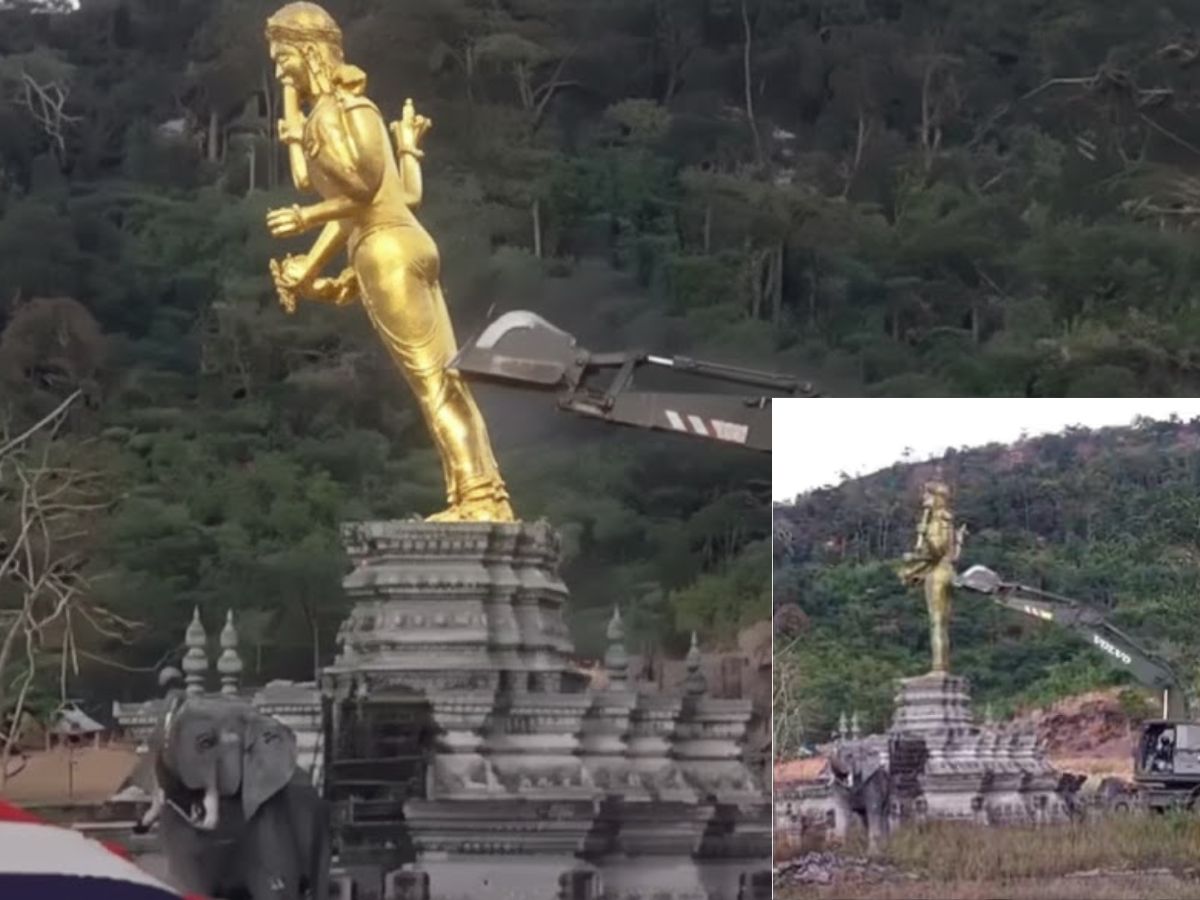
India, as the birthplace of Hinduism, formally expressed concern, describing the act as “disrespectful” because of the statue’s religious importance.India, as the birthplace of Hinduism, formally expressed concern, describing the act as “disrespectful” because of the statue’s religious importance.Diplomatic tensions have emerged from the continuing military clashes between Thailand and Cambodia, focused on the removal of a religious statue. India has formally expressed concern, describing the Thai military’s demolition of a Lord Vishnu statue as “disrespectful.” Thailand, however, said the action was linked to security and sovereignty issues, not religious disrespect.
Why Was the Lord Vishnu Statue Demolished?
According to a statement from the Thai–Cambodia border press centre, the statue was located in an area recently regained by Thai forces following weeks of fierce border clashes. Thailand claims the “symbols,” referring to the Hindu deity statues, were erected by Cambodian soldiers to illegally claim sovereignty over Thai territory. The statement emphasized that the dismantling by army engineers was “solely for the purpose of area management and security” and was “not intended to involve religion, beliefs, or disrespect any sacred entities.”
How Did India and Cambodia React?
India’s concern highlighted the religious sensitivity of the act. Concurrently, Cambodia contested the very location of the statue. A government spokesman from the border province of Preah Vihear stated that the Vishnu statue was situated “in our area,” asserting it was within Cambodian territory. This contradiction over the statue’s placement underscores the deeper, long-running territorial dispute that fuels the border conflict between the two nations.
Also Read: Below Zero in Ooty: Tourists Flock to Ooty to Witness Rare Frost After Temperatures Hit -1°C | Watch
What is the Context of the Broader Border Conflict?
The statue controversy unfolds against a backdrop of deadly military clashes that have killed at least 86 people. The dispute originates from a colonial-era conflict over the demarcation of their 800-kilometre common border and ownership of ancient temple sites along it. While military officials from both sides started talks to re-establish a ceasefire, the episode involving the religious symbol further complicated an already strained diplomatic and military atmosphere.
What Does This Incident Signify?
Thailand’s clarification to India suggests a move to control diplomatic fallout and distinguish security issues from religious sentiment. Apart from military casualty figures, the destruction of a culturally important artifact in a contested zone raises the human and cultural cost of the conflict. The incident has drawn worldwide focus on how local disputes can impact shared regional heritage.
FAQs:
Q: What did Thailand say about demolishing the Vishnu statue?
A: After regaining control of the region, Thailand claimed that the demolition was for “area management and security” and was not intended to be disrespectful to any faith.
Q: Why is India involved in this issue?
A: India, as the origin country of Hinduism, voiced formal concern, calling the act “disrespectful” due to the statue’s religious significance.
Q: What is Cambodia’s claim regarding the statue?
A: Cambodia claims the statue was located inside its territory in the Preah Vihear border province, contradicting Thailand’s position.
Q: What is the root cause of the Thailand-Cambodia clashes?
A: A long-standing territorial dispute over their shared boundary and the ownership of ancient temple sites along it is the source of the conflicts.
Also Read: Cost of Christmas: Planning Your Christmas Feast? Your City Might Make It Pricier Than You Think