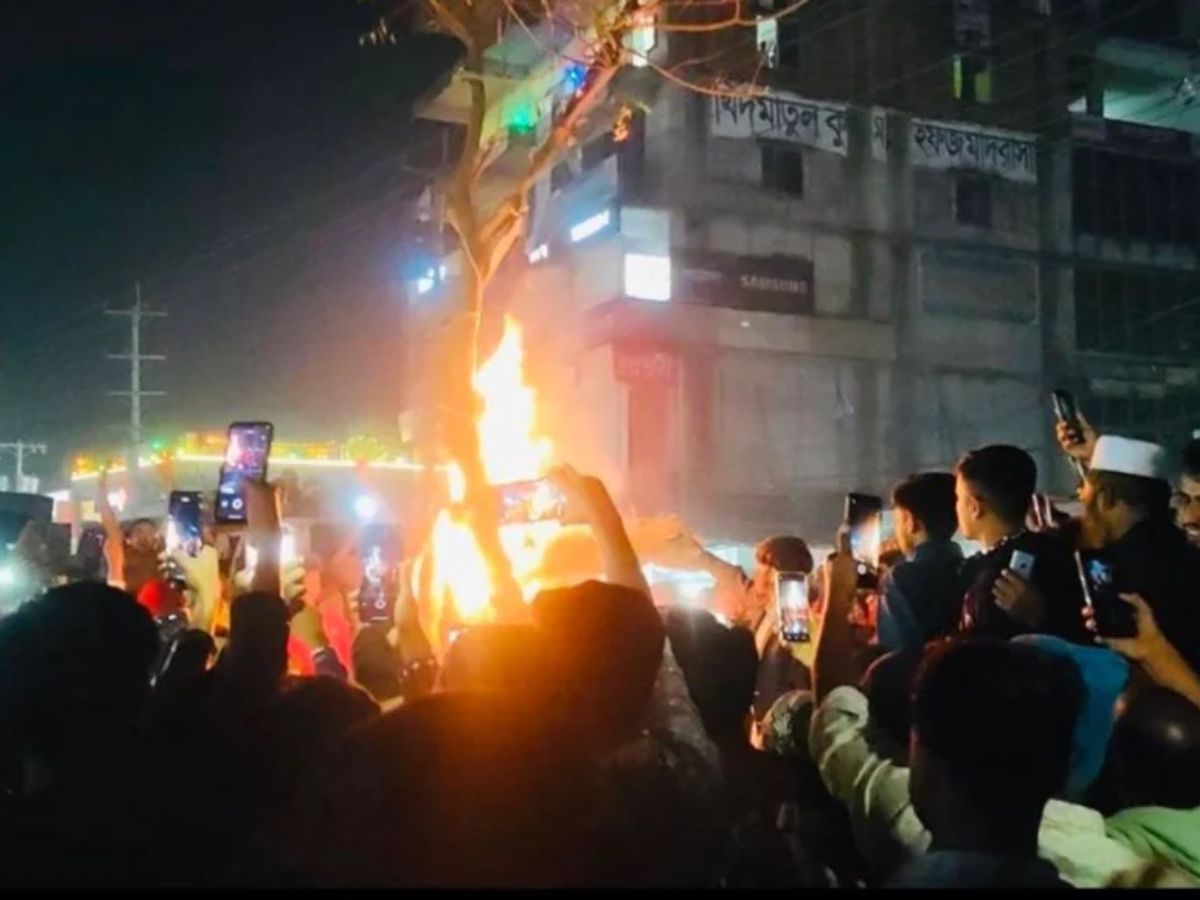
Bangladeshi authorities have arrested seven suspects in the mob lynching of a 27-year-old Hindu man, Dipu Chandra Das, whose father has given a harrowing account of his son being tied to a tree and set on fire. The killing occurred Friday in the Baluka area of Mymensingh district amid widespread and violent national protests following the death of a local youth leader.
Chief Adviser Muhammad Yunus confirmed the arrests by the elite Rapid Action Battalion (RAB-14) unit. The administration has condemned the act, stating, “There is no place for such violence in the new Bangladesh.”
‘They Poured Kerosene and Set Him on Fire’: A Father’s Anguish
In an exclusive interview with NDTV, the victim’s father, Ravilal Das, described learning of the attack through social media and local whispers before discovering the brutal truth. “We found out about it when someone told me he was beaten badly. Half an hour later, my uncle came and told me they took my son and they tied him to a tree,” he said.
Ravilal Das provided chilling details not previously fully disclosed by officials:
- The mob tied his son to a tree before dousing him with kerosene.
- Dipu Chandra Das’s burned body was left at the scene.
- The family has received no direct assurance or communication from the government regarding justice or security.
“No one from the government has given any assurance. No one said anything,” Ravilal told NDTV, expressing a profound sense of abandonment.
Also Read: Cement’s Low-Cost Rival? Lab Breaks New Ground With Zero-Cement, High-Strength Building Material
Who Are the Suspects Arrested in the Lynching?
The Rapid Action Battalion named the seven individuals taken into custody: Md. Limon Sarkar (19), Md. Tarek Hossain (19), Md. Manik Mia (20), Ershad Ali (39), Nijum Uddin (20), Alomgir Hossain (38), and Md. Miraj Hossain Akon (46). Their arrests followed operations at various locations, though official charges are pending.
How Does This Lynching Connect to Bangladesh’s Broader Unrest?
This incident did not happen in isolation. It comes after days of violent protests and major anti-government mobilization sparked by the recent death of youth leader Sharif Osman Hadi. The unrest has seen:
- Attacks on newspaper offices, including The Daily Star.
- Protests with distinct anti-India overtones near the Indian High Commission in Dhaka and other diplomatic posts.
- A deteriorating security situation that prompted India’s External Affairs Ministry to summon Bangladesh High Commissioner Riaz Hamidullah to formally protest the threat to its mission.
What Is the Government’s Official Stance on the Violence?
In an official statement following the lynching, the Bangladesh government voiced “deep condemnation.” It asserted, “No one involved in this brutal crime will be spared.” The statement presents the act as an anomaly against the state’s vision, a response likely directed at both domestic and international observers concerned with minority rights and law.
This case now becomes a critical test of that pledge, unfolding against a complex backdrop of social tension, political grievance, and international diplomatic concern.
Also Read: Not Just Dropped, But Left in Dark? The Gill Omission That’s Raising Eyebrows in Indian Cricket