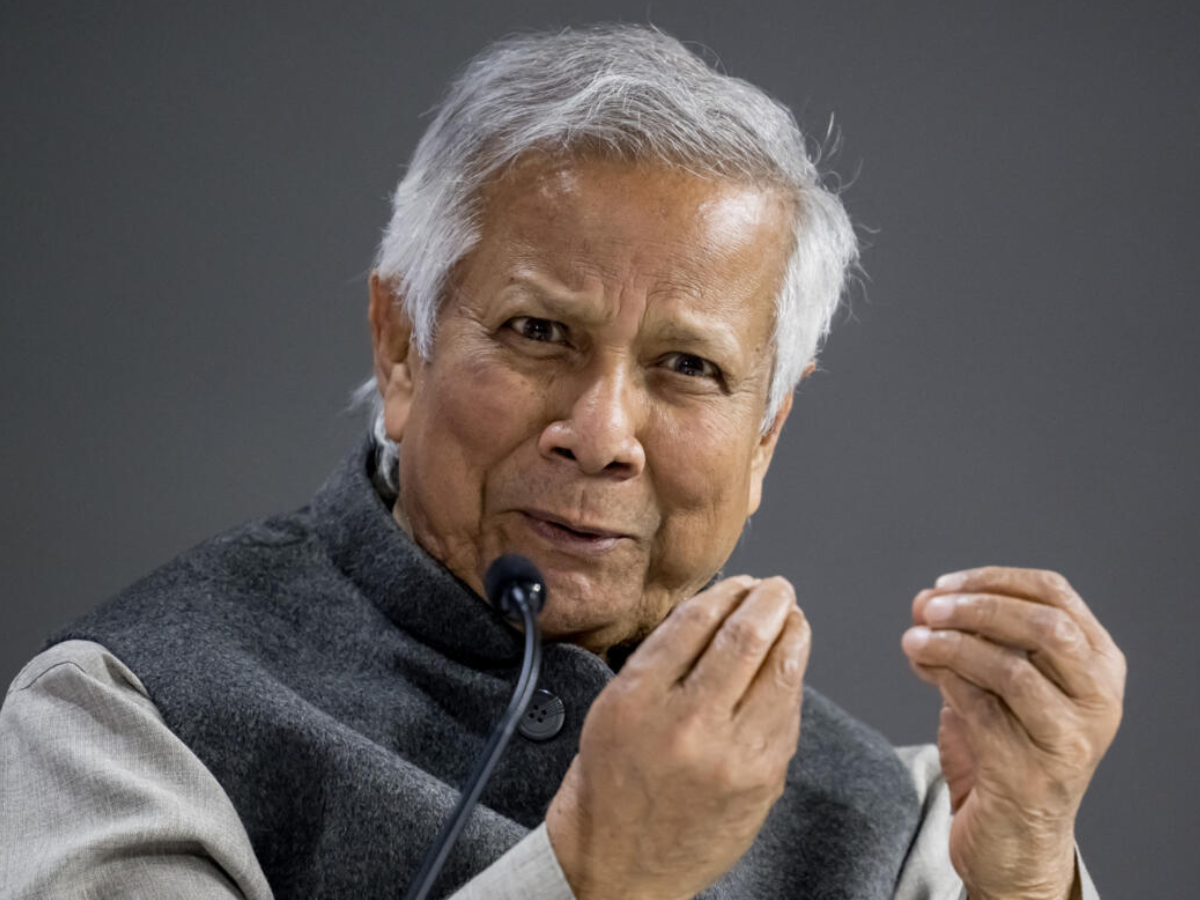
Bangladesh Chief Adviser Muhammad Yunus on Tuesday announced that the next general election will be conducted in February 2026.
“On behalf of the interim government, I will write to the Chief Election Commissioner, requesting that the Election Commission organise a national election in February 2026, before the next Ramadan,” Chief Adviser Muhammad Yunus said.
Preparation and Appeal to Political Parties
“We will all begin mental preparation and institutional arrangements from tomorrow to complete all arrangements so that this year’s election is memorable in the country’s history in terms of joy and celebration, peace and order, voter turnout, and cordiality,” he added.
“My appeal to political parties is that in your election manifestos, in your promises, pledges, and plans, the youth should not be left out. Women should not be left out. Remember, the youth who have changed Bangladesh have the power to change the world as well,” Yunus said.
July Declaration Officially Released
Earlier today, the interim government of Bangladesh formally released the “July declaration”, a formal announcement of the July Mass Uprising of 2024 in Bangladesh. Chief Adviser Muhammad Yunus has proclaimed the declaration that includes 26 points of political, constitutional and governance matters in conformity with the spirit of the student-led mass uprising that toppled the former Prime Minister Sheikh Hasina.
The caretaker government had a dialogue with the political parties that took part in the movement against Sheikh Hasina prior to finalizing the “July Declaration”. The top brass of the parties, such as Bangladesh Nationalist Party (BNP), Jamaat-e-Islami, and recently established National Citizen Party (NCP) leaders, were there when this declaration, adopted at the political parties’ instance, was made public at the South Plaza of the Bangladesh Parliament Complex during the anniversary of the uprising.
Criticism of Past Governance and Constitutional Reform
The July proclamation condemned the 1972 constitution following the war of independence against Pakistan in 1971 and vowed to amend it.
“Whereas, the post-independence Awami League government failed to materialise the people’s aspirations because of the weaknesses in the procedures of drafting and in the structure of the constitution, along with its inappropriate application,” the July Declaration said.
“Whereas, during the rule of Sheikh Hasina, under her very leadership, an extreme force that was anti-people, autocratic and against human rights turned Bangladesh into a fascist, mafia and failed state and thereby tarnished Bangladesh’s international image,” it added.
“Therefore, the people of Bangladesh express their desire that the student-people uprising of 2024 will get proper state and constitutional recognition and that the July Declaration will feature in the schedule of the reformed constitution as framed by the government formed through the next national election,” the July Declaration said.
Thousands of people gathered at Manik Mia Avenue, a major street in Sher-e-Bangla Nagar, Dhaka, on Tuesday, forming the south boundary of the National Parliament House Complex, to celebrate the first uprising day and the one-year anniversary of the overthrow of the previous Sheikh Hasina government, amid high security. The interim government of the South Asian country of 170 million people has organised the mega-event after declaring the day a national holiday.
Human Rights Watch Criticises Interim Government
Human Rights Watch (HRW) was critical of the interim government of Mohammad Yunus for failing to deliver on its difficult human rights agenda, a year after tens of thousands of people marched onto the streets to overthrow Sheikh Hasina’s government.
“The hope of the thousands who braved lethal violence a year ago when they opposed Sheikh Hasina’s abusive rule to build a rights-respecting democracy remains unfulfilled,” said Meenakshi Ganguly, deputy Asia director at HRW.
“The interim government appears stuck, juggling an unreformed security sector, sometimes violent religious hardliners, and political groups that seem more focused on extracting vengeance on Hasina’s supporters than protecting Bangladeshis’ rights,” she added.
Bangladesh is in emergency alert at the anniversary of the uprising. Security agencies, including the police, have established roadblocks on the roads and are carrying out searches.
Historical Context and Background
Bangladesh’s Independence hero, Sheikh Mujibur Rahman, was murdered along with the majority of his family on August 15, 1975. In spite of the prohibition of the activities of the Bangladesh Awami League, the party is marking August as a month of mourning.
Bangladesh’s last Prime Minister Sheikh Hasina was removed in a Student-led rebellion, the July uprising or July revolution, in August last year. She had escaped to India, and an interim government came under the leadership of Muhammad Yunus, a Nobel Laureate. (ANI)