

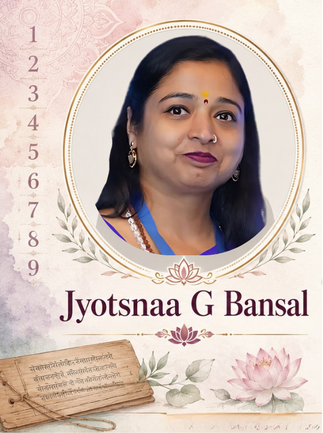
Numerologist, researcher and author Jyotsnaa G. Bansal is exploring the intersection of numerology and Indian Knowledge Systems through academic research. Her latest paper, published in Prajnā, a reputed research journal of Poornaprajna Samshodhana Mandiram, Bengaluru, examines shastric concepts through a research-based approach. In this exclusive interview with The Daily Guardian, she discusses her work, philosophy and vision for blending ancient wisdom with modern life.
1. What inspired you to take numerology into academic research?
Ans. After learning numerology, I experienced that it was viewed merely as a vague, isolated or prediction or belief-based practice. I wanted to explore it beyond prediction and belief & present Numerology as a meaningful subject for serious academic discussion.
2. How do you respond to those who question the academic validity of numerology?
Ans. I believe these questions only motivated me – to study Numerology systematically within the framework of Indian Knowledge Systems, to connect them with Indian Shastric concepts & examine them through patterns, conceptual correlation & interdisciplinary research.
3. What is the most significant takeaway from your research paper published on Ayurvedic Numerology?
Ans. This study suggests that Numerological profile (after considering various factors, not only Date of Birth) of a person can offer an additional perspective on a person’s natural constitution, health, behaviour & related aspects when studied in accordance with Ayurvedic concepts.
4. How has your HR career shaped your Numerology and Research journey?
Ans. Coming from the HR background has helped me to deal with different types of people, as I am also a Certified Corporate Trainer & Facilitator which further helped me in Numerologic Consultations. I After carefully analysing the date of birth numbers & other calculated numbers, I was able to deal with different clients with a blend of HR & Professional Numerologist’s Skills.
5. How can Indian Knowledge Systems help address modern-day challenges?
Ans. Our Indian Knowledge Systems offer a rich and holistic understanding and practical solutions to many modern challenges of almost every aspect of life. Our Vedic scriptures discuss health through Ayurveda and Yoga, education through the Gurukula tradition, finance and governance through the Arthashastra, ethics through the Bhagavad Gita, social duties through Dharmashastra and national security, diplomacy and polity through Chanakya’s teachings.
Their greatest strength is that they do not treat problems in isolation. They connect individual well-being, social harmony, responsible leadership, economic balance and national interest.
6. What is your latest published research connecting Numerology with Indian Knowledge Systems and what further areas are you currently exploring?
Ans. My latest Research paper on the interdisciplinary study of Numerology & Indian Knowledge systems & philosophical framework is published in Prajnā (Reputed Research Journal) published by Poornaprajna Samshodhana Mandiram, recognized as an Adarsh Shodh Sansthan (Model Research Institute) by Central Sanskrit University. I am working further beyond the concepts covered in my research paper and examining several additional philosophical and numerological connections in a simple and systematic manner.
7. Why do you think young Indians are increasingly drawn to traditional wisdom?
Ans. Traditional Indian wisdom offers practical guidance on health, relationships, discipline, leadership and mental well-being. At the same time, India’s growing presence on the world stage has created greater pride and curiosity about our intellectual heritage. Young people, searching for inner balance, identity and deeper meaning, are therefore returning to their roots—not to reject modernity, but to combine ancient wisdom with modern life.
8. What did your healing journey teach you about holistic wellness?
Ans. My healing journey taught me that true wellness is not limited to medicines or physical treatment alone. Wellness is a blend of physical care, mental balance, emotional healing and spiritual well-being, where different practices work together to support the healing of the body, mind, emotions and inner energy. Yoga played a major role by improving my strength, balance and connection with my body. I also experienced the calming effect of Chakra Healing Sounds, Reiki, Meditation and Indian herbs.
9. What does the Arundhati Vidushi Pratibha Samman mean to you?
Ans. Receiving the Arundhati International Vidushi Pratibha Samman on Women’s Day, during the Third Global Vidushi Confernce-2026 organised by the Global Sanskrit Forum at Lucknow University, was a deeply meaningful moment for me. As the Managing Editor of ASMITAA (an International, Peer-Reviewed, Tri-Lingual, Bi-Monthly IKS based Academic Magazine), I see this honour not only as personal recognition, but also as encouragement for my work in research, writing and the promotion of Indian Knowledge Systems.
10. How do you envision blending ancient wisdom with modern life and leadership?
Ans. By connecting ancient values with modern needs, we can create meaningful progress. The values in our ancient wisdom guide us to lead with discipline, ethics, compassion and balance.






