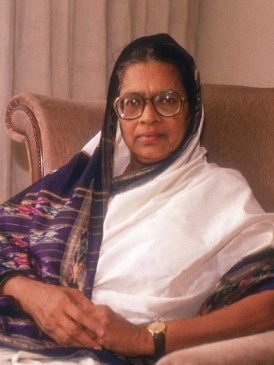
October 6, 1989, marked a turning point in the history of India’s judiciary when Justice M. Fathima Beevi became the first woman judge of the Supreme Court of India. Her journey from a young law graduate in Kerala to the country’s highest court was built through a series of firsts across the judicial system.
A milestone reached on October 6
When M. Fathima Beevi took her place on the Supreme Court on October 6, 1989, she entered an institution that had existed for nearly four decades without a woman judge.
Born on April 30, 1927, in Pathanamthitta, Kerala, Beevi pursued her education at a time when professional opportunities for women were considerably narrower than they are today. She studied at Catholicate High School in Pathanamthitta and went on to obtain a B.Sc. from University College, Thiruvananthapuram, followed by a law degree from Law College, Thiruvananthapuram.
She enrolled as an advocate on November 14, 1950. That marked the beginning of a judicial career that would eventually take her through almost every level of the legal system before she reached the apex court.
From the bar to the bench
Beevi entered the Kerala subordinate judicial service in May 1958 as a munsiff. From there, she steadily moved through the judicial hierarchy.
She became a subordinate judge in 1968 and a chief judicial magistrate in 1972. In 1974, she was promoted as a district and sessions judge. In January 1980, she became a judicial member of the Income Tax Appellate Tribunal.
Each step added another distinction to her career. She became the first female judicial member of the Income Tax Appellate Tribunal, adding another milestone to a professional journey that was already breaking traditional barriers.
In 1983, Beevi was elevated to the Kerala High Court and became a permanent judge the following year. She was the first female Muslim judge of a High Court in India.
By then, her career had already established that her appointment to the Supreme Court would not be an isolated breakthrough. It was the culmination of more than three decades spent moving through the legal and judicial system.
The first woman at the Supreme Court
On October 6, 1989, Beevi was elevated to the Supreme Court.
The significance of the appointment went beyond the fact that she was a woman. She was also the first Muslim woman to serve as a judge of India’s Supreme Court. Her elevation therefore represented a breakthrough on more than one front.
Her tenure at the apex court lasted until April 29, 1992. She spent less than three years on the Supreme Court bench, but the importance of those years lay not simply in their duration.
Her elevation demonstrated that the highest levels of India’s judiciary were no longer an entirely male preserve.
For women entering the legal profession, the appointment carried a significance that extended beyond one individual career. A woman had reached the highest judicial institution in the country, creating a precedent that could not be reversed.
A career built on successive firsts
Beevi’s professional journey stands out because the Supreme Court was only one of several barriers she crossed.
Her legal career began in 1950, when women remained a small presence in the profession. She began her judicial career at the level of a munsiff and gradually advanced through the subordinate judiciary.
Her rise was neither sudden nor confined to one branch of the legal system. She served as a subordinate judge, chief judicial magistrate, district and sessions judge and judicial member of the Income Tax Appellate Tribunal before moving to the High Court.
Her elevation to the Kerala High Court was another landmark. Five years later, she reached the Supreme Court.
The progression showed the breadth of her judicial experience. She had worked at different levels of the justice system before becoming a member of the country’s highest court.
Beyond the Supreme Court
Beevi retired from the Supreme Court on April 29, 1992. But retirement from the apex court did not mark the end of her public career.
She went on to serve in other important public institutions. She became the first chairperson of the Kerala Backward Classes Commission and later served as the first woman member of the National Human Rights Commission.
In January 1997, she entered another constitutional office when she was appointed Governor of Tamil Nadu.
She served as Governor from January 25, 1997, to July 1, 2001.
Her public life after the Supreme Court reflected the same trajectory that had defined her judicial career. She continued to occupy positions in institutions that played important roles in governance, social justice and constitutional administration.
A trailblazer remembered
Beevi’s career remained significant long after she left the Supreme Court.
In 2023, Prime Minister Narendra Modi described her as a trailblazer whose journey had broken several barriers and inspired women.
She died on November 23, 2023, at the age of 96.
Her contribution was recognised posthumously in 2024 when she was awarded the Padma Bhushan. The honour acknowledged her contribution as an eminent jurist and her pioneering role in the Indian judiciary and public life.
The recognition also underlined the lasting importance of a career that had begun more than seven decades earlier.
The door she opened
Justice M. Fathima Beevi’s story is not simply about a woman becoming the first woman judge of the Supreme Court.
It is the story of a professional journey that began in Kerala in the early years of independent India and progressed through the bar, subordinate judiciary, district judiciary, High Court and finally the Supreme Court.
On October 6, 1989, that journey crossed a historic threshold.
For decades, the Supreme Court had stood as one of the most important institutions of India’s constitutional democracy, but its bench had remained exclusively male. Beevi’s elevation changed that.
She retired from the Supreme Court in 1992, but the significance of October 6, 1989, remained. The first woman had entered the country’s highest court, establishing that the barrier could be broken.
Her career subsequently carried that breakthrough into other institutions — the Kerala Backward Classes Commission, the National Human Rights Commission and the Raj Bhavan in Tamil Nadu.
Justice Fathima Beevi’s journey remains a landmark in the history of Indian women and the judiciary. Her achievement was not only that she became the first woman to sit on the Supreme Court bench, but that she reached there through a long judicial career-built step by step.
October 6, 1989, therefore remains a defining date in India’s judicial history — the day Fathima Beevi became the first woman judge of the Supreme Court of India.