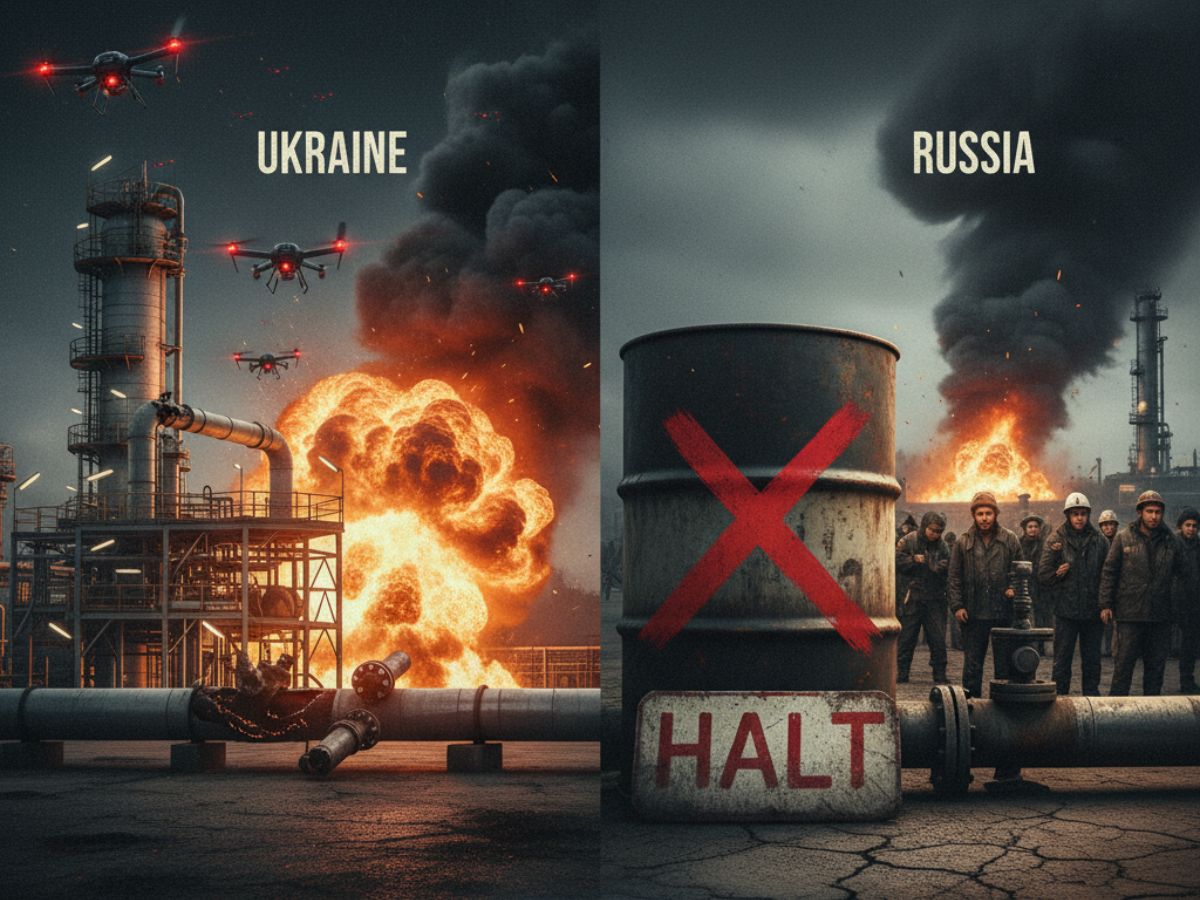
Russia has been forced to extend a ban on fuel exports until the end of the year, a dramatic move that underscores the severe impact of Ukrainian drone strikes on its energy infrastructure. Despite official efforts to minimize the issue, the decision highlights a worsening internal crisis as petrol stations nationwide and in occupied territories like Crimea face acute shortages.
Why Has Russia Extended the Fuel Export Ban?
The official reason, given by Deputy Prime Minister Alexander Novak, is to address a domestic “slight shortage of petroleum products.” He claimed the situation is being managed using “accumulated reserves.” However, the extension of the embargo on both gasoline and diesel exports until December 31 directly contradicts the initial official narrative that blamed temporary “logistical reasons.” The government is clearly prioritizing domestic supplies over vital export revenue, as evidenced by the prohibition, which suggests the shortage is more severe than officials acknowledge.
What is the Real Cause of the Shortages?
The primary driver of the fuel crisis is an intensifying campaign of Ukrainian drone strikes. All summer, Kyiv has struck at Russia’s fuel network—refineries, pumping stations, and trains—in a bid to choke supply lines and cut off a vital war chest for the Kremlin. The Ukrainian Air Force announced this week that it had successfully attacked a significant refinery run by Gazprom in Bashkortostan, in the heart of southern Russia. The production problems, which even Russian-appointed officials in occupied territories now accept, are the result of these attacks’ severe reduction of refining capacity.
How Severe is the Situation on the Ground?
Reports from various sources paint a picture of a worsening crisis:
Rationing: Some Russian districts have started restricting fuel, limiting the amount that each consumer may purchase, according to the pro-Kremlin tabloid Izvestia.
Empty Pumps: In annexed Crimea, the situation is critical. The business outlet Kommersant reported that about half of all petrol pumps on the peninsula are out of service.
Long Queues & Price Hikes: Social media and local Telegram channels show long lines at functioning stations. The channel “Crimean Wind” reported that the city of Sevastopol was completely out of gasoline, and when tankers arrived, they were emptied within hours. Prices have reportedly surged by about a third.
The channel added with sarcasm: “There are no lines for hay yet, and the prices for horses and donkeys are stable.”
Also Read: ‘Russia is Testing Us’: NATO Warns of ‘Full Force’ Response to Airspace Violations
What Are the Broader Implications?
Russia faces serious economic and strategic ramifications from the fuel crisis.
Economic Blow: As one of the world’s largest diesel producers, Russia relies on fuel exports as a major source of government revenue. Halting these exports inflicts a direct financial wound.
Domestic Discontent: Shortages at the pump and surging prices risk fueling unrest, challenging the Kremlin’s narrative of normalcy.
Military Logistics: When it comes to military logistics, fuel shortages unavoidably make it more difficult to transfer troops and equipment to the front lines in Ukraine.
Ukraine’s policy of attacking energy infrastructure is clearly working, as evidenced by the extension of the export embargo, which creates a key vulnerability distant from the front lines of the conflict.