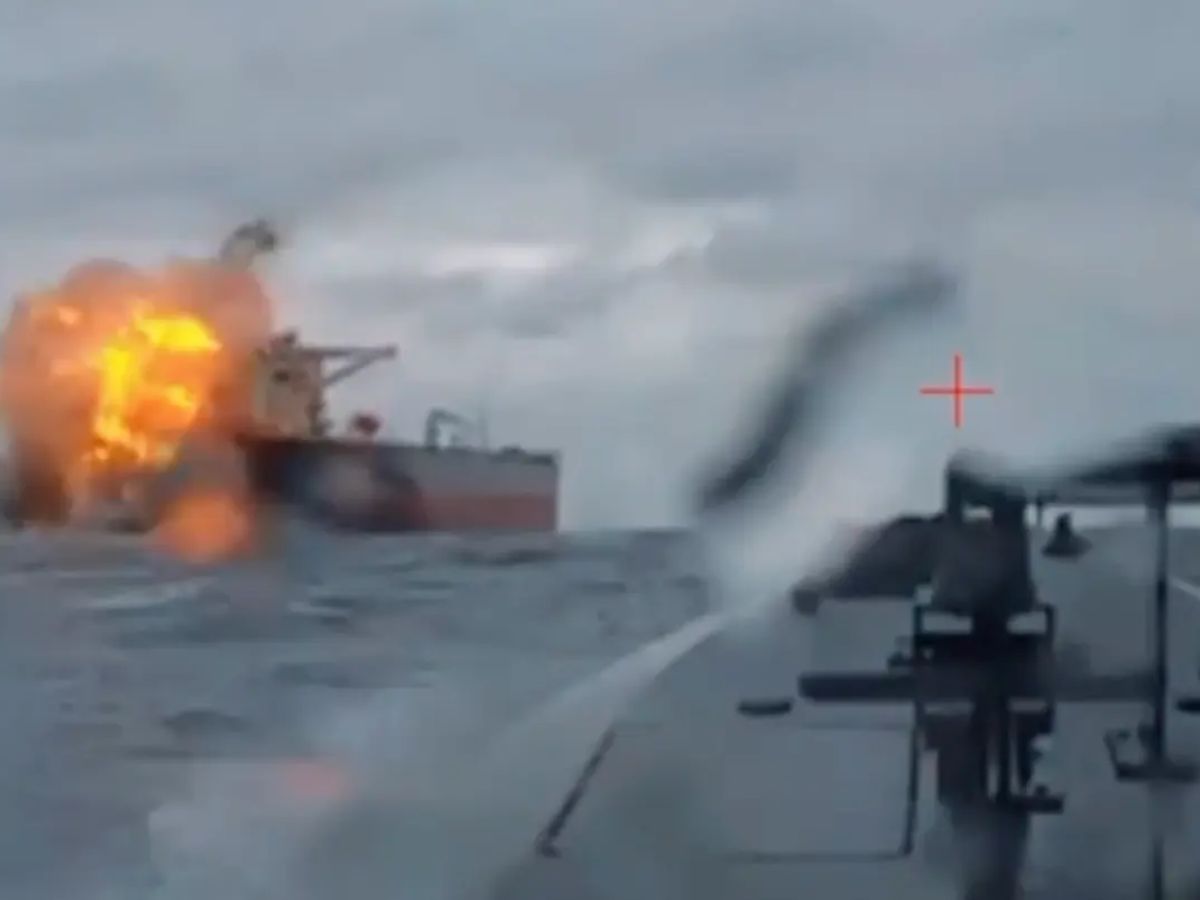
In a continued campaign to disrupt Russia’s oil export revenue, Ukrainian sea drones struck and critically damaged the tanker Dashan in the Black Sea on Wednesday. The attack is the third successful hit on ships from Russia’s “shadow fleet” in two weeks, intensifying a maritime conflict that is raising insurance costs and putting key shipping routes at risk.
How Did the Attack Unfold?
According to a Security Service of Ukraine (SBU) official, the Dashan was sailing at maximum speed with its tracking transponders switched off—a tactic used by the sanction-evading “shadow fleet”—through Ukraine’s exclusive economic zone en route to the Russian port of Novorossiysk.
The attack was captured on video, verified by Reuters, which showed naval drones speeding toward the large tanker followed by powerful explosions upon impact. The SBU source stated the explosions hit the vessel’s stern, inflicting “critical damage” and disabling it. There was no immediate information on casualties, and Russia did not comment on the incident.
What is Russia’s “Shadow Fleet” and Why is it a Target?
“Shadow fleet” refers to a set of older tankers that operate beyond Western regulations, employing opaque ownership and insurance to move Russian oil in defiance of post-2022 sanctions. These vessels allow Moscow to sell oil globally and finance its military.
The SBU official explicitly linked the attacks to this financial warfare, stating: “The SBU continues to take active measures to reduce petrodollar revenues to the Russian budget… that had helped the Kremlin circumvent international sanctions.” The Dashan itself is under European Union and British sanctions and was sailing without a known flag registry.
What is the Broader Impact of These Attacks?
Ukraine’s prolonged conflict with Russian oil infrastructure is expanding from land-based refineries to the maritime sector with dire consequences:
Escalation at Sea: These attacks mark a new front. Along with at least seven other suspected Ukrainian strikes on tankers in the Mediterranean since December 2024, they show Kyiv’s aim to extend its reach far beyond its own shores.
Economic Pressure: Ukraine is increasing the danger to these vessels to make shipping Russian oil extremely expensive and difficult, directly squeezing funds for the war.
Insurance Crisis: The conflict has already caused war insurance costs for Black Sea shipping to spike dramatically, with insurers reviewing policies daily. This raises global shipping costs and disrupts trade.
Russian Threats: In response to previous attacks, President Vladimir Putin threatened last week to “sever Ukraine’s access to the Black Sea,” accusing Kyiv of piracy and raising the risk of further naval escalation.
Your Questions Answered: Ukraine’s Maritime Campaign FAQs
Q: What kind of drones did Ukraine use?
A: USVs, often called “sea drones,” are unmanned surface vessels that are usually small, fast, and explosive-laden. Remote operation makes them challenging to detect and stop.
Q: Is attacking civilian tankers legal under international law?
A: Since these ships are a part of a supply chain that directly finances Russia’s war effort, Ukraine claims they are valid military targets. Russia and some international lawyers may label the attacks as unlawful interference with civilian shipping. The legal status is a subject of intense debate.
Q: How does this differ from attacks on Russian refineries?
A: Russia’s domestic gasoline output and military supplies are the targets of the refinery strikes. Tanker strikes target the cash flow directly in an effort to interfere with export earnings after the oil is produced.
Q: Can Russia stop these drone attacks?
A: It is challenging. The Black Sea is vast, and the small, low-profile drones are hard to spot. While Russia has increased patrols and defenses around critical ports like Novorossiysk, intercepting every drone in open water is extremely difficult.
Q: What happens to a “disabled” tanker?
A: A severely damaged tanker cannot move on its own. It would probably need substantial repairs and an expensive salvage operation, which would keep it out of service for a long time. An oil spill poses a serious risk to the environment.