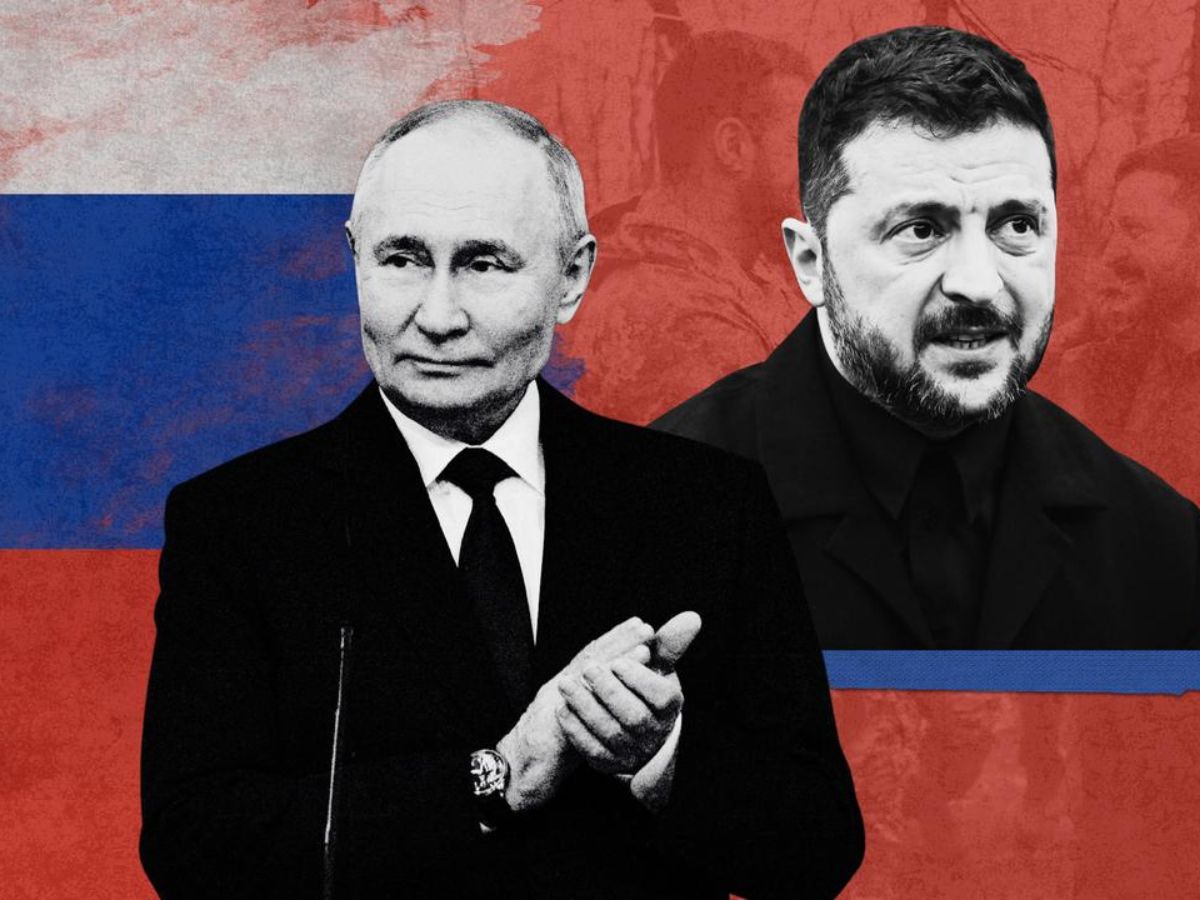
Ambitious plans for a historic face-to-face summit between Ukrainian President Volodymyr Zelensky and Russian President Vladimir Putin appear to be losing momentum—just days after US President Donald Trump expressed confidence that a meeting could happen within weeks.
Trump’s Optimism Meets Kremlin Vagueness
President Trump revealed that he had “begun arrangements” for a summit, suggesting that Putin signaled agreement during a recent phone call. But Moscow quickly watered down expectations. Russian aide Yuri Ushakov stated the two leaders had only discussed “raising the level of representatives,” hinting that ministers—not presidents—might meet.
German Chancellor Friedrich Merz echoed cautious optimism, saying a summit was possible “within the next two weeks,” though he cast doubt on Putin’s willingness to attend without heavy persuasion. Trump, meanwhile, warned of a “rough” outcome for Russia if it refused to cooperate but gave no details.
Security Guarantees: The Core Sticking Point
At the heart of the deadlock are security guarantees for Ukraine. Trump envoy Steve Witkoff claimed Russia had accepted terms, but it later emerged these guarantees mirrored Moscow’s earlier rejected proposals from 2022—ones that gave Russia veto power over foreign military support to Kyiv and banned Western troops on Ukrainian soil.
Foreign Minister Sergei Lavrov reinforced this stance, calling any alternative framework “an absolutely futile undertaking.” Zelensky, however, insists that guarantees must come from Western allies, explicitly excluding Russia. This clash leaves the sides entrenched and unwilling to budge.
Where Could They Meet?
Diplomatic whispers have floated venues across Europe and beyond: Budapest, Vienna, Geneva, Istanbul, the Vatican, and Saudi Arabia. Each comes with symbolic baggage.
- Budapest is favored by the Americans but strongly opposed by Poland’s Donald Tusk, who recalled the city’s role in Ukraine’s 1994 nuclear disarmament deal—later violated by Russia. Zelensky himself called Budapest “challenging,” citing Viktor Orban’s pro-Moscow leanings.
- Switzerland and Austria are neutral but ICC signatories, complicating matters given Putin’s outstanding arrest warrant for alleged war crimes.
- Istanbul hosted past delegation-level talks, though they failed to yield results.
- The Vatican and Saudi Arabia remain long-shot contenders, with both positioning themselves as brokers of prisoner exchanges and peace efforts.
For now, no consensus has been reached.
War on the Ground Undermines Diplomacy
Even as speculation over a summit swirls, fighting rages on. Ukraine announced a strike on a Russian oil refinery in Rostov region, while Russia unleashed its heaviest wave of missile attacks in weeks, killing at least one and injuring many.
Zelensky posted defiantly on social media: “There is still no signal from Moscow that they are truly going to engage in meaningful negotiations and end this war. Pressure is needed.”
Also Read: Global Outcry Builds: 27 Nations Demand Israel Open Gaza to Foreign Journalists
Remote Possibility, High Stakes
Both sides continue to accuse each other of blocking peace efforts. With Moscow demanding restrictive security guarantees and Kyiv refusing to compromise, the likelihood of a Putin–Zelensky summit remains remote, despite Trump’s push and mounting international pressure.