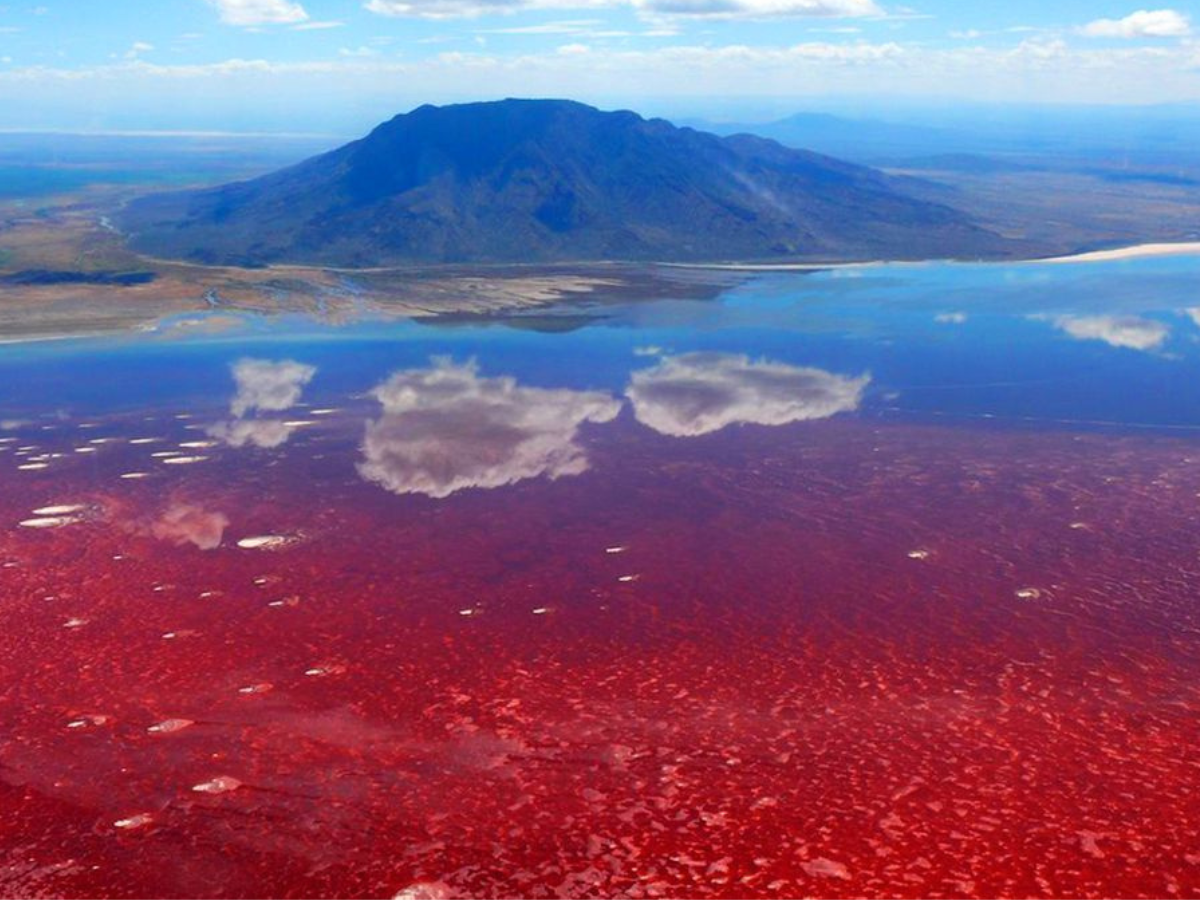
In the north of Tanzania, near the Kenyan border, is one of the most amazing and haunted natural marvels on the planet: Lake Natron. This small salt and soda lake in the Great Rift Valley is unique compared to any other waterbody.
Location and Origins
Lake Natron, one of the famous sites of Tanzania, sits at the foot of the active Ol Doinyo Lengai volcano, commonly known as the “Mountain of God” by native Maasai people. This volcano dominates the lake’s distinctive chemistry. Volcanic ash and minerals have settled in the lake over thousands of years, endowing it with its high concentrations of sodium carbonate and other alkaline salts. The lake is shallow never more than three meters deep and measures some 57 kilometers long and 22 kilometers wide.
Why Does It Mummify Animals?
The water in the lake possesses a pH value of up to 10.5, nearing the level of household ammonia. Coupled with excessive salt and mineral content, it is intensely dangerous. The temperature rises up to 60°C (140°F). Birds and other small creatures, which accidentally alight on the water, are soon submerged by the scorching salts. The caustic water peels off tissue and, eventually, crusts the body of the animal with minerals and salt.
Also Read: Alyssa Carson: The Girl Who Wanted to Go to Mars but Will Never Return to Earth
How Many Animals Have Been Mummified?
No exact scientific tally has been done, but numerous explorers, scientists, and photographers most notably Nick Brandt have captured the spooky image of calcified birds, bats, and even small mammals. The tally is in the hundreds over decades, though not on a mass extinction level. Most creatures that die here are those that inadvertently crash into the reflective lake surface, confusing it for hard land or quieter water.
Also Read: Is Enteromix vaccine is The Unexplained Answer For cancer Patient In Future?
What About Humans?
The hostile environment of Lake Natron is also very perilous for human beings. Exposure to the water over a long period of time results in severe burns, skin scarring, and blindness. There are no recorded cases of humans being “petrified.” Humans who go near the lake usually do not touch its water directly.
The Paradox of Flamingos
Though infamous for its killing power, Lake Natron is among the top breeding sites in the world for lesser flamingos. The toxic ecosystem shields the flamingos from potential predators, providing a secure nesting site on remote mudflats. Over 2.5 million flamingos use Lake Natron to nest their young annually, and it is vital for their survival.
When Did This Mystery Start?
Its unusual properties have been in place for thousands of years, since volcanic action deposited minerals into the basin. Its ghostly reputation as a “petrifying lake” developed more recently, particularly after sensational photos of calcified animals hit the headlines during the early 2010s.
Also Read: Animals That Can Regrow Entire Organs