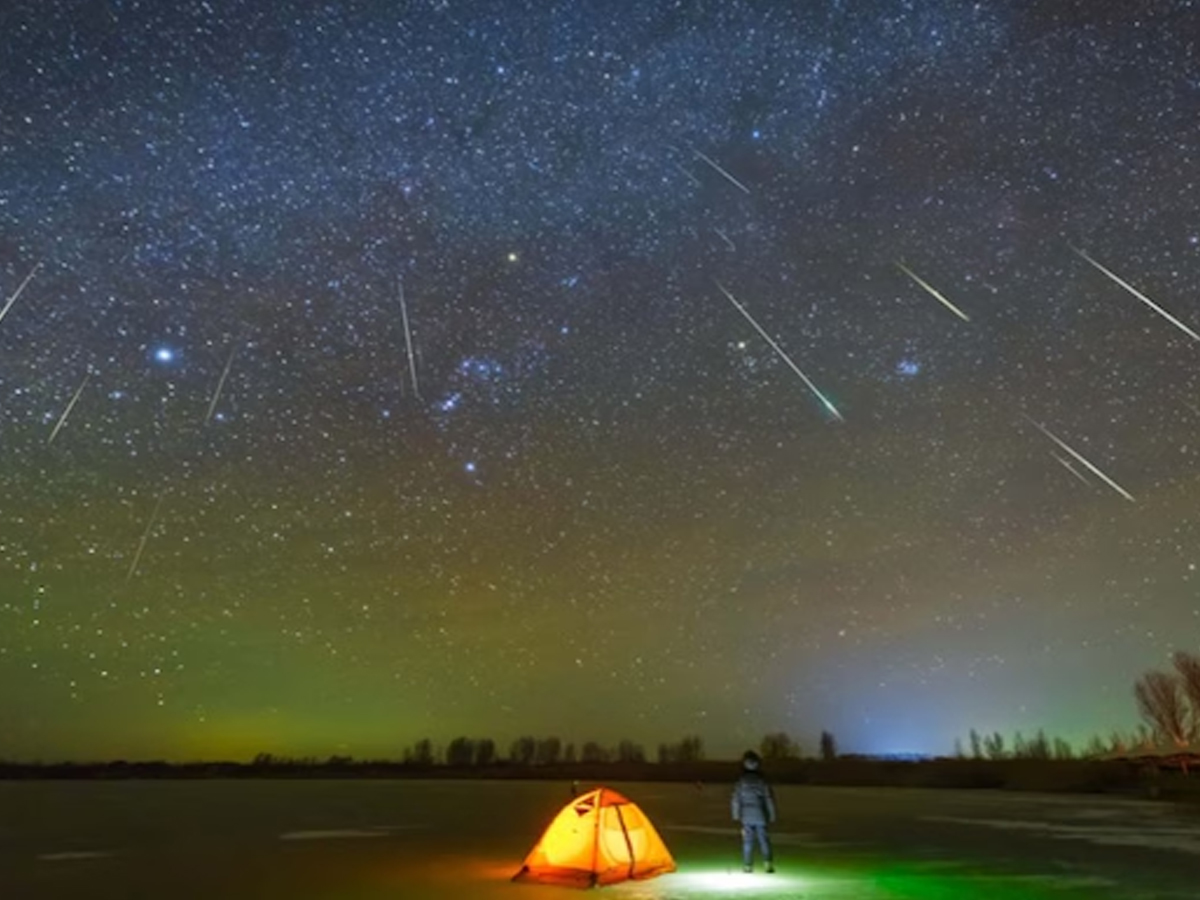
Skywatchers in India are in for a spectacular treat this December as the Geminid meteor shower, one of the brightest and most dependable meteor displays in the world, prepares to light up the night sky. The 2025 edition is expected to produce a strong show, and Indian viewers will get a clear viewing window during the late-night hours.
With the peak set for December 13–14, this is the best time of the year for anyone who wants to witness dozens of glowing streaks racing across the sky.
If you plan right, avoid city lights, and choose a clear, open spot, you can enjoy one of the most dazzling sky events of the year.
What Are the Geminids?
The Geminid meteor shower appears every December and is known for its bright, colorful meteors. While most meteor showers come from comet dust, the Geminids come from an asteroid called 3200 Phaethon, often described as a “rock comet.”
These meteors look bright and often appear yellow or white. They can shoot across any part of the sky, not just near the Gemini constellation.
Geminid Meteor Shower Timings in India (2025)
- Peak Night: December 13–14, 2025
- Best Time: Midnight to 4:00 AM
- Strongest Activity: 1:00 AM – 3:00 AM
India’s Northern Hemisphere position makes it ideal for watching the Geminids. With dark skies, you may see dozens of meteors per hour.
Can You Watch the Geminids in India?
Yes. The Geminids are clearly visible in most parts of India. Clear winter skies, low humidity, and long nights make December one of the best months for meteor viewing in the country.
To see more meteors, move away from city lights, avoid tall buildings, and give your eyes 20 minutes to adjust to the darkness.
Where to Watch the Geminid Meteor Shower in India
Best Dark-Sky Destinations (Hill Stations & Low-Light Areas)
North India: Mukteshwar, Kausani (Uttarakhand)
High altitude, crisp winter air, and open skies make them ideal for stargazing.
Corbett National Park:
Open landscapes and minimal lighting create perfect viewing conditions.
Rajasthan: Sambhar Lake
India’s largest salt lake offers wide, uninterrupted sky views.
- Desert Outskirts of Jaisalmer & Pushkar
- Desert weather increases visibility tremendously.
Maharashtra: Bhandardara, Lonar Crater
These lakeside and crater regions are famous for astronomy events and night-sky camps.
Karnataka & Western Ghats: Coorg, Chikkamagaluru
Cool weather, dark skies, and hilly terrain make these spots a favorite among astrophotographers.
Best Viewing Spots Inside Major Indian Cities
Even if you cannot travel, you can still catch the meteor shower from open locations within cities.
Delhi
- India Gate Lawns – Wide sky views
- Sanjay Van – Low-light patches
- Ambawatta One rooftops – Clear skyline
- Jama Masjid area – Open surroundings
Mumbai
- Marine Drive – Seaside, open horizon
- Juhu Beach – Large crowds but clear sky
- Worli Seaface – Quieter space for late-night watchers
- Girgaon Chowpatty – Good open sky visibility
Chennai
- Elliot’s Beach (Besant Nagar)
- Thiruvanmiyur Beach – Calmer, better suited for meteor viewing
Kolkata
- Prinsep Ghat – Riverfront with open sky
- Maidan Grounds – Perfect for lying down and watching the show
- Polo Floatel (Floating Hotel) – Sky + river views
Jaipur
- Central Park
- Amar Jawan Jyoti
- Jal Mahal Viewpoint
- Roads near Nahargarh – Ideal for photography
Bengaluru
- Nandi Hills – High altitude, very clear skies
- Skandagiri Night Trek
- Savandurga Hills
- Turahalli Forest edge – Low pollution
How to Photograph the Geminid Meteor Shower
Recommended Camera Setup
- Camera: DSLR/Mirrorless
- Lens: Wide-angle (14–35mm)
- Tripod: Stable, essential
- Aperture: f/1.8 to f/2.8
- ISO: 1600–3200
- Shutter: 10–30 seconds
- Focus: Manual focus to infinity
- Shooting Style: Continuous interval shooting
Photography Tips
- Avoid pointing the camera directly at bright light sources.
- Use a foreground (trees, hills, water bodies) for dramatic compositions.
- Keep shooting continuously — more frames mean a greater chance of capturing a meteor.
How to Watch the Geminids: Step-by-Step Guide
- Choose a dark location away from buildings and street lights.
- Face a wide-open sky, not just the direction of Gemini.
- Let your eyes adjust to the darkness for 20–30 minutes.
- Lie back on a mat or reclining chair.
- Keep your phone brightness low.
- Watch patiently — meteor showers require relaxed viewing.