
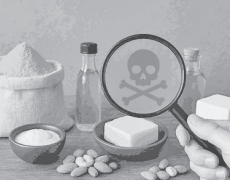
The recent food safety figures tabled in Parliament read less like a routine administrative report and more like an indictment of structural paralysis. While national data underscores a persistent enforcement deficit across India, Telangana’s numbers expose a complete institutional collapse. What local authorities have presented as an aggressive campaign hyped through task forces like the Hyderabad Food Adulteration Surveillance Team (HFAST) and viral restaurant raids is not proactive governance. It is reactive optics. In other words, damage control. It took parliamentary scrutiny to illuminate a stark reality: behind the high-profile inspections lies a system operating under functional immunity for offenders.
The Union Health Ministry’s data is unambiguous. Out of 3,576 food samples analyzed in Telangana during 2025–26, 398 failed quality checks; a failure rate exceeding 11%. Yet, despite nearly 400 non-conforming samples involving adulteration, misbranding, and toxic additives, the state logged zero civil penalties and zero criminal convictions. This was no single-year anomaly. Over a five-year parliamentary tracking window, more than 2,900 of nearly 21,000 tested samples failed checks in Telangana. The total tally of criminal convictions over that entire half-decade remains zero.
This zero-punishment record stands in sharp contrast to neighboring states. Tamil Nadu analyzed 44,603 samples; over twelve times Telangana’s volume. Tamil Nadu secured 1,359 penalties and 857 criminal convictions during the same period. Kerala tested 16,746 samples, yielding 1,026 penalties and 330 convictions. Even Andhra Pradesh, with a comparable footprint of 5,798 samples, recorded 196 penalties and 16 convictions.
The roots of Telangana’s breakdown are both institutional and administrative. In the Food Safety and Standards Authority of India (FSSAI) State Food Safety Index, Telangana cratered to 24th out of 28 states, scoring a dismal 35.75 out of 100. The index sub-categories reveal an administrative void: 2/100 in consumer empowerment, 1/100 in training, and 3.75/100 in human resources and data management. Nearly 46% of Food Safety Officer posts sit vacant statewide, leaving just 44 officers to cover the entire state while hundreds of legal cases languish in administrative backlogs before designated adjudicators.
This domestic failure operates alongside a broader, systemic double standard. In Western jurisdictions, food safety is anchored in strict precautionary principles. The European Union and the US FDA enforce rapid recalls, heavy corporate fines, and strict liability for toxic contamination. Yet, multinational conglomerates routinely exploit looser Indian regulatory enforcement. Investigation reports by Public Eye, for instance, revealed that infant cereals like Nestlé’s Cerelac contained up to 3 grams of added sugar per serving in India and developing nations, compared to zero added sugar in the UK and Germany.
Similarly, chemical additives and pesticides banned across the EU for neurotoxicity or endocrine disruption are routinely permitted in domestic food processing. While Indian agricultural exports undergo rigorous screening to avoid international rejections, domestic consumers are left exposed to synthetic dyes, starch-laced oils, industrial pigments like Titanium Dioxide, and adulterated dairy products that would fail basic compliance checks abroad.
Treating deliberate food fraud as a minor administrative infraction undermines deterrence entirely. When commercial suppliers knowingly introduce hazardous compounds into the food supply, regulatory mechanisms must shift from soft correction to rigorous criminal prosecution. Flashy enforcement drives and short-lived task forces mean little if they consistently end in zero judicial outcomes. Until state frameworks enforce strict penal provisions and clear judicial backlogs, public health will remain secondary to market impunity, leaving consumers to pay for food fraud through expensive medical bills. Safe food is not an administrative courtesy; it is a fundamental entitlement.
Akash Kolluru is National Spokesperson, Telangana Rakshana Sena (TRS). Views are personal