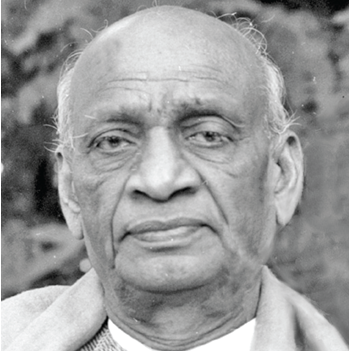
The birth anniversary of Sardar Vallabhbhai Patel is marked as ‘National Unity Day’ (Rashtriya Ekta Diwas) every year on October 31
In history, there are certain figures whose significance transcends the events of their own lifetime, becoming, in effect, timeless history. Such monumental figures, while addressing the challenges of their era, establish principles that serve as guiding lights for future generations. Sardar Vallabhbhai Patel was one such national leader.
His legacy in Indian history is unique; he is remembered as a valiant freedom fighter, an extraordinary organizer, a skilled administrator, and the primary architect of the political integration of modern India. Following India’s independence in 1947, Patel played a decisive role in the integration of over 562 princely states and the establishment of the All-India Services.
Today, as India navigates a new phase defined by economic aspirations, social diversity, technological transformation, and global competition, reflecting on the relevance of Sardar Patel is not merely an act of remembering the past—it is an essential engagement with the guiding ideas and policies he left behind, which continue to shape the path toward the future.
From independence to nation-building: an extraordinary challenge
Born on October 31, 1875, in Nadiad, Gujarat, Vallabhbhai Patel’s character was forged through struggle, discipline, and practical wisdom. Upon joining the freedom movement under the leadership of Mahatma Gandhi, he demonstrated his remarkable leadership abilities by organizing farmers during the Kheda Satyagraha and the Bardoli movement in Gujarat.
The Bardoli farmers’ movement earned him the title of ‘Sardar’ (Leader) and propelled his standing in national politics to new heights. The most challenging chapter of Sardar Patel’s historic role began following India’s liberation from British rule in 1947. At the time of the end of British colonial rule, the Indian subcontinent comprised over 562 princely states, each under the absolute authority of a ruler—be it a king, a maharaja, or a nizam.
The question of their future posed a significant challenge to the integrity of the newly independent India. Had these princely states not been integrated and merged into independent India, the nation’s political geography could have become fragmented, severely compromising its national unity, sovereignty, and prospects for development.
During this critical period, Sardar Vallabhbhai Patel—then Deputy Prime Minister and Home Minister—along with his associates, including V. P. Menon, employed a combination of dialogue, diplomacy, pragmatic understanding, and, where necessary, firm administrative action.
Consequently, the historic process of integrating these states into the Indian Union moved forward; Sardar Patel also played a decisive role in resolving complex cases such as those of Junagadh and Hyderabad. This achievement underscores that nation-building is not merely a matter of proclaiming ideals; it requires vision, timely decision-making, the capacity for dialogue, and an unwavering commitment to national interests. Patel exemplified a synthesis of these qualities—a model that remains a guiding policy and principle for governments even today.
He played a Crucial role in lifting the ban on the RSS
Sardar Vallabhbhai Patel played a pivotal role in the process of lifting the ban imposed on the Rashtriya Swayamsevak Sangh (RSS) in 1949. Following the assassination of the Father of the Nation, Mahatma Gandhi, the then-central government had imposed a ban on the RSS in February 1948. Sardar Patel, who served as the Home Minister, took the initiative to hold decisive talks aimed at lifting this ban. Consequently, the Government of India formally removed the ban on the RSS on July 11, 1949.
Dialogue with firmness: The true essence of leadership
Sardar Patel is known as the ‘Iron Man’ (Lauh Purush). However, it would be inaccurate to define his personality solely as a symbol of rigidity. His political style combined firm determination with pragmatism and the ability to make decisions tailored to specific circumstances.
His approach to the integration of princely states—utilizing a mix of negotiations, agreements, and other measures suited to the unique situation of each state—serves as a prime example of this vision. The enduring relevance of Patel lies in this balance: firmness is not the same as stubbornness, and dialogue is not a sign of weakness.
True, effective leadership requires the courage to take necessary decisions while remaining constantly mindful of the consequences of those decisions and the interests of the citizens. The current leadership of India is demonstrating an alignment with the ideas and policies of Sardar Patel.
It is addressing complex challenges—such as balancing economic development with environmental concerns, promoting social justice and expanding opportunities, safeguarding civil rights alongside technological progress, and fostering international cooperation while ensuring national security—by combining firm decision-making with a grounded understanding of facts, constructive dialogue, institutional capacity, and a long-term perspective.
The ‘statue of unity’ in Ekta nagar, Gujarat
At the initiative of Prime Minister Narendra Modi, the Government of India took the historic decision to observe October 31—the birth anniversary of Sardar Vallabhbhai Patel—as ‘National Unity Day’ (Rashtriya Ekta Diwas) every year. This day reminds us that the nation’s unity is not solely the responsibility of the government; rather, it is deeply linked to the conduct and sense of duty of every individual citizen.
‘Ekta Diwas’ (Unity Day) serves as an opportunity to further the vision of Sardar Patel. Our Prime Minister, Narendra Modi, has honored the ‘Iron Man,’ Sardar Vallabhbhai Patel, by establishing the world’s tallest statue—the Statue of Unity (182 meters)—in the Narmada district of Gujarat, and has renamed the site ‘Ekta Nagar’ (formerly known as Kevadia). This monument, dedicated to Sardar Patel, has become a major attraction for millions of people from both within the country and abroad.
Sardar Patel attended the Historic Ceremony marking the formation of Rajasthan
Sardar Vallabhbhai Patel himself attended the historic ceremony marking the formation of Rajasthan on March 30th,1949. As part of a series of recent initiatives within the Rajasthan Legislative Assembly, a ‘Constitution Gallery’ has been established in its digital museum. This gallery effectively narrates the story of the integration of India—and specifically Rajasthan—achieved through the dedicated efforts of Sardar Patel.
Notably, it prominently features photographs from the historic ceremony held in Jaipur on March 30, 1949, to mark the formation of the state of Rajasthan, which took place in the presence of Sardar Vallabhbhai Patel. Since the Legislative Assembly museum was opened to the public, it has been visited by more than 50,000 people.
Unity Does not mean uniformity
India’s greatest characteristic is its diversity. Languages, attire, cuisine, and folk traditions vary across the country; yet, despite these diversities, a shared national identity has evolved in India. The legacy of Sardar Patel reminds us that national unity does not entail the elimination of all differences, but rather the respectful inclusion of these differences within a broad constitutional and national framework.
Even today—amidst regional aspirations, social inequalities, linguistic sensitivities, and the need for dialogue between diverse communities—Sardar Patel’s vision teaches us that differences are best resolved not through confrontation, but through dialogue, mutual trust, and adherence to constitutional norms. A strong nation is not one where all citizens think alike; rather, it is one where citizens with diverse viewpoints remain committed to shared constitutional values. It is in this comprehensive sense that Sardar Patel’s legacy of national unity must be understood.
Patel’s message for the new generation
For today’s youth, the life of Sardar Patel serves as a lesson in discipline, organization, hard work, and responsibility toward the nation. He demonstrated that individual talent creates a profound impact only when it is aligned with a collective purpose. His strength, capabilities, and legacy should not be confined merely to displays, slogans, ceremonies, or statues.
The true potential of the youth will be harnessed—and they will be truly honored—when they align themselves with the nation’s mainstream and act with a spirit of “nation-first.” Young people should channel their energy into nationbuilding and development, remaining committed to national unity and integrity. Furthermore, they should prioritize honesty in public life, maintain dialogue despite differences, transcend social divisions, and—while embracing India’s eternal (sanatan) culture—diligently fulfill their professional duties and apply their technical knowledge.
The meaning of legacy: A responsibility beyond History
Sardar Vallabhbhai Patel’s historic contribution is indisputably linked to the political integration of India and the strengthening of its administrative framework. However, the true significance of his legacy extends even further. It inspires us to envision an India where social harmony complements national unity, justice accompanies development, and responsibility stands alongside power.
The most meaningful way to remember Patel is not to reduce his persona to a single symbol, but to integrate into our own lives the core values that guided his contribution to nation-building. Respect for history is only truly meaningful when it serves as an inspiration to improve the present. Sardar Vallabhbhai Patel’s vision and policies—centered on national unity, firm leadership, good governance, administrative impartiality, and the ability to build consensus amidst diversity—remain highly relevant today.
The need to strengthen India’s unity, ensure the credibility of its institutions, and foster a shared national purpose across its diverse landscape is as critical now as it ever was. His life serves as a reminder that a nation is not defined merely by its geography; rather, it is built upon trust, duty, institutions, and a collective resolve. This is Sardar Patel’s enduring legacy and his most significant message for modern India. A respectful salutation and humble tribute to the ‘Iron Man’—a figure worthy of being remembered every single day!
*The author is the Hon’ble Speaker of the Rajasthan Legislative Assembly.