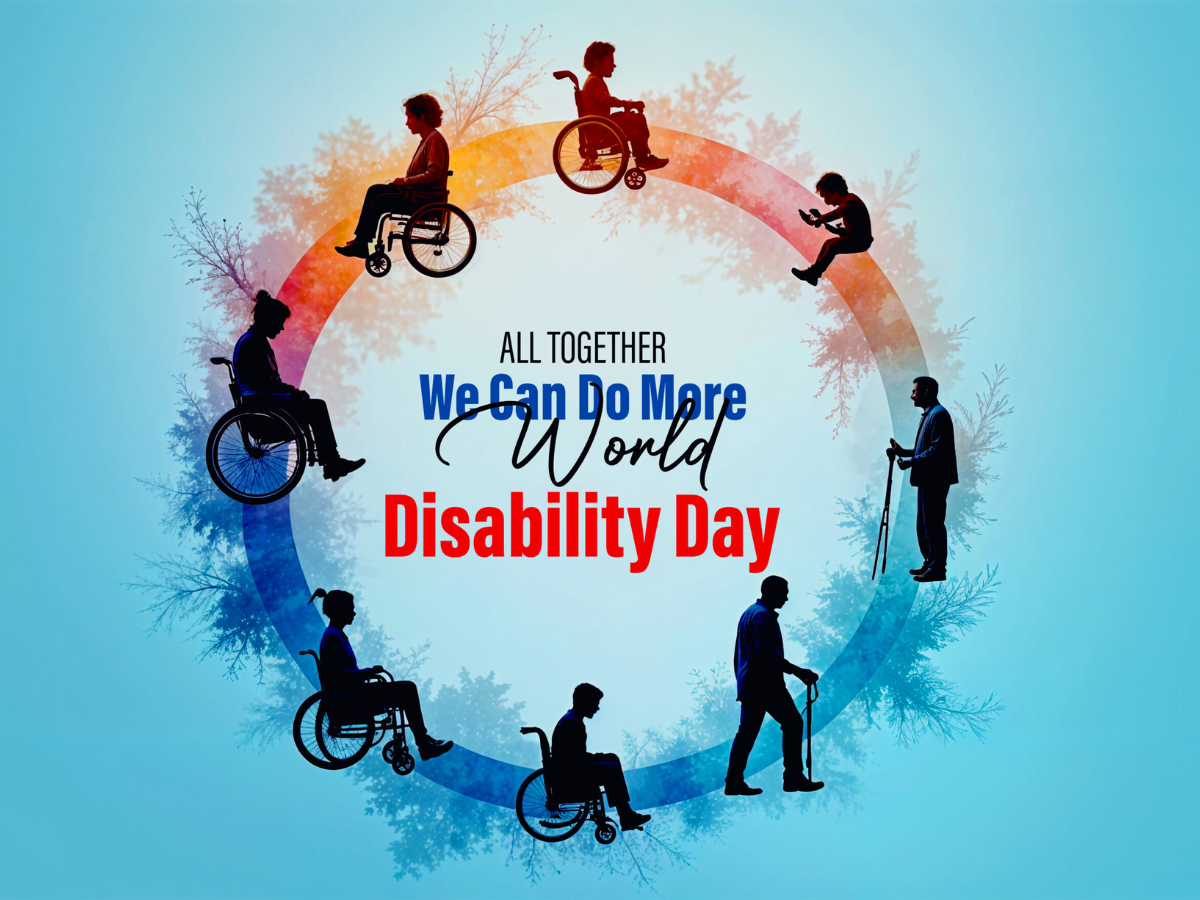
On World Disability Day, India has an opportunity to restate a deeper measure of progress. A nation’s growth is not judged only by rising GDP, but by how firmly it protects dignity, builds inclusion, and opens opportunity for every citizen. Over the years, our national conversation on disability has moved away from charity and welfare toward rights, autonomy, and full citizenship. This shift reflects a more confident democracy, one that sees persons with disabilities as equal stakeholders whose participation in education, sport, and society is a matter of entitlement, not generosity.
A rights-based view treats disability not as a personal limitation but as part of the natural range of human experience – one that deserves supportive environments. This understanding lies at the heart of the Rights of Persons with Disabilities (RPwD) Act, 2016, which aligns with the UN Convention on the Rights of Persons with Disabilities and places equality, participation, and access at the core of national duty. Within this vision, education and sport stand out as the most powerful arenas through which inclusion becomes real empowerment.
Education is the strongest engine of human capability, and for persons with disabilities it must be treated not as a welfare intervention but as an enforceable right. The need is urgent. According to the 2011 Census, among children aged 5–19 with disabilities, only about 61 percent were enrolled in an educational institution, while some 27 percent had never attended school at all. Nearly one in four children with disabilities remains entirely outside the education system. The literacy picture remains bleak for many – as per the 2011 data, the literacy rate among persons with disabilities stood at 54.5 percent, significantly lower than the national average.
However the numbers also show what is possible if we invest right. To unlock the full potential of our Divyangjan, India needs a deeper and more deliberate approach. What we need is inclusive, accessible, and adaptive education policy – combining universal design with personalised support – so every learner can progress with confidence and dignity.
India’s recent policy moves show that this shift is beginning. The National Education Policy 2020 and a growing wave of assistive-technology efforts reflect increasing commitment. Across the country, institutions are slowly introducing adaptive digital learning tools, sign-language resources, tactile materials, upgraded infrastructure, and teacher training in inclusive pedagogy. But true transformation will require embedding universal design standards, building specialised resource hubs, and creating multi-disciplinary support teams so that no learner with disability is left behind because of structural barriers.
If education builds capability, sport gives that capability its most vivid expression. Para-sports is not a pastime. It is a path to confidence, health, leadership, and social validation. When a young person with a disability enters a sports arena, they push back against stereotypes, reject marginalisation, and claim their identity as equal citizens.
India’s para-athletes have already shown what happens when opportunity meets determination. Sheetal Devi, the world’s first armless female archer, has stunned audiences with her precision and resolve. Devendra Jhajharia, Mariyappan Thangavelu, Bhavina Patel, Sumit Antil, Pramod Bhagat, Ekta Bhyan and many others have proven that excellence among persons with disabilities is not the exception. It becomes consistent when systems invest in training, technology, and support.
Recent breakthroughs in Indian para-sport make this clearer than ever. In 2025, the Indian Women’s Blind Cricket Team lifted the inaugural T20 World Cup for the Blind with an unbeaten run, earning admiration nationwide. And at the Paris 2024 Paralympics, India claimed a historic 29 medals – surpassing its own previous Olympic tally and positioning the country among the world’s leading para-sport nations. These victories go beyond sport. They show that limitations arise not from physical conditions, but from the environment society builds around its people.
Support for para-sports in India has grown sharply in the last decade, driven in large part by the personal attention and encouragement of the Prime Minister, whose consistent recognition of para-athletes has helped bring them into the national spotlight. Higher budgets, the extension of the Target Olympic Podium Scheme to para-athletes, investments in specialised equipment, and stronger national federations have all followed this push. The task now is to widen the base. That means accessible infrastructure, coaches trained in disability-specific methods, district-level para-sport academies, and stronger private and CSR investment to help talent emerge from every part of the country.
The broader challenge is to see education and sport as partners in empowerment rather than separate sectors. Inclusive education builds confidence, skill, and ambition. Sport builds resilience, leadership, and visibility. Together, they empower the specially abled not just to participate but to lead, not only to integrate but to excel.
India’s journey toward an inclusive future has begun. Now it must move faster. The goal is constructive nation-building: schools without barriers, sports fields where every athlete competes with dignity, technology that personalises inclusion, strong local systems, and a society that celebrates difference instead of fearing it.
On this World Disability Day, India can make a clear national promise: to become a country where every Divyangjan can realise the fullness of their abilities; where systems enable rather than restrict potential; and where children with disabilities grow up with the space to imagine greatness. By strengthening inclusive education and widening access to sport, India can build a future where brilliance and leadership rise from every part of the country, and where the next Helen Keller, the next Stephen Hawking, and the next Pal Szekeres emerge to help guide the path of an inclusive nation.