Setting up research funds takes an executive notification. Freeing state faculty from bureaucratic inertia takes institutional reform.
For nearly two decades, India’s research and development discourse revolved around a single, stagnant metric: Gross Expenditure on R&D (GERD) hovering stubbornly between 0.64% and 0.70% of Gross Domestic Product. According to Department of Science and Technology (DST) data, national R&D expenditure doubled in absolute terms over the past decade, yet as a proportion of GDP, it remains well below the global average of 1.8%. Advanced industrial economies consistently operate between 2.0% and 5.0%; South Korea touches 4.9%, the United States spends 3.4%, and China hovers near 2.4%.
With the operationalization of the Anusandhan National Research Foundation (ANRF) under the ANRF Act, the policy conversation finally pivoted from lamenting capital shortages to engineering a national innovation engine for Viksit Bharat. The financial architecture looks formidable on paper. The ANRF framework outlines a five-year corpus of Rs 50,000 crore, structured around a targeted fiscal design where the Central Government provides Rs 14,000 crore, while the remaining Rs 36,000 crore—over 70%—is projected to be mobilized from industry, philanthropic endowments, and public enterprises.
The primary statutory mandate of the Foundation is to reverse the extreme concentration of public science funding, committing nearly 50% of its resources outside elite institutions. Yet anyone who tracks institutional governance in India knows that approving budget allocations is the fastest step in public administration. The variables that determine whether research capital converts into commercial patents, technology transfers, and deep scientific capabilities cannot be resolved by fiscal sanctions alone.
Start with where India’s higher education population actually studies. According to official disclosures in the All India Survey on Higher Education (AISHE), national tertiary enrolment exceeds 4.33 crore students across more than 1,160 universities and 45,000 affiliated colleges. Out of this vast cohort, less than 3% study in premier central establishments—Central Universities, IITs, IISc, NITs, and IISERs. More than 80% of all undergraduate students and nearly two-thirds of postgraduate scholars are housed within State Public Universities and their affiliated colleges.
Yet public research spending reflects a severe structural imbalance. Data compiled by the National Science and Technology Management Information System (NSTMIS) shows that Central Government sources historically drove 43.7% of national R&D spending, with 84% of central extramural funding absorbed by 12 premier scientific agencies and toptier central campuses. An IIT or IISc faculty member operates with institutional grant managers, dedicated sponsored research offices, fast-track seed funds, and lower teaching loads. A state university researcher operates inside a web of administrative friction. The primary constraint across state-level research is administrative drag, not intellectual capacity.
Under standard state higher education channels, the administrative pipeline for an approved central grant is fragmented. Once central concurrence is granted, faculty members routinely wait six to nine months simply for university finance desks to register the grant and issue sanction codes. Where projects require clearance from state treasuries or state higher education departments, files pass through registrars, finance officers, and non-academic secretariat staff operating on standard civil administrative rules rather than time-sensitive scientific timelines.
Then comes the procurement bottleneck. Premier central institutes have progressively delegated financial approvals to principal investigators, but state colleges remain strictly governed by state procurement manuals and general financial rules originally framed for purchasing public stationery and office inventory. Faculty acquiring specialized reagents, micro-controllers, or calibration tools through the Government e-Marketplace (GeM) or open tenders run into multi-tier quotation mandates, audit objections, and extensive delivery lags.
If an imported biological reagent stalls at customs or a procurement window lapses before financial year-end reconciliations, the faculty member bears personal audit liability. As a result, researchers often spend more working hours clearing audit objections, verifying voucher compliance, and submitting utilization certificates than conducting laboratory experiments.
This structural friction extends directly into academic time allocation. Under standard University Grants Commission (UGC) workload regulations, assistant professors carry a mandatory baseline of 16 hours of direct classroom instruction per week, excluding heavy non-academic obligations like exam invigilation, centralized paper evaluation, election duties, and departmental record-keeping.
By contrast, researchers at leading global universities typically allocate 40% to 60% of their working calendar exclusively to laboratory work, grant proposals, and graduate mentorship. Combined with legacy Academic Performance Indicators that long rewarded the sheer volume of publications rather than citation depth or commercial applications, the system structurally incentivized high-volume, low-effort research over deep empirical inquiry.
The ANRF’s objective of directing substantial grant capital to state universities and colleges addresses an undeniable historical skew. However, simply handing out funds without fixing the institutional setup just moves the administrative bottleneck from New Delhi to the state capitals. Dumping capital into systems still choked by procedural delays mainly produces paperwork and compliance reports, not actual scientific breakthroughs.
Other countries managed this shift by shielding research from everyday bureaucratic machinery. When the United States passed the Bayh-Dole Act, it gave universities direct ownership of patents and set up dedicated Technology Transfer Offices so academic work could link more naturally with industry. Germany, meanwhile, built out applied industrial research through the Fraunhofer-Gesellschaft and kept scientific procurement and industrial testing free from the usual civilservice spending rules. For India, structural administrative reforms have to go hand in hand with ANRF disbursements. State public universities need independent Research Project Management Units that can handle project accounting, fellow hiring, and procurement separately from the general university administrative registries.
Concurrently, state public finance departments must modernize procurement manuals to establish higher financial thresholds and single-source exemptions for scientific consumables, reagents, and equipment maintenance. Finally, university service rules should allow faculty securing competitive national grants to buy out a portion of their mandatory teaching load, substituting classroom hours with teaching assistants to protect core research time.
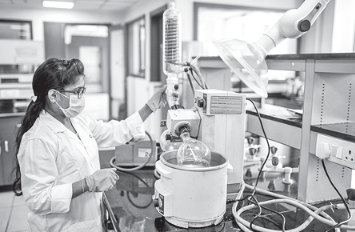
Building domestic semiconductor fabrication, advanced biomanufacturing, and clean energy systems demands domestic technological depth. We have demonstrated the capacity to design national missions and commit capital outlays. Whether those investments deliver long-term technological sovereignty will not be decided solely by high-level approvals in New Delhi. It will be decided by whether a researcher in a state university laboratory can acquire an instrument and validate an experiment without spending nine months navigating administrative red tape.
*The author is a postgraduate scholar in Political Science and a Public Policy Researcher at the Policy, Politics and Governance Foundation (PPGF), specialising in institutional governance and higher education policy.