

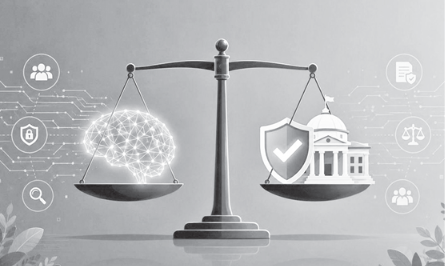
As Trump and Xi prepare to meet, the nuclear era has already answered whether safety requires slowing down.
Martin Wolf, the Financial Times’ chief economics commentator, recently made the case for a “managed slowdown” of artificial intelligence, aligned with Anthropic chief executive Dario Amodei’s warning that recursive self-improvement in AI models could soon outrun human oversight. Henry Paulson and Robert Rubin urged Presidents Trump and Xi to negotiate an “AI Cooperation Treaty” when they meet later this month at the White House. The intent behind both views is sound: large, poorly understood risk deserves serious attention. Their prescription may not! Let us look at the history. Nuclear fission, by August 1945, had already levelled two cities, a risk categorically worse than anything AI has yet produced. Even then, no credible argument suggested reactors should be throttled. Within a decade, governments began building an enforcement architecture around the technology instead: the International Atomic Energy Agency, established in 1957; mandatory safeguards; licensing regimes; a verification bureaucracy that took decades to mature and is still a work in progress.
Nuclear power did not wait for the institutions to be ready. The institutions were built at the pace the technology demanded, because stopping was neither credible nor, in the end, necessary. That is the model we need. Not slower AI. But faster institutions and governing mechanisms. One can argue that nuclear and AI are two different animals. Correct. But the underlying doctrine of risk management is the same. The slowdown argument refuses to see what remains untouched by AI’s current or future capabilities, or what future unmet needs remain. Drug discovery is one example: AI can compress a decade of drug candidate screening into months. This matters as the global pipeline of new therapies shrinks and lives are already being impacted. Agriculture is another. The world will add roughly two billion more people by mid-century, on a food system strained by water scarcity and a warming climate. The yield and resource-efficiency gains that AI-assisted breeding, soil modelling and precision irrigation can deliver are close to a necessity, not a luxury. From the Gulf, where several governments are betting simultaneously on AI infrastructure and food security as twin national strategies, that tradeoff is not abstract. It is next year’s budget line. What, then, is actually new about this moment, and worth taking seriously rather than brushing aside? Amodei’s own answer is the better one: recursive self-improvement.
This is not the familiar story of a stable technology being misused by a bad actor, which is the shape of the nuclear-weapons risk and the source of most of the fear it generates. It is systems becoming harder to predict even without one. That is a genuinely different problem, and it is the actual argument for urgency. It is not a case for slowing capability, but for building verification and evaluation capacity at the same speed as the capability itself. Amodei’s proposal for embedded evaluators is the right instinct. It should be funded and staffed like an emergency, not studied like a green paper. The same logic holds beyond nuclear power. Climate change risk does not call for slowing industrialisation; it calls for reducing pollutants instead. AI deserves the same treatment. Not slowing growth, but building faster guardrails around it. Much of the public appetite for a slowdown, I suspect, is not really about calibrated risk at all. It is about the plain discomfort of the human species that cannot keep pace with the rate of change in its own tools. That discomfort is understandable.
It has driven policy before, usually badly. It is a poor basis for policy now, when the honest tally includes not just the risks Wolf and Amodei describe, but the diseases left untreated and the food systems left unmodernised while the debate over hypothetical harm runs its course. Paulson and Rubin’s proposed treaty and Amodei’s evaluators point in the right direction, provided the pace matches the technology instead of the diplomacy. History suggests which is faster. When Trump and Xi meet this month, the useful question is not whether to slow AI down. It is how quickly the world can build, this time, the institutions we built too slowly around the last technology capable of doing this much good and this much harm. Rakesh Chitkara serves as the Country Director for the United Arab Emirates at the World Agriculture Forum and is based in Dubai. He previously held senior roles across agribusiness, chemicals, Energy and healthcare, including General Electric, Dow, Monsanto and Abbott.






