For much of the past decade, the Indo-Pacific has been narrated as a strategic extension of Washington—a theatre animated by American alliances, anxieties, and abstractions. That framing is now visibly fraying. Power in the Indo-Pacific is no longer scripted from a single capital; it is bargained over daily across sea lanes, island chains, and maritime chokepoints. In this shifting order, India is no longer a responsive actor in someone else’s design. It is beginning to write the grammar of its own regional presence.
The exhaustion of a Washington-centric Indo-Pacific is no longer theoretical. The United States remains indispensable, but its strategic attention is fractured—pulled simultaneously toward Europe, the Middle East, and domestic political churn. Even India–US ties, despite their structural depth, now carry friction: trade protectionism, technology controls, and diverging threat assessments have injected periodic strain. This is not rupture; it is recognition. India’s Indo-Pacific engagement cannot be outsourced to another power’s priorities, however aligned they may appear.
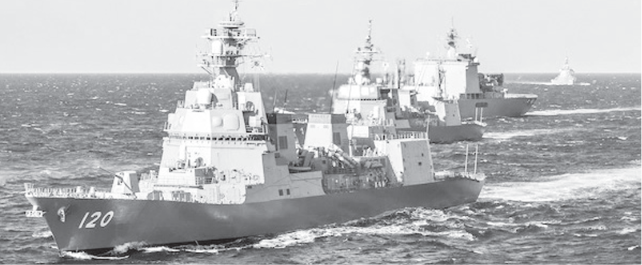
What sets India apart is not rhetoric, but the steady accumulation of maritime power. New Delhi is expanding fleets, inducting submarines, and sustaining a wider naval presence across the Indian Ocean. This hard power is fused with space and data through satellite integration, enhanced maritime surveillance, and indigenous navigation via NavIC. Complementing these caparency. Alongside this, a widening web of bilateral naval exercises and logistics arrangements signals seriousness without provocation. bilities is a growing lattice of bilateral and multilateral maritime exercises, signalling readiness, interoperability, and resolve—without the theatrics of alliance politics.
India’s Southeast Asia policy reflects the same calibrated assertiveness. By foregrounding ASEAN centrality, India has avoided the optics of intrusion while deepening cooperation through training programmes, port calls, and maritime coordination. Crucially, this engagement extends beyond any single platform or coalition. In an environment where multilateral formats rise and recede with political cycles, India has chosen diversification over dependency, and durability over display.
Geography, long treated as destiny, is now being converted into strategy. The development of Great Nicobar Island is best understood not as tactical militarisation, but as long-term maritime positioning—linking the Bay of Bengal to the Malacca Strait and reinforcing India’s eastern seaboard at a moment when sea lanes have become strategic cur Further east, partnerships with Japan and South Korea have matured from dialogue into operational cooperation—spanning defence technology, joint exercises, and supply-chain resilience. These relationships underline India’s appeal as a stabilising force rather than a camp enforcer. Singapore, meanwhile, remains India’s most reliable strategic anchor in Southeast Asia, offering both logistics access and a gateway to deeper regional defence integration.
Yet the true fulcrum of India’s Indo-Pacific vision lies closer to home: the Indian Ocean. Here, New Delhi is increasingly positioning itself as a guardian of the region—not through domination, but stewardship. The recalibration of ties with the Maldives reflects a sober acceptance of domestic political realities and the limits of pressure diplomacy. Sustained outreach to Seychelles and the elevation of Mauritius to neighbour status reveal an island diplomacy that treats proximity as responsibility, not entitlement.
This posture stands in contrast to the expanding footprint of China across the Indo-Pacific. Beijing’s approach—marked by infrastructure leverage, dualuse facilities, and opaque financing—has unsettled many littoral states. India’s response has been quieter but more durable: transparency over debt, capacitybuilding over dependency, and presence without pressure. For smaller nations navigating an increasingly crowded maritime order, India offers strategic breathing space rather than strategic enclosure.
Taken together, these strands signal India’s evolution from a balancing power to an emerging system-shaper. Its leadership of the Global South is not rhetorical; it rests on development-first partnerships, respect for sovereignty, and the absence of coercive conditionalities. In a world fatigued by binary choices, restraint itself has become a strategic asset.
This trajectory is not without risk. Resource overstretch, uneven execution across theatres, political volatility in partner states, and mounting pressure to align within rigid blocs pose real challenges. Strategic impatience or excessive militarisation could dilute the credibility India has carefully cultivated as a restrained maritime actor.
India’s imperative, therefore, is coherence over expansion—integrating naval power, space assets, defence exports, and diplomacy into a single maritime vision. Partnerships must be institutionalised rather than personalised, while relations with the United States and competition with China are managed without surrendering strategic autonomy.
The Indo-Pacific will not be ordered by slogans, summits, or alliances alone. It will be shaped by powers that marry capability with credibility, and restraint with resolve. India’s strength lies precisely here—not as an enforcer or a follower, but as a stabilising maritime power quietly redefining leadership in a contested oceanic century.
*Apurva Rakesh Pandey is an alumnus of the University of Allahabad and an Independent writer on International Relations and Strategic Affairs.