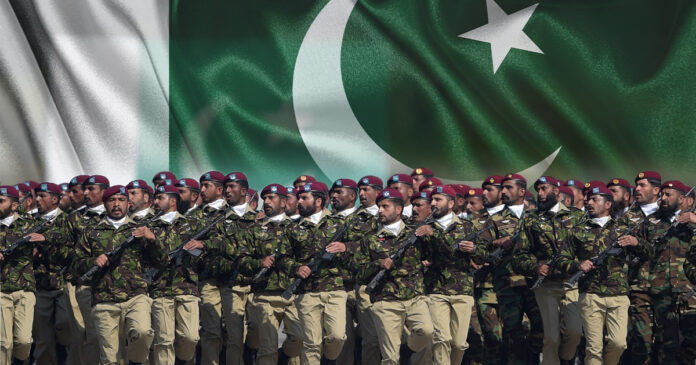
Pakistan’s latest military reforms show that the country is once again moving towards greater military control over its political and strategic affairs. On August 20, Pakistan’s National Assembly and Senate passed the Defence Forces of Pakistan Act, 2026 and amendments to the National Command Authority Act, 2010. The bills give legal backing to the military structure created by Pakistan’s 27th Constitutional Amendment. Under the new system, the Army, Navy and Air Force come under the operational command of Chief of Defence Forces Field Marshal Asim Munir, who already serves as Pakistan’s Army Chief. A new Defence Forces Headquarters will also function under his command.
The changes further affect Pakistan’s nuclear command structure, making the concentration of military authority even more significant. This is much more than a routine military reform. Pakistan has a long history of military involvement in politics, and these changes appear to give the military establishment even greater power. Instead of strengthening Parliament and civilian institutions,
Pakistan is moving towards a system where enormous authority is concentrated within the military and increasingly around one individual. This is particularly worrying because Pakistan is a nuclear-armed country with a long record of supporting terrorism and cross-border terrorism against India. Giving greater power to the military while reducing civilian checks can create risks for Pakistan and the wider region. However, India should view these developments with confidence, not fear. Pakistan should not mistake military posturing for superiority over India.
India today has a strong and credible deterrence. Its nuclear forces, missile systems, air power, naval capabilities, surveillance systems and growing indigenous defence technology provide the country with the ability to respond effectively to any serious threat. India’s expanding sea-based nuclear capability and second-strike capacity further strengthen the credibility and survivability of its deterrence. India has also demonstrated its willingness and ability to respond firmly when its security is challenged.
Pakistan therefore cannot assume that military adventurism, terrorism or nuclear threats will allow it to achieve strategic objectives against India. The irony is that Pakistan’s greatest danger may not come from India—it may come from its own choices. For decades, Pakistan has invested heavily in its military while continuing to struggle with political instability, economic difficulties and terrorism. Its policy of supporting or tolerating terrorist groups has also created serious security problems within Pakistan itself.
Terrorism cannot remain a controlled instrument forever; eventually, it can turn against the state that enabled it. Pakistan now risks repeating this mistake by concentrating even more power in the military. A strong country is not built simply through missiles, fighter jets or nuclear weapons.
It is built through strong democratic institutions, a stable economy, accountable governance and respect for the rule of law. Pakistan risks becoming a country that is heavily armed but institutionally weak. For India, the response should therefore be simple: remain alert, remain prepared and remain confident. India’s credible deterrence ensures that Pakistan cannot expect military adventurism to achieve its objectives.
Pakistan may believe that concentrating power will make it stronger. In reality, it risks making its political system more fragile. Pakistan does not need more power in the hands of its military. It needs stronger institutions, economic stability and a functioning democracy. Its greatest strategic mistake may ultimately be the system it is building for itself.
*The author is Founder, YOBHA – Research & Policy Think Tank